- Doug Ford asks cabinet to report on gambling ads across TV and social media
- He says he would restrict betting ads once that report lands
- No scope, timeline or specific measures have been announced
In this story4 sections
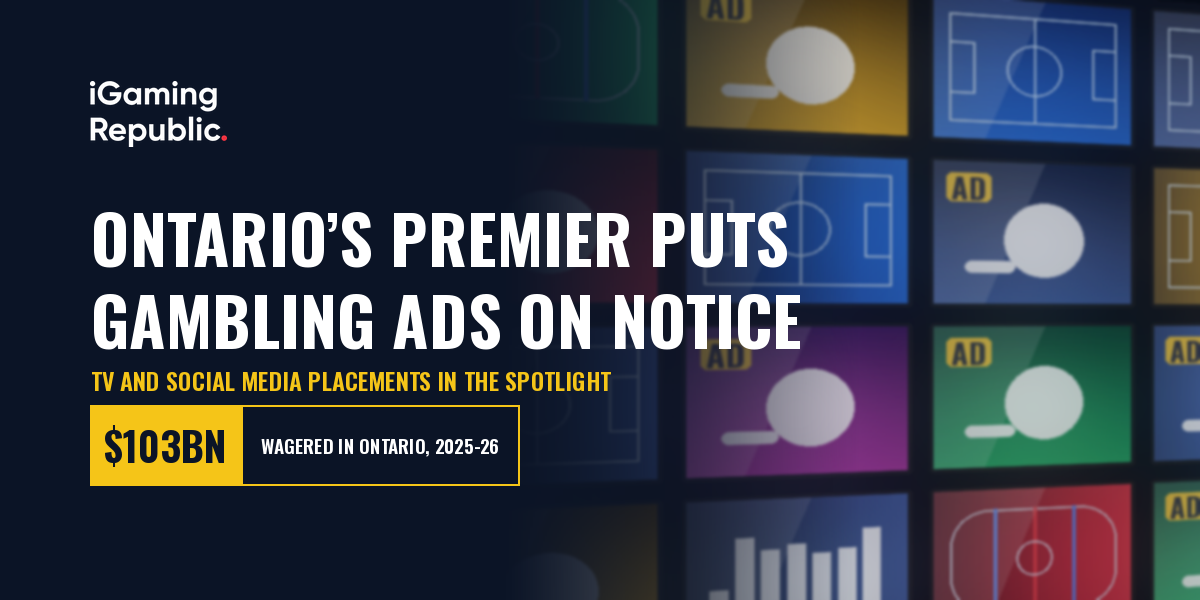
Ontario Premier Doug Ford has asked his cabinet to examine online gambling advertising, calling the volume of ads on television and social media “out of control.”
Ford said he would move to restrict betting ads once he receives a report back. No scope, timeline or specific measures have been set out.
Add iGaming Republic as a preferred source on GoogleSee more of our stories in Google’s Top Stories.Criticism from the top
Ford spoke to reporters at Queen's Park on November 24, ahead of his party's weekly caucus meeting. He said he had asked cabinet to study the amount of gambling advertising on TV channels and social media, and to report back to him.
He did not soften his language, according to Global News. Ford said:
“It's out of control, in my opinion.”
Asked whether he would restrict betting ads, Ford replied:
“Once I receive a report back, yeah.”
The criticism lands awkwardly for his own government. Ford's Progressive Conservatives opened Ontario to private operators in April 2022, making it the first province with a regulated, competitive market.
That market is now large and established. iGaming Ontario's operator directory lists 48 operators and 83 gaming websites as of November 6. In its fourth year, from April 2025 to March 2026, the market generated more than $4.2bn in gaming revenue from over $103bn in wagers, according to unaudited iGO figures.
Ford has not said what the review will cover or when cabinet will report. No changes to Ontario's advertising rules have been announced, so operators have nothing new to comply with yet.
Rules already in force
Ontario licensees already market under tight limits. The Alcohol and Gaming Commission of Ontario (AGCO) bans the public marketing of bonuses and incentives under its Standards for Internet Gaming. The regulator has described Ontario as one of the first jurisdictions in the world to ban mass advertising of inducements.
The standards also prohibit advertising aimed at minors, high-risk individuals and self-excluded players. Imagery likely to appeal to anyone under the legal gambling age of 19 is banned too.
Since February 28, 2024, operators cannot use active or retired athletes in ads, except to advocate for responsible gambling. The same update restricted celebrities likely to appeal to minors.
Broadcast spend has carried on regardless. ComeOn, for one, launched an Ontario TV campaign fronted by actor Jeremy Piven.
Alberta took a similar stance on bonus advertising before its market launch in July. The AGCO has also shown it will use its enforcement powers: PointsBet accepted Ontario's first iGaming suspension.
In May, iGaming Ontario launched BetGuard, a single portal that lets players self-exclude from every regulated site. Excluded players lose access to existing accounts, cannot open new ones and stop receiving marketing.
In June, Stan Cho, then Minister of Tourism, Culture and Gaming, told CTV News that 2,000 people had signed up for BetGuard in its first month. He also said changes to the laws on online gambling ads were coming soon.
Stan Cho said:
“We understand that the time to do something is now.”
No new rules followed. Zee Hamid took over the ministry in September, with oversight of iGaming Ontario and OLG.
Rejected ban, rising harm
Ford's review comes six months after his MPPs rejected a much harder line.
Liberal MPP Lee Fairclough introduced Bill 107, the Stop Harmful Gambling Advertising Act, 2026, in April. It would have barred anyone operating an electronic gaming site, or acting on its behalf, from advertising or promoting that site, with limited exceptions.
Corporations faced fines of up to $1m and individuals up to $100,000. A second conviction would have required the Registrar to revoke an operator's registration.
The government defeated the bill at second reading on May 14. During the debate, Fairclough said $83bn had been wagered online in Ontario in 2024-25. Opposition members are still calling for a complete ban.
The bill's preamble cited a 144% increase in calls to the ConnexOntario helpline after online gambling was privatized in April 2022.
The evidence has grown since that vote. On September 16, an ICES study found that emergency department visits for gambling disorders nearly doubled after Ontario opened its online market and Canada legalized single-event sports betting. The peer-reviewed findings appeared in the American Journal of Preventive Medicine.
Researchers tracked 952 visits by 757 people over 14 years. Among males aged 10 to 29, visits ended up 154% higher than expected, The Canadian Press reported.
In October, a CBC News investigation drew on new Alberta Gambling Research Institute estimates. Nearly 130,000 Ontarians now show signs of problem gambling, up from roughly 43,000 in 2018.
Neither study blames advertising directly. Both, though, hand critics of current ad volume fresh numbers.
Ottawa's clock is ticking
The federal government is moving too. Bill S-211, the National Framework on Sports Betting Advertising Act, passed the Senate in October 2025. It was reported back to the House of Commons with amendments on November 4.
The bill now sits at report stage, with third reading still to come. Because the Commons amended it, the Senate must then consider those changes.
S-211 would not ban anything outright. It requires Ottawa to develop a framework covering the volume, placement and reach of sports betting ads. Ontario and Alberta oppose it, arguing it oversteps their authority over their own gambling markets.
For Ontario licensees, the near-term risk is two sets of rules arriving close together. A provincial report could land as Ottawa starts work on national standards, with both covering the TV and social media placements Ford singled out.
Any cap on volume would likely hit broadcast-heavy sponsors first. The industry's strongest counterargument sits in iGO's own data: an Ipsos study found 91.1% of surveyed online gamblers used regulated sites in the market's fourth year.
Paul Burns, President and CEO of the Canadian Gaming Association, told iGaming Republic in September that the figure showed the strength of Ontario's regulated market. He also warned that Alberta was likely to face “similar pushback on gaming advertising.”