- A Utah judge dismisses 14 criminal charges against Kalshi and its co-founders without prejudice
- Kalshi pauses new trades in Utah after losing its federal court challenge
- Utah’s civil suit against Kalshi and two Susquehanna firms continues
In this story4 sections
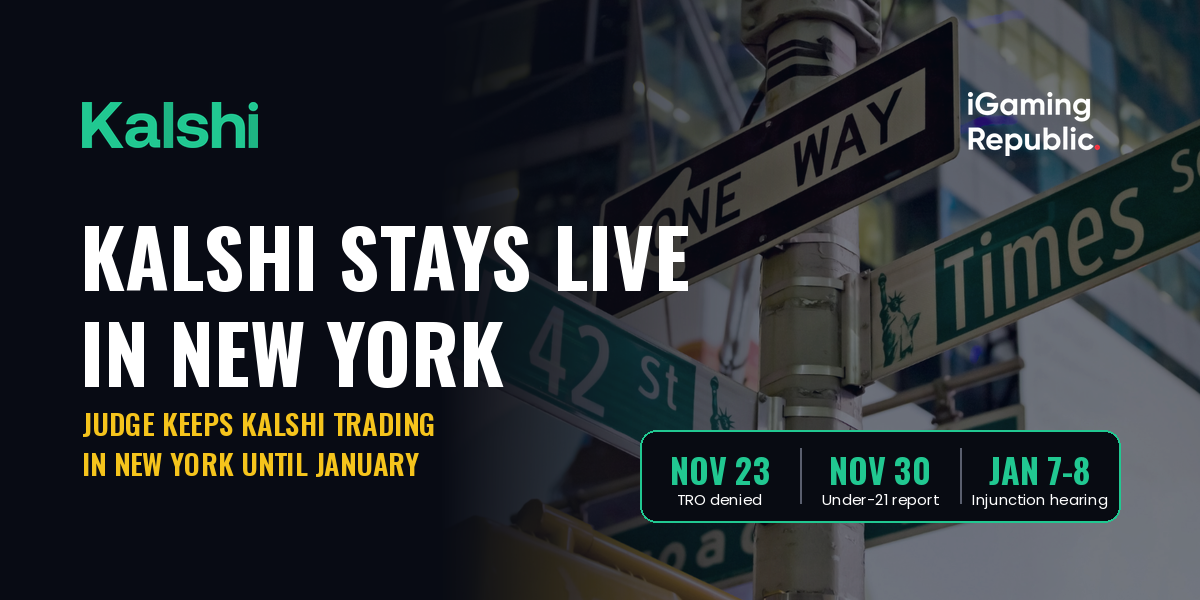
A Utah judge has dismissed all 14 criminal charges against Kalshi and its co-founders, Tarek Mansour and Luana Lopes Lara.
Attorney General Derek Brown’s office filed the motion on Monday, November 23, after Kalshi stopped taking new trades from Utah users.
Add iGaming Republic as a preferred source on GoogleSee more of our stories in Google’s Top Stories.Brown announced the move on November 24, and Third District Court Judge Todd Hilbig granted it the same day.
Dismissal comes without prejudice
The dismissal is without prejudice, so prosecutors can refile if Kalshi returns. Judge Hilbig also canceled the founders’ initial court appearance, which had been set for December 4.
Brown filed the case on October 28. It named KalshiEX alongside both founders and included 13 felony counts. It rested on a sting. An investigator from Brown’s office opened a Kalshi account from a Utah IP address and placed 12 wagers on sports events in September.
Derek Brown, Attorney General of Utah, said:
“Kalshi has pulled out of Utah, and if it returns, so will the charges.”
Brown told Front Office Sports that no agreement was involved:
“There was not a deal.”
Kalshi pauses Utah trading
Kalshi says it paused after losing in federal court. Utah users can no longer open new contracts, but they can close existing positions and withdraw funds.
According to Brown’s office, Kalshi said it would geofence Utah and monitor for Utah-based IP addresses. The office says seven companies, Kalshi included, have now agreed to stop operating in the state.
Kalshi says it wants to return.
Jacki McGavick, spokesperson at Kalshi, said:
“This is an unfortunate outcome for the more than 177,000 Utahns who use Kalshi.”
That figure is Kalshi’s claim and has not been independently verified. Court filings put the number at 55,819 accounts registered to Utah addresses as of February. Of those, 32,940 had completed full sign-up.
General counsel Yaakov Roth said Kalshi was pleased the charges were dropped.
Yaakov Roth, General Counsel at Kalshi, said:
“Good faith jurisdictional disagreements should never be criminalized.”
Most of Kalshi’s rivals have already left. DraftKings Predictions, FanDuel Predicts and Fanatics Markets pulled back after the October charges. Brown’s office says Robinhood, Novig and ProphetX have also gone.
Polymarket is still available in Utah, according to an unnamed source cited by Yahoo Finance. The company has not confirmed this. Brown’s statement said that if companies “promote, support, or enable gambling, we will hold them accountable.”
Civil, federal cases continue
The criminal case is over, but Kalshi still faces legal action in Utah. Brown’s civil lawsuit, filed on October 20, is still running.
It targets five Kalshi entities and two trading firms, Susquehanna International Group and Susquehanna Government Products. Utah says the Susquehanna firms act as market makers, taking the other side of users’ trades.
The suit estimates Kalshi collected between $30.6m and $61.2m in fees from Utah accounts. The state wants those profits returned, restitution for residents, and sports, election and culture markets blocked for Utah users. The suit can cost the defendants money, but it carries no prison risk.
The federal question is still open. Kalshi sued Utah in February, arguing that federal commodities law protects its contracts from state gambling bans.
Judge Robert Shelby rejected that argument in August and granted Utah summary judgment. Kalshi has appealed to the Tenth Circuit, which declined in September to pause enforcement until it rules.
The US government and the CFTC then sued Utah on October 26, two days before the criminal charges were filed. At a November 20 hearing on requests for a temporary restraining order, Shelby said the federal side faced “a steep hill to climb”. He has not set a date for a ruling.
Preemption fight still unresolved
Arizona was the first state to charge Kalshi criminally. A federal judge blocked that prosecution on preemption grounds, and Arizona is trying to revive it.
Utah’s criminal case ended without a trial, so it never tested that argument. Preemption is still being fought in Kalshi’s appeal and in the CFTC’s lawsuit.
Charging the founders personally raised the stakes for Kalshi. Within four weeks of the charges, the company had paused Utah operations, citing its federal court defeat.
The Tenth Circuit and Shelby’s ruling in the CFTC case will now decide whether that pause becomes permanent. If Kalshi wins and comes back to Utah, Brown has already said what follows.