- ANSEJA files a 35-page petition seeking restored licenses or a 180-day exit
- Petition cites 60,677 irregular betting records in the ban's first weeks
- Association seeks about BRL1.6bn in proportional license fee refunds
In this story5 sections
Brazil's National Association for the Legal Security of Games and Betting (ANSEJA) is back at the Supreme Federal Court (STF) with a new demand. Either lift the betting ban, or give licensed operators 180 days to close down properly.
The 35-page petition, filed on November 20, builds on the group's challenge to Provisional Measure 1.394/2026.
Add iGaming Republic as a preferred source on GoogleSee more of our stories in Google’s Top Stories.Plan A, plan B
ANSEJA's main ask is for the court to strike the measure down as unconstitutional. Failing that, it wants authorizations temporarily reinstated for at least 180 days. That would give operators time to rework contracts and clear outstanding commitments.
Plan B kicks in if the court refuses reinstatement. ANSEJA proposes a 180-day assisted closure with no new bets taken. Operators would use it only to return player funds, keep records and settle obligations.
The petition also wants the measure's daily fine suspended during any transition. It asks the court to confirm that lottery products such as Loteca remain legal. It also requests a conciliation hearing with the Union and affected sectors.
Irregular offers multiply
ANSEJA's core argument is that the ban isn't stopping betting. It's pushing players toward unlicensed sites. To make the case, the petition draws on the government's own numbers.
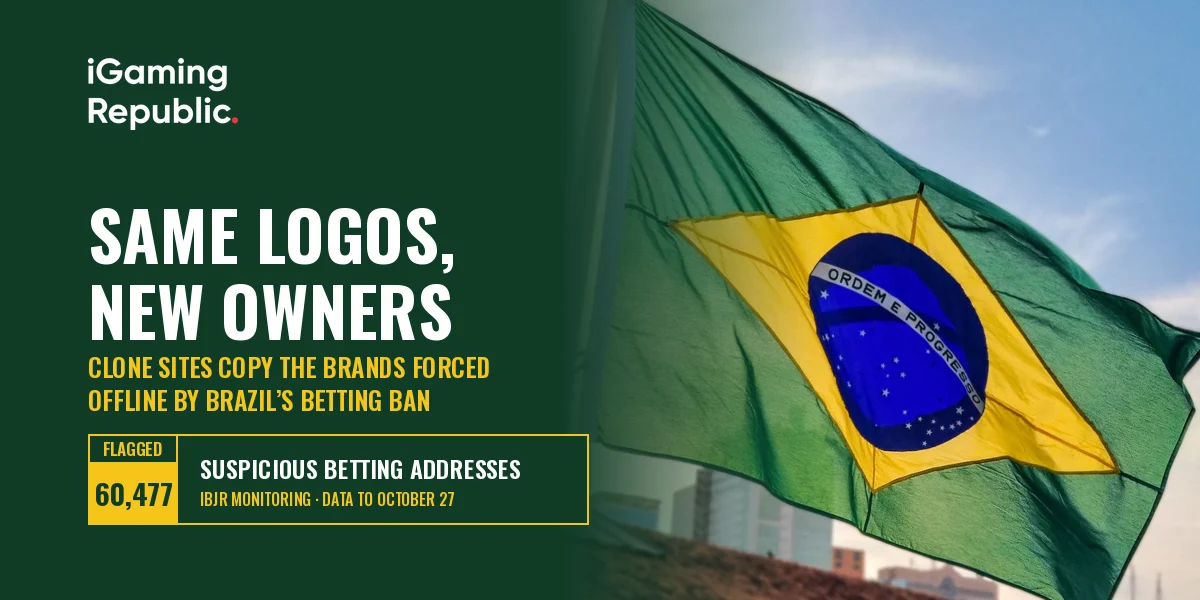
A Justice Ministry survey, filed by the Attorney General's Office (AGU) on November 17, logged 60,677 records promoting irregular betting between September 25 and November 9. Most were websites, alongside Facebook pages, Telegram groups and social media profiles.
Their combined audience reached about 204.2 million, though the petition accepts this isn't a count of unique users. Anyone tracking the market will recognize the trend. Copycat sites have been trading on licensed brands' names for weeks.
Finance Ministry figures cited in the filing point the same way. Authorities blocked 30,567 unauthorized operator URLs between January and June 2026, when the regulated market was open. Within weeks of the ban, 38,696 URLs offering illicit services had been identified.
The petition also cites a reply from the ministry's Prizes and Betting Secretariat (SPA) to an access-to-information request. Sent on September 24, it said no studies existed on a ban's economic, fiscal, regulatory or social impact. The government issued the measure the next day.
Who pays back the BRL30m
Each authorization cost BRL30m and ran for five years. The measure ends them without a refund.
ANSEJA puts the total paid at about BRL2.55bn. Assuming terms began in January 2025, around 38 of the 60 months go unused. On that basis, it seeks roughly BRL1.6bn in proportional restitution, plus the right to claim for unamortized investments.
Operators are already counting the cost. Flutter booked an $873m impairment on its Brazilian business in the third quarter.
Lower courts frozen
President Luiz Inácio Lula da Silva signed MP 1.394 on September 25, and licensed sites went dark on October 6. ANSEJA challenged the measure at the STF within days, under ADI 8024. The new petition is filed in the same case.
Some operators tried the lower courts instead. Stake won an injunction on October 8, but the appeals court suspended it the next day.
On November 8, Justice Luiz Fux suspended every lower-court case questioning the measure, at the request of Prosecutor General Paulo Gonet. The freeze holds until the STF rules on four constitutional challenges. Every step since the ban is logged on iGR's Brazil ban tracker.
Racing the clock
ANSEJA wants the full court to hear the case as a priority, so the freeze on lower courts doesn't drag on.
Congress has its own deadline. After a 60-day extension, lawmakers must vote on the measure by March 4, 2027, with the count paused over the year-end recess. They have tabled 99 amendments. The joint committee meant to review the measure still hasn't been set up, leaving the ban in limbo until March.
ANSEJA's pitch rests on time. The longer operators stay dark, the less a reinstated license is worth. That makes the wind-down request potentially the most important one. Granting it would give Brazil a formal exit route for licensed operators. A refund order on top would put a price on shutting a regulated market overnight.