Paul Burns, CGA: Regulated Ontario is pulling players from the black market

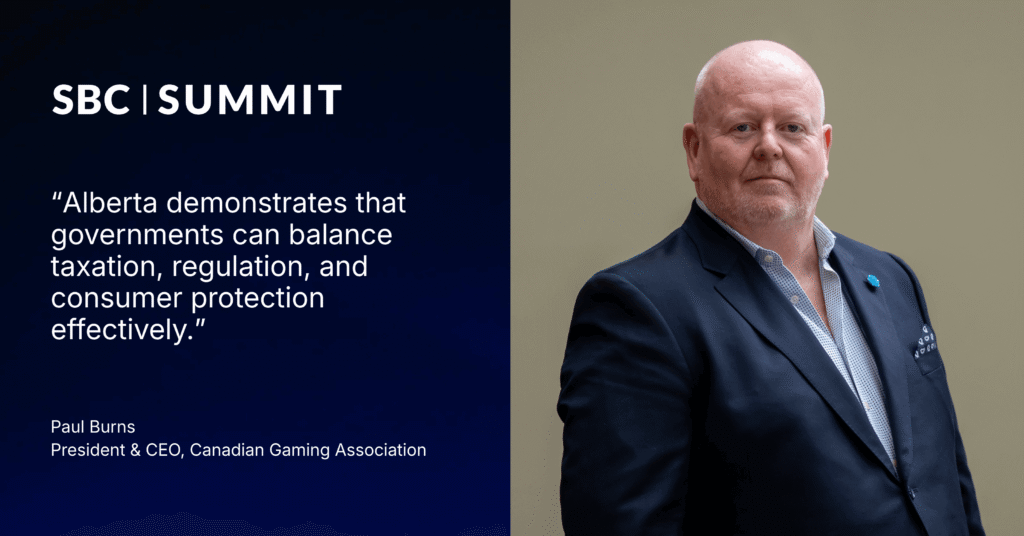
Paul Burns, President & CEO of the Canadian Gaming Association, explains why Alberta’s smooth launch and Ontario’s 91% channelization rate are the clearest proof yet that regulated markets can outcompete the offshore ones, and why platform accountability is the next front in that fight.
Canada’s regulated gaming map is shifting on two fronts at once. Alberta has just opened a competitive, regulated iGaming market, while Ontario, several years into its own, is refining what it already built rather than launching something new. Together the two provinces are giving the rest of the country a live comparison of what “early” and “mature” regulation actually look like.
Paul Burns is President & CEO of the Canadian Gaming Association (CGA), the national body representing operators, suppliers and stakeholders across Canada’s gaming sector. That vantage point puts him across both stories at once, and across how Alberta’s launch and Ontario’s review connect to the industry’s bigger fight against offshore, unregulated platforms.
Burns will be speaking on the panel “Canada: Province by Province Progress” at SBC Summit on Tuesday 29 September, 15:30–16:10, alongside Brooke Hilton (Head of Casino, PointsBet) and Ron Segev (Founding Partner, Segev LLP), moderated by Matthew Showell (CEO, Snap Call Media).
Ahead of that session, he spoke to iGaming Republic about Alberta’s launch numbers, why Ontario’s channelization rate keeps climbing, and what the offshore market means for both provinces.
This Q&A breaks down:
- How Alberta’s launch is playing out, and what separates it from Ontario’s approach
- The channelization numbers behind Ontario’s regulated market, and what’s driving its next regulatory review
- Why the offshore market, and platform accountability, sits behind both provinces’ next moves
Let’s dive in!
iGaming Republic readers can save 30% on VIP, Conference, Networking and Business passes using code IGRPARTNERVIP at checkout.
iGaming Republic: Alberta has now opened its competitive regulated iGaming market. How is the launch playing out so far, and what are you hearing from operators and consumers?
Paul Burns: The Canadian Gaming Association (CGA) applauds Alberta for launching an expanded, regulated iGaming market. Alberta is now the second province in Canada to show that a market can meet consumer demand while maintaining strong player protections and regulatory oversight. With 22 sites launching on day one and another 25 applying for licenses, Alberta demonstrates that governments can balance taxation, regulation, and consumer protection effectively.
Member feedback indicates Alberta’s launch has gone very smoothly. Unlike Ontario, Alberta opened with province-wide self-exclusion and automated AML reporting already in place, while AGLC has actively promoted responsible gaming tools across multiple media platforms.
“Alberta demonstrates that governments can balance taxation, regulation, and consumer protection effectively.”
Paul Burns, President & CEO of the Canadian Gaming Association
iGR: Ontario is several years further along and is now refining an established market rather than launching one from scratch. What does the contrast with Alberta tell you about where each province stands today?
PB: Since launch, Ontario has become one of the world’s strongest and most comprehensive regulated iGaming markets. Alberta has largely adopted Ontario’s framework, so we expect a similar trajectory, though with several important differences. Alberta launched with centralized self-exclusion already in place, has run public awareness campaigns to explain the shift to regulated gaming, and is moving quickly to help land-based casinos benefit from enhanced retail gambling regulations alongside new online gaming offerings.
Ontario launched BetGuard, its centralized self-exclusion program, in May 2026, more than four years after its market opened. Even so, Ontario has reached a channelization rate of about 91%. An Ipsos study released the same month found that 91.1% of online gamblers used regulated sites, up 7.4 percentage points from 83.7% the year before, underscoring the strength and appeal of Ontario’s regulated market.
“Since launch, Ontario has become one of the world’s strongest and most comprehensive regulated iGaming markets.”
Paul Burns, President & CEO of the Canadian Gaming Association
iGR: Alberta has benefited from learning from Ontario’s experience. Where do you think Alberta has improved on Ontario’s model, and where might it still face the same challenges?
PB: Alberta is expected to release data soon and, ideally, report channelization rates annually. Those figures will provide the clearest measure of the market’s success. Although Alberta’s population is smaller than Ontario’s at about 5.5 million, Albertans consistently rank among Canada’s highest in gaming spend per capita. The province is also likely to face similar pushback on gaming advertising, making a continued focus on responsible gambling essential to the market’s responsible development.
iGR: What is driving the next phase of Ontario’s regulatory discussion? And if it leads to substantive changes, how much influence do you expect Ontario’s experience to have on other provinces?
PB: The Ontario government’s gaming review has focused on reducing duplication and overlap between regulatory agencies and industry stakeholders. The CGA and its members have actively participated in the review and look forward to working with the province on measures that streamline processes, improve efficiency, and lower industry compliance costs.
iGR: With the offshore market still in the picture, how much is the need to attract players to regulated sites influencing the debate in Alberta and Ontario?
PB: Digital safety is central to this issue, as is holding online platforms such as Meta accountable. We are already seeing a surge in illegal ads that violate IP rights and attempt to scam consumers. We are working with the federal government on legislation that would require platforms to implement stronger safeguards.
“Digital safety is central to this issue, as is holding online platforms such as Meta accountable.”
Paul Burns, President & CEO of the Canadian Gaming Association
iGR: Looking beyond your panel, what are you most looking forward to at SBC Summit this year?
PB: The SBC Summit is always a great opportunity for me to connect directly with many of the CGA members, and dialogue with industry colleagues and get a pulse on global trends.
iGaming Republic readers can save 30% on VIP, Conference, Networking and Business passes using code IGRPARTNERVIP at checkout.
About the author
Bianca Máthe
Bianca Máthe is Publisher of iGaming Republic. She spent close to a decade on the supplier side of iGaming, working across the sector's core verticals: platform and player-engagement technology and crypto payments. That mix gave her a working knowledge of how operators, suppliers and payment providers actually run. In 2025 she started a media project, bringing that operational grounding to her editorial work. Her output includes interviews with high-profile iGaming executives, original reports, and in-depth features covering licensing, M&A, and the operators and suppliers shaping the sector. Based in Malta, she spends much of her time getting closer to emerging sectors like prediction markets, tracking how they're developing before the rest of the industry catches up.
Do you have a story worth sharing?
Send it over to our editors!