DraftKings, FanDuel and Fanatics pull back in Utah following Kalshi charges
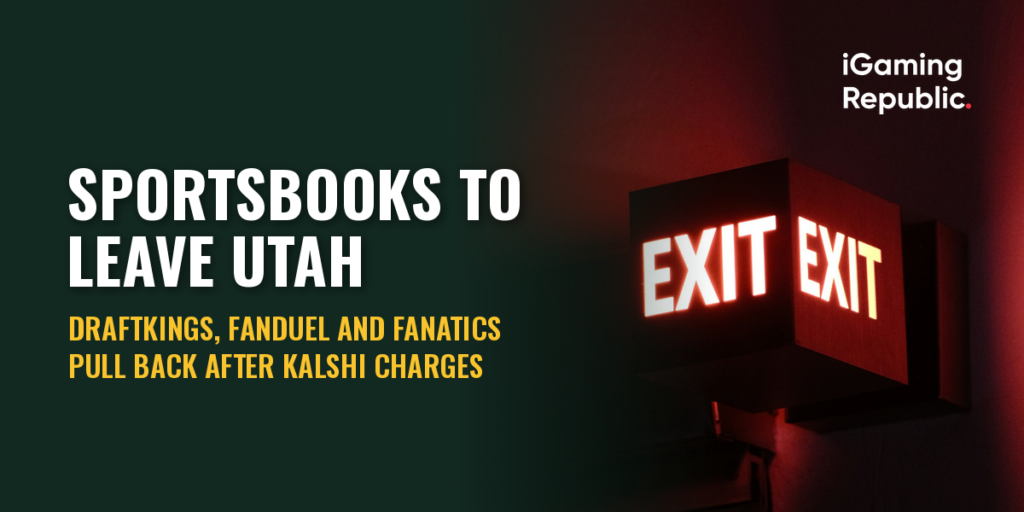
- DraftKings and FanDuel drop sports, political and novelty contracts for Utah customers.
- Fanatics Markets stops accepting trades in the state on November 4.
- The moves follow criminal charges against Kalshi and its two co-founders.
DraftKings, FanDuel and Fanatics are pulling back their prediction market products in Utah, days after state prosecutors brought criminal charges against Kalshi and its co-founders.
Fanatics Markets is going furthest, halting all new trades in the state on November 4.
Fanatics walks away
DraftKings confirmed on October 29 that DraftKings Predictions no longer offers sports, political, novelty and certain other event contracts to customers physically located in Utah. Contracts on stocks, commodities and cryptocurrency remain live. Open positions will settle as normal.
FanDuel followed on October 30, switching off sports, politics and novelty contracts on FanDuel Predicts. A spokesperson told SBC Americas that Utah customers can still trade economic benchmarks and key financial indicators.
Fanatics Markets is making a cleaner exit. It will stop accepting trades across its entire Utah offering from November 4, financial contracts included. Utah was among the first states where the product went live in December 2025.
A Fanatics spokesperson said:
“Due to recent developments, we are stopping trade placement on Fanatics Markets in the state of Utah on November 4.”
Not everyone blinks
PrizePicks has also cut back. A spokesperson confirmed it turned off Team Picks, its sports prediction markets, and Culture Picks, which cover politics, entertainment and pop culture. Only its daily fantasy-style Player Picks remain.
Underdog is holding its position for now. It still listed Utah as an available market for its prediction product on October 30 and did not respond to an SBC Americas inquiry.
Undercover in Utah
The retreat follows the 14 criminal counts filed on October 28 by Utah Attorney General Derek Brown. The defendants are Kalshi, chief executive Tarek Mansour and chief operating officer Luana Lopes Lara.
Prosecutors filed 13 felony counts and one class A misdemeanor. The most serious is a second-degree felony for a pattern of unlawful activity. Twelve third-degree felony counts cover online gambling promotion. Mansour and Lopes Lara received summonses rather than arrest warrants.
The evidence comes from an undercover state investigator, Scott Eggerman, who opened a Kalshi account on September 13. He placed 12 wagers on NFL and MLB games, a Real Salt Lake match and a University of Utah football game. Kalshi took a fee each time.
Derek Brown, Attorney General of Utah, said:
“Gambling is illegal in Utah, whether you place the bet, run the game, or promote it. Calling it a ‘prediction market’ doesn’t change what it is, and being federally registered doesn’t put a company above the law.”
Kalshi rejects the case outright. A Kalshi spokesperson said:
“This is a crazy overreach; Utah is clearly playing politics. We look forward to putting a stop to this in court, just like we did in Arizona.”
Washington weighs in
Utah’s pressure has built in quick succession. On October 20, Brown filed a civil lawsuit against Kalshi and two Susquehanna trading firms. The complaint estimates Kalshi collected $30.6 million to $61.2 million in fees from Utah accounts.
On October 26, the CFTC and the Department of Justice sued Utah in federal court. Their complaint seeks to bar the state from enforcing its gambling laws against contracts on CFTC-registered exchanges. Utah is the tenth state the agency has sued.
The criminal charges followed two days later. The federal courts have so far backed Utah. US District Judge Robert Shelby rejected Kalshi’s preemption argument in August, and the Tenth Circuit denied its request for an emergency injunction.
Arizona offers Kalshi a different precedent. It filed the first criminal case against the exchange in March, and a federal judge blocked that prosecution in April.
Licenses on the line
The split is telling. Kalshi keeps operating and litigating, and its chief executive has dismissed state lawsuits as faux indignation. The sportsbook-backed platforms are stepping aside before any charges reach them.
All three run licensed sportsbooks across much of the country, and each depends on good standing with state regulators. Legal Sports Report noted that the trio broke with BetMGM and Caesars by entering prediction markets. They have still been more cautious than Kalshi about testing state gambling laws.
Utah bans nearly all gambling, so there is no licensed business there to protect.
Waiting on the justices
The real pressure point is whether other attorneys general copy Utah’s criminal route in states where far more volume is at stake. DraftKings is already fighting a Seminole Tribe lawsuit in Florida over its prediction product.
The wider jurisdiction fight is heading to the US Supreme Court. New Jersey has asked the justices to hear Flaherty v. KalshiEX, and Kalshi’s response is due on November 9.
Until the court decides whether to take the case, each new state action tests how much prediction growth the sportsbook brands are prepared to defend.
Do you have a story worth sharing?
Send it over to our editors!