- Senator Jeremy Cooney introduces the FUTURES Act, S10748, on November 23
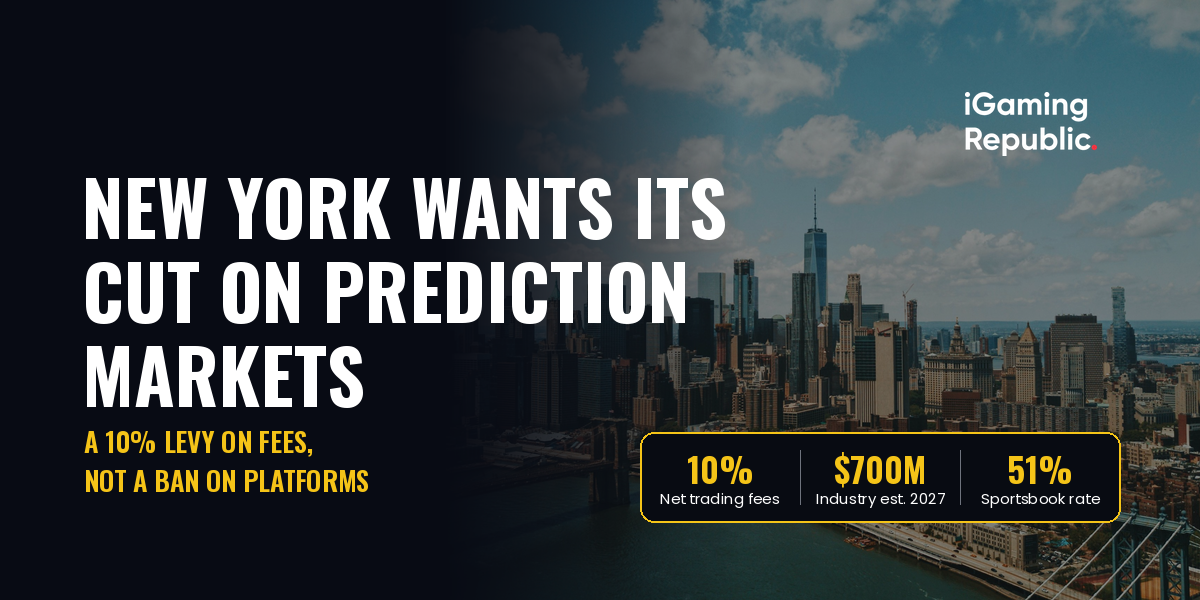
- Operators would pay 10% of New York net trading fee revenue into a pre-K fund
- Cooney's office cites industry estimates of $700m in 2027, including capital gains
In this story6 sections
New York State Senator Jeremy Cooney wants prediction market operators to pay a 10% tax on the trading fees they earn from New Yorkers, with the money going to universal pre-kindergarten.
He introduced the FUTURES Act, S10748, on November 23, the same day a Manhattan judge let Kalshi keep trading in the state.
Add iGaming Republic as a preferred source on GoogleSee more of our stories in Google’s Top Stories.From fees to classrooms
Cooney, a Rochester Democrat, built the bill's name around its acronym: the Fairness, User Transparency, Universal Pre-Kindergarten, and Responsible Exchange Safeguards Act. It has been referred to the Senate Rules Committee.
The tax would apply to each operator's net trading fee revenue apportionable to New York. That means fees from residents who are domiciled in the state and physically present when they trade. Market maker payments, promotional incentives, clearing fees and compliance costs are deducted first.
All of it would go into a new Futures Fund for Early Education for children aged two to four. The bill also directs existing income tax on New Yorkers' prediction market gains, and corporate franchise tax on company gains, to the same fund.
The state commissioner of taxation and finance would hold the fund. Payments to school districts would be decided in consultation with the Division of the Budget and the State Education Department.
Jeremy Cooney, New York State Senator, said:
“Every year, Universal Pre-K is forced to compete against other priorities in difficult state budget fights.”
He has also borrowed the industry's own language:
“I'm placing a bet on the future of UPK in New York.”
Cooney says the revenue could help New York fully fund universal pre-K by the 2028-29 school year. His release cites industry estimates that the 10% tax and capital gains revenue together could raise $700m in 2027. It does not say who made the estimate or how the capital gains share was calculated.
The bill's own timetable is slower. The state would not start certifying gains revenue until December 2029.
The 51% question
Licensed operators will compare this with their own tax bills. New York takes 51% of mobile sportsbook gross gaming revenue, one of the steepest rates in the US.
The two taxes are not charged on the same base. Sportsbooks pay on what they keep from bettors. Prediction market operators would pay on the fees they charge traders, after deductions. Even so, the difference in headline rates is stark.
The bill describes its levy as “solely a revenue measure”. It imposes no license, registration or other regulatory requirement on operators.
Borrowed from Raleigh
The bill does not try to regulate the exchanges themselves. It says nothing in it authorizes state approval or regulation of matters reserved to the CFTC, such as the listing, terms or settlement of event contracts. Where state and federal rules conflict, federal obligations control.
SBC Americas reported that New York copied language from North Carolina, which wrote federal approval of prediction markets into its tax law. North Carolina's 6% tax on net trading fee revenue was signed in July and starts on January 1, 2027.
The two bills also tax the same trades. Both tie apportionment to residents who are domiciled and present in the state at the time of the trade.
Rules without a license
In place of a license, the bill sets a consumer protection code enforced by the attorney general. Operators would need identity and eligibility checks, self-exclusion of at least a year, and tools for deposit limits and cooling-off periods.
They would have to disclose the risk of total loss and their fees before each trade. Ads could not use “free” or “risk-free” language or target minors. Customer funds would be held separately, with withdrawals paid within five business days.
Each operator would file an annual report with the attorney general and pay for an independent compliance audit.
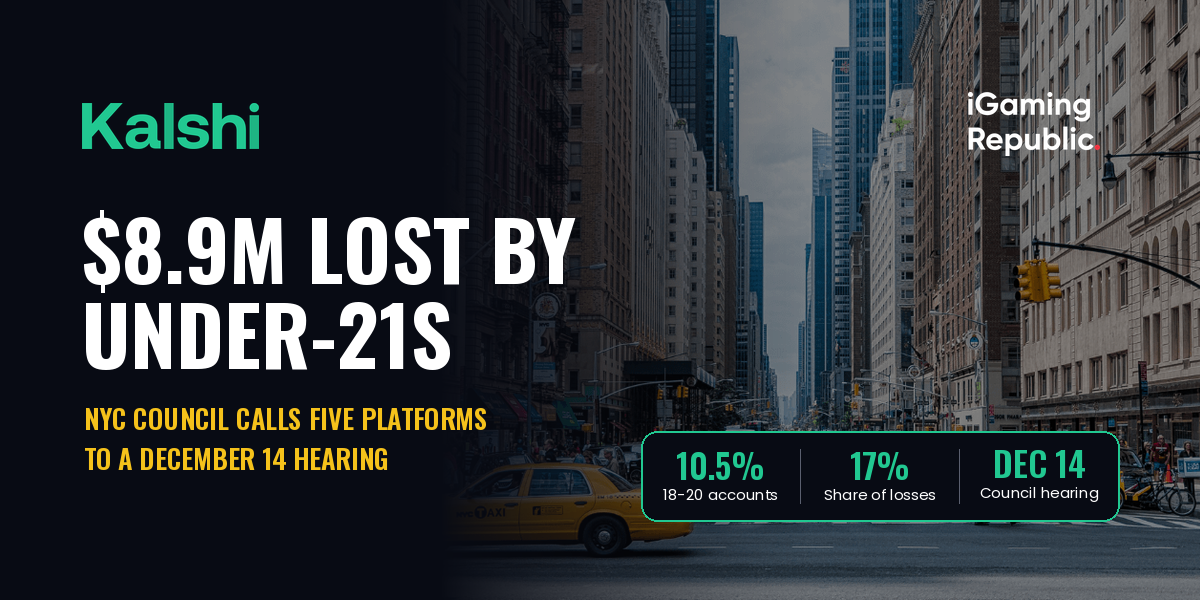
The bill leaves the minimum trading age to the CFTC. That matters in New York, where licensed sportsbooks cannot take bets from anyone under 21 but Kalshi accepts users from 18. City Council data shows 18 to 20-year-olds lost about $8.9m on Kalshi in New York City this year.
Statewide, legislative and local elected officials would be barred from trading, along with state employees in designated policymaking roles. Using a platform to further an election crime would become a felony.
Albany's split screen
The bill arrives as the state's attorney general is suing the industry. Letitia James sued Kalshi on July 31, alleging it runs an unlicensed gambling business. She has also sued Polymarket, and has since gone after Coinbase and Gemini over their prediction market products.
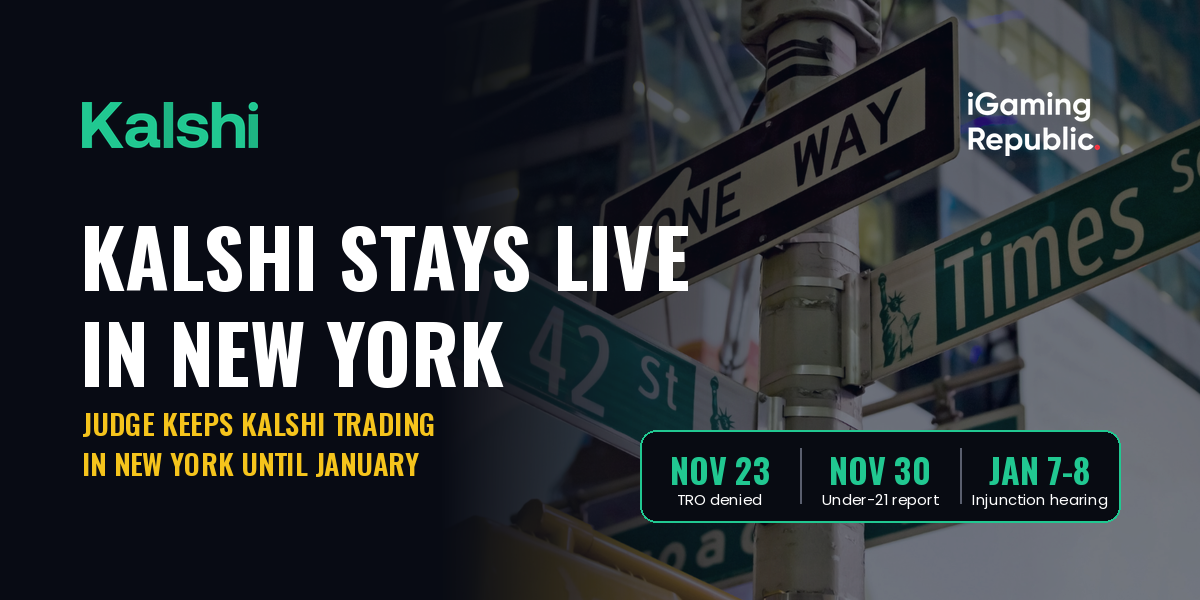
On November 23, Justice Melissa Crane of the New York County Supreme Court turned down the state's request for a temporary restraining order. She did not rule on whether Kalshi breaks state gambling law.
The state argues that Kalshi pays no state gambling tax on products that look like sportsbook bets. Assistant Attorney General Brent Tomer told the court the hit to tax revenue was “pretty obvious” but gave no figures.
Crane pressed both sides on whether Kalshi would pause sports and culture contracts for 18 to 20-year-olds in New York. They must report back by November 30. A preliminary injunction hearing is tentatively set for January 7 or 8.
The CFTC has sued New York and other states to defend its claim to exclusive authority over event contracts.
In the Capitol, Cooney's bill has rivals. Assemblyman Clyde Vanel's ORACLE Act would stop platforms offering sports contracts in New York without a state gambling license. Cooney's own January bill, S8889, would have had the Department of Financial Services license operators as financial products.
The FUTURES Act drops licensing altogether.
Joining the queue
Three states have already passed prediction market taxes. Kentucky went first in April with a 14.25% excise on operators' transaction fees, starting January 1, 2027. A group of operators including Kalshi, Crypto.com and Polymarket has sued to block it.
Illinois followed in June. It brought sports-event contracts under its Sports Wagering Act, with a 1.75% transaction tax that rises to 3.5% after five million wagers in a fiscal year. North Carolina was third.
The Coalition for Prediction Markets, which counts Kalshi, Coinbase, Robinhood and Underdog among its members, has said it supports “a strong federal standard” over state-by-state rules, Bloomberg Law reported.
New York's bill is the first to tie the money to early education. It would take effect 180 days after becoming law, by which time the Kentucky and North Carolina taxes will be in force.
If it passes, Kalshi would be paying tax in its home state at the same time as the state's attorney general tries to make it get a gambling license there.