Sweepstakes casinos in the US.
Every legislative and enforcement move against the US sweepstakes casino model, as our newsroom reported it.
- 1Sweepstakes casinos are still legal in much of the US, but the dual-currency model faces a fast state-by-state crackdown.
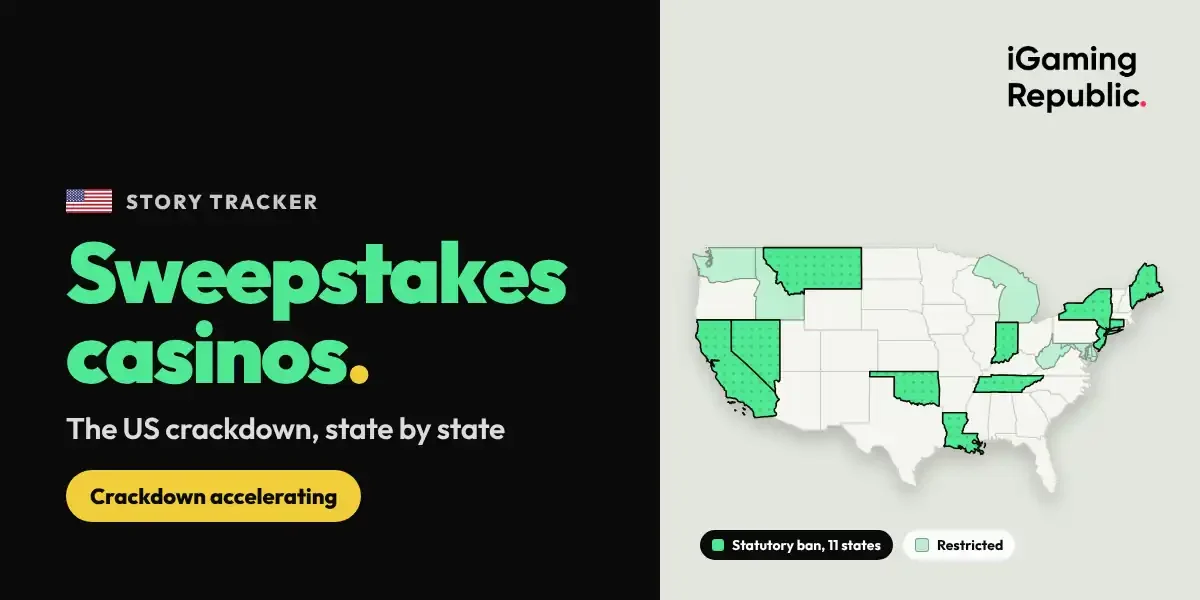
- 2Eleven states now have statutory bans in force. Oklahoma’s took effect on 1 November 2026.
- 3Enforcement is spreading. Utah sued Stake.us on 17 November, three months after Florida sued Stake and VGW.
- 4Pennsylvania’s bill has had no hearing and dies when the session ends on 30 November. Wyoming’s draft is aimed at 2027. There is no federal ban.
Sweepstakes casinos run on two currencies. Players buy Gold Coins to play for fun and receive Sweepstakes Coins, which can sometimes be redeemed for cash prizes. Operators say that makes it a promotional sweepstakes, not gambling. A growing number of state lawmakers and regulators disagree.
The crackdown picked up speed after Montana, Connecticut, New Jersey, New York and California acted in 2025. California’s ban took effect on 1 January 2026, followed by Indiana, Louisiana, Maine and Tennessee during 2026. Oklahoma became the 11th state on 1 November, after lawmakers overrode Governor Kevin Stitt’s veto. Its law makes operating or promoting a sweepstakes casino a felony and reaches suppliers, geolocation providers and affiliates.
There is no federal ban. Qualifying US sweepstakes promotions generally have to offer a free way to enter, but state gambling, consumer protection and gaming laws decide whether a dual-currency casino product can operate. Attorneys general are now going to court. Utah sued Stake.us on 17 November, Florida has sued Stake and VGW, and Michigan sent 33 cease-and-desist letters in October. In Arizona, VGW still operates despite a 2024 felony warning from the regulator. Some operators have switched to Gold Coin-only play in states with bans.
The timeline
No updates match this filter yet.
Tracker opened 1 Jan 2026State status
We only call a state “banned” where a statute names the dual-currency model. Where regulators, older gambling law or operator exits keep the model out, we list the state as restricted.