Indiana bans sweepstakes casinos, sets July deadline
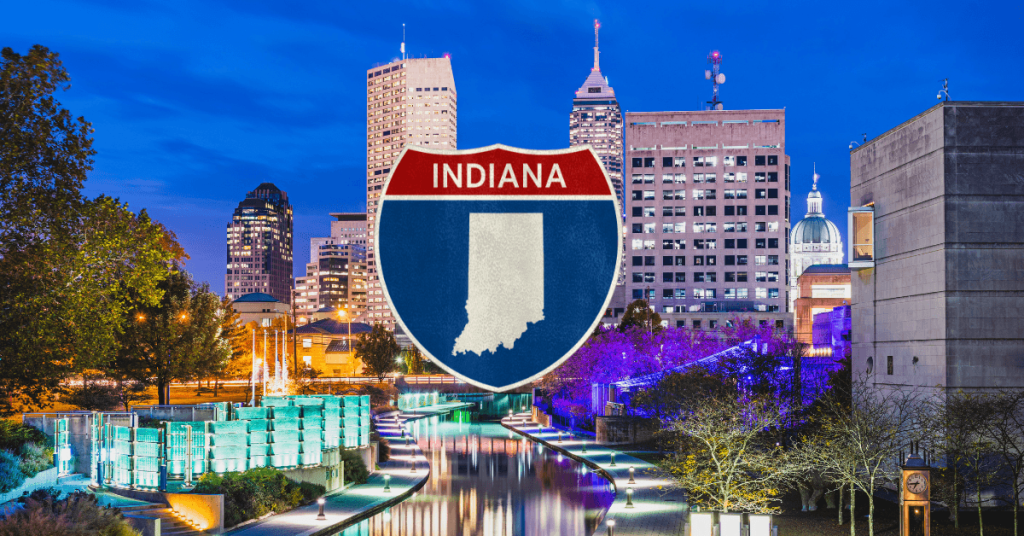
- Gov. Mike Braun signed House Bill 1052 into law on March 12, making Indiana one of the first states in 2026 to formally ban sweepstakes casino platforms.
- The law targets dual-currency online gaming platforms and empowers the Indiana Gaming Commission to levy fines of up to $100,000 per violation.
- The Social Gaming Leadership Alliance opposed the ban, calling instead for a regulated framework that could generate tens of millions annually in state tax revenue.
Indiana has become one of the first states in 2026 to formally prohibit sweepstakes casino platforms after Gov. Mike Braun signed House Bill 1052 into law on March 12. The legislation is set to take effect July 1, 2026, barring any subsequent amendment.
What the law covers
HB 1052 creates a new section of the Indiana Code — IC 4-33-10-7.
The statute defines a “sweepstakes game” as a game, contest, or promotion that utilises a dual- or multi-currency payment system allowing players to exchange virtual currency for cash prizes or cash equivalents, and that simulates casino-style gaming, including slot machines, video poker, table games, bingo, or sports wagering.
The statute explicitly excludes peer-to-peer skill poker and state lottery commission products from its scope. The Indiana Gaming Commission can impose civil penalties of up to $100,000 per violation. The prohibition applies to any operator knowingly offering prohibited sweepstakes games to Indiana residents, including out-of-state companies serving players within the state.
The bill passed the House on February 2 with a vote of 87-11, then cleared the Senate on February 17 by 37-8 before reaching the Governor’s desk.
Industry pushback
The Social Gaming Leadership Alliance (SGLA) campaigned against the outright ban throughout the legislative process, urging lawmakers to regulate and tax the model rather than prohibit it. Trade groups argued regulation could generate more than $20 million per year in state revenue. Lawmakers rejected that proposal and advanced the ban.
Following the signing, SGLA Managing Director Sean Ostrow said in a statement issued after the signing:
“We are disappointed that HB 1052 has become law, but are grateful to the many Indiana lawmakers who engaged thoughtfully on the merits of regulating this long-standing industry. Despite the outcome, the legislative record shows meaningful bipartisan support for a smarter approach that embraces innovation and economic growth.”
Some operators are reported to be continuing to defy the regulatory trend, viewing the ban as unsustainable and banking on the possibility of outlasting lawmakers and defeating regulators.
A growing state-level trend
Braun’s signature makes Indiana one of the first states this year to formally ban sweepstakes casinos, following several jurisdictions that did so in 2025.
California, New York, New Jersey, Connecticut, Montana, and Nevada all approved similar bans last year. More than a dozen states have taken steps in the past year to restrict or block sweepstakes gaming platforms.
Pressure is building across the supply chain too. Google revised its ad policies to remove sweepstakes casinos from social gaming categories. Game providers have also moved: Pragmatic Play, Playtech, and Evolution began removing titles from sweepstakes platforms in certain states.
Legislative momentum is building elsewhere. Tennessee and Oklahoma recently advanced bills through their state senates targeting similar dual-currency platforms.
In Tennessee, Senate Bill 2136 approaches the issue through consumer protection law, defining online sweepstakes games as internet gambling that uses virtual currencies exchangeable for prizes or cash equivalents.
Oklahoma is taking a stricter criminal approach: according to bill text and coverage, Senate Bill 1589 amends the state’s gambling statutes to explicitly include online casino-style games, with violations classified as Class C2 felonies carrying fines between $500 and $2,000 and possible imprisonment.
For operators still active in the sweepstakes space, Indiana’s enactment is a concrete signal that legal gray areas are narrowing fast. With supplier exits accelerating and active legislation advancing across the country, the July 1 effective date will be closely watched as an early test of how enforcement under the new statutory framework holds up in practice.
Do you have a story worth sharing?
Send it over to our editors!