Oklahoma sweepstakes ban takes effect November 1
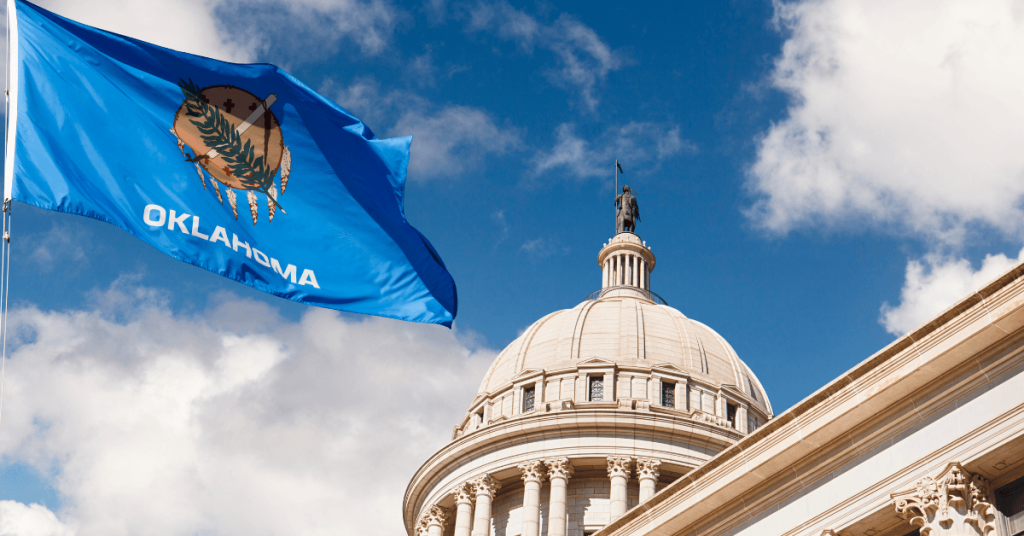
- Oklahoma’s legislature voted on May 14 to override Gov. Kevin Stitt’s veto of Senate Bill 1589, passing the measure 34-10 in the Senate and 68-19 in the House.
- The law bans dual-currency sweepstakes-style casino games, with violations carrying felony penalties and fines of $500 to $2,000.
- Oklahoma becomes the third state in 2026 to enact a sweepstakes casino ban, joining Indiana and Maine.
Oklahoma’s legislature has voted to override Governor Kevin Stitt’s veto of Senate Bill 1589, making the state’s ban on sweepstakes casinos law.
The legislation takes effect November 1, 2026, giving operators roughly five months to exit the market or shut down dual-currency gameplay.
The veto override
The Senate voted first to override, 34-10, followed by the House at 68-19, on May 14. The bill had moved through both chambers with ease. The Senate passed SB 1589 by a 48-0 vote in March, and the House approved it 65-21 before sending it to the governor.
Gov. Kevin Stitt vetoed the bill on May 7, arguing its language was too expansive. In his veto message, Stitt said:
“This bill is so broad that it criminalizes everyday apps people use for fun. It also unnecessarily creates a new felony and extends criminal liability to businesses and service providers.
“That kind of vague and overbroad approach creates uncertainty for businesses operating in good faith and discourages innovation and investment in our state.”
Despite those concerns, lawmakers moved swiftly to override him.
In Oklahoma, a two-thirds majority of each chamber is required to override a veto, set at 32 votes in the Senate and 67 in the House. Both thresholds were cleared.
What the law covers
SB 1589 amends Oklahoma’s gambling statute to explicitly cover online casino-style games, defining them as any internet gambling that allows users to risk something of value via computers, mobile phones, or tablets, including slots, lottery-style products, and bingo.
The legislation’s central provision extends the definition of “representative of value” to include currency used in a dual-currency system that can be exchanged for prizes, cash, or cash equivalents, targeting the sweepstakes casino model directly.
Liability extends to operators and a broad set of supporting businesses, including geolocation providers, gaming suppliers, platform providers, promoters, and media affiliates.
Carve-outs protect tribal gaming conducted under the Indian Gaming Regulatory Act and charitable gaming authorized under the Oklahoma Charity Games Act.
Growing state crackdown
Oklahoma is the latest in a rapidly expanding group of states moving against sweepstakes casinos in 2026.
Indiana and Maine both enacted bans this year, with Maine’s legislation also introducing credit card deposit restrictions alongside its sweepstakes prohibition.
The Minnesota Senate voted in late April to ban sweepstakes alongside prediction market contracts.
Legislation remains active in Tennessee and Louisiana, where two bills are expected to become law, one classifying sweeps gaming as illegal gambling by computer and a second designating it as racketeering.
The push reflects sustained pressure from regulated gaming operators and tribal interests, who argue sweepstakes platforms function as de facto unlicensed online casinos, operating without the consumer protections, tax obligations, or regulatory oversight applied to licensed operators.
For sweepstakes operators, the November 1 effective date provides a narrow window to restructure or wind down activity in the state.
With Louisiana’s racketeering approach potentially raising enforcement stakes nationally, operators face mounting legal and financial exposure across an increasing number of states and a narrowing set of markets where the dual-currency model remains viable.
Do you have a story worth sharing?
Send it over to our editors!