Indiana committee passes bill to ban online sweepstakes casinos
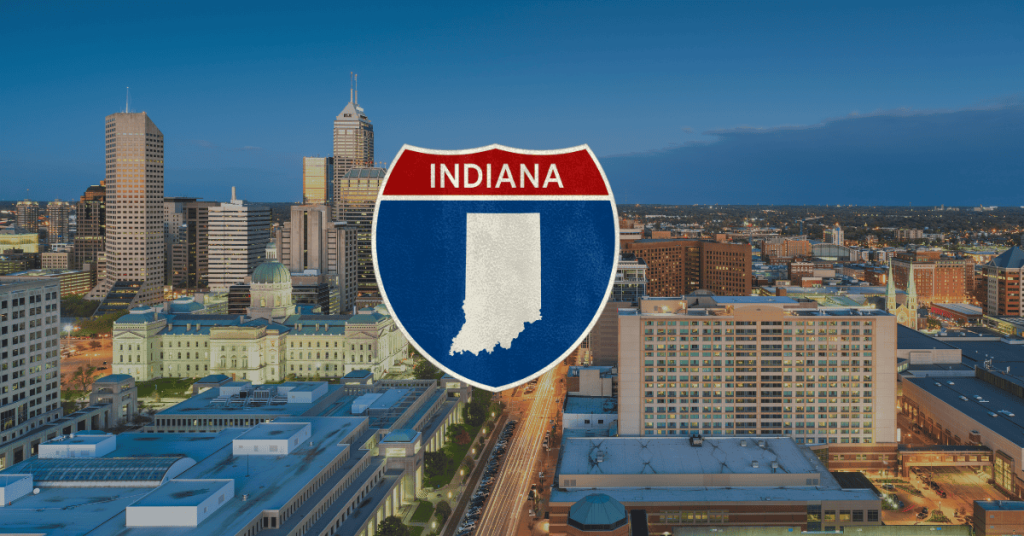
- Indiana’s House Public Policy Committee has unanimously approved House Bill 1052, which would ban online sweepstakes casinos operating in the state.
- The bill passed with a 10-0 vote after amendments changed the definition from “dual-currency” to “multi-currency” systems and removed criminal penalties.
- Representative Peggy Mayfield expressed concerns about insufficient debate and the Attorney General’s Office declining to comment on the matter.
Indiana has moved closer to banning online sweepstakes casinos after the House Public Policy Committee unanimously approved legislation targeting the unregulated sector.
House Bill 1052, sponsored by Public Policy Chairman and state Rep. Ethan Manning, passed out of committee on Thursday with a 10-0 vote following minor amendments. The bill now advances to the full House for consideration during the current legislative session, which adjourns on 27 February.
Amendments refine legislative approach
Manning’s amendments altered the definition of a sweepstakes game from “dual-currency” to “multi-currency” systems, broadening the scope of platforms under the prohibition. The amendments also removed criminal penalties, leaving only civil penalties of up to $100,000 per violation.
HB 1052 classifies slots-style games, video poker, table games, bingo, lottery games and simulated sports wagering as illegal when tied to multi-currency payment systems that allow players to exchange currency for cash prizes or cash equivalents.
Internal divisions surface despite unanimous vote
Rep. Peggy Mayfield expressed frustration over limited debate, noting that “three weeks ago, most of the people in this committee had never heard of sweepstakes gaming”.
Mayfield, who met with stakeholders on both sides, felt the legislation required more comprehensive policy discussion. She voiced particular concern about the Indiana Attorney General’s Office declining to respond to inquiries, describing this as a “refusal to chime in… which gives me pause to vote” before adding that she “very reluctantly votes yes on this bill”.
Natalie Huffman, general counsel at the Indiana Gaming Commission, stated that sweepstakes operators are not technically breaking current Indiana law, highlighting the regulatory gap the legislation addresses.
“It’s nuanced, but we don’t think so, which is why we need this legislation,” said Huffman.
“Other states think their gambling laws are written in a way that is able to be used against these online casinos. But I don’t think that the way that our gambling laws are written, we can move forward with sending a cease-and-desist letter in good faith, based on current law…The multi-currency model is what allows it to operate outside of our current regulatory scheme.”
Nate Friend, IGC Legislative Liaison, would have sent cease-and-desist letters to operators if it had the authority. He noted that nine states, including Maine, Arkansas, Maryland, Mississippi, Florida, Illinois, Ohio and Massachusetts are considering similar prohibition legislation.
Industry pushes for regulation over prohibition
The Social Gaming Leadership Alliance has lobbied Indiana lawmakers to consider regulation rather than an outright ban. Sean Ostrow, the organisation’s managing director, estimated that regulated sweepstakes could generate $20 million in total annual revenue for the state.
“Social Plus games have been operating lawfully in Indiana since 2012 and are enjoyed by hundreds of thousands of Hoosiers,” Ostrow said following Thursday’s vote.
The alliance estimates approximately 200,000 players in Indiana currently use sweepstakes platforms. Industry representatives from ARB Interactive and VGW attended committee hearings to argue for regulation. Ostrow admitted the laws sweepstakes casinos operate under are “antiquated” but suggested Indiana could lead in regulating the sector.
Competing gambling policy priorities
The committee’s sweepstakes ban comes alongside separate legislation to expand legal gambling. The House Public Policy Committee voted 9-3 to advance House Bill 1078, which would legalise online lottery ticket sales whilst prohibiting lottery games that resemble casino products.
Manning previously championed regulated online casino gaming in Indiana, though earlier attempts stalled. His 2025 bill never received a vote in the Ways and Means Committee, despite expressions of openness from legislative leaders.
Some committee members questioned the selective approach to online gambling expansion. Rep. Cory Criswell stated:
“I strongly feel that i-gaming and i-lottery should be hand in hand, and we’re picking winners and losers. I don’t think that’s the way it should work.”
The Legislative Services Agency projects online lottery sales could boost the Hoosier Lottery’s revenues by between $314 million and $629 million in the third year, potentially increasing annual profits by $31 million to $94 million.
National enforcement trend accelerates
Indiana joins a nationwide push to restrict sweepstakes casino operations. In 2025, New York, New Jersey, California, Connecticut, Montana and Nevada all passed sweepstakes-related legislation.
New York Governor Kathy Hochul signed comprehensive sweepstakes legislation into law this month, with fines ranging from $10,000 to $100,000 and potential loss of gaming licences. Most operators withdrew after Attorney General Letitia James issued cease-and-desist notices to 26 providers.
Attorneys general in Louisiana and West Virginia banned online sweepstakes casinos through enforcement actions last year. Louisiana AG Liz Murrill issued a written opinion whilst West Virginia counterpart JB McCuskey served subpoenas on operators.
Eight states have now banned sweepstakes casino operations, with several others forcing platforms to exit through regulatory pressure.
Manning’s focus on closing regulatory loopholes before reconsidering broader online gambling reforms suggests Indiana may pursue a measured approach to digital gaming expansion. The bill’s passage through committee with reluctant support from some members indicates potential challenges when it reaches the full House floor.
Do you have a story worth sharing?
Send it over to our editors!