Pennsylvania lawmakers target sweepstakes with $500k fines
- HB 2801 sets fines of $50,000 to $500,000 per sweepstakes violation.
- The PGCB and attorney general would gain subpoena and cease-and-desist powers.
- The bill has had no hearing, and the session ends on November 30.
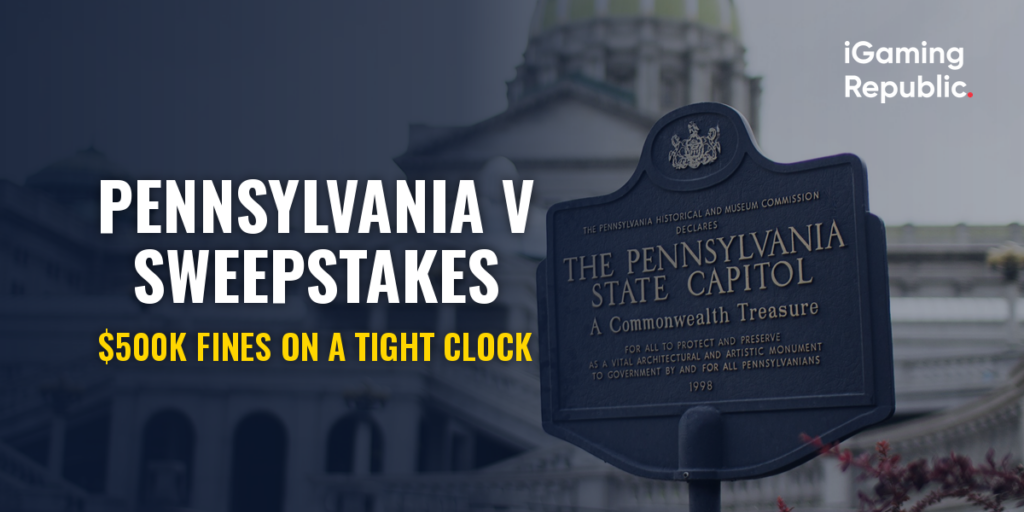
A Pennsylvania House bill would outlaw dual-currency sweepstakes casinos, fining operators and anyone who helps them up to $500,000 per violation.
HB 2801, led by Rep. Russ Diamond, has sat in the House Gaming Oversight Committee since September 24 with no hearing or vote scheduled.
Diamond, the committee’s Republican minority chair, is the lead sponsor. Republican Reps. Jacob Banta, Brad Roae and Dan Moul and Democratic Rep. Jeanne McNeill are co-sponsors, according to the bill’s General Assembly page.
Who gets caught
The ban targets games that simulate casino-style play and run on two currencies, one of which players can exchange for cash, prizes or cash equivalents. The bill’s definition covers slots, table games, poker, keno, bingo and sports wagering.
Coin-only social casinos are not covered. Any game that awards no cash prizes or cash equivalents is excluded.
Operators are not the only target. The bill also makes it unlawful to support or assist in running or promoting the games. California and New York list payment processors, geolocation providers and affiliates by name in their bans, but HB 2801 does not. Regulators and the courts would decide how far its wording reaches.
Fines start at $50,000 and rise to $500,000 per violation. Violators would also lose any state gaming license and be barred from holding one.
Teeth for the regulator
HB 2801 gives the Pennsylvania Gaming Control Board (PGCB) powers it has been asking for. The board could investigate, hold hearings, issue subpoenas and order platforms to stop. The attorney general could do the same, alone or alongside the board.
The regulator has made this case before. At an April 2025 hearing before the same committee, Chief Enforcement Counsel Cyrus Pitre said the board had sent about 18 cease-and-desist letters. Every one was obeyed, but he warned that new sites kept replacing those that shut down.
Chief Counsel Steve Cook told the committee the board is not a law enforcement agency and cannot bring criminal cases. Both officials asked lawmakers to rewrite the law.
A much bigger rewrite
Sweepstakes are a small part of the bill. Diamond’s co-sponsorship memo sets a single 49.9% tax on all online casino games. Online slots currently pay 54%.
The package also covers skill games. The Pennsylvania Supreme Court ruled in June that the machines are slot machines, and its stay expired on October 13. State Police began seizing unlicensed machines the next day.
HB 2801 would allow up to five terminals at clubs, liquor-licensed bars and restaurants, and qualified truck stops, taxed at 20%. A companion bill, HB 2802, would pay gaming tax money to homeowners as an annual dividend.
Russ Diamond, Republican minority chair of the House Gaming Oversight Committee, said in a September 1 statement:
“Pennsylvania’s gaming law was originally written for a much different era. It’s time to modernize our approach, bring skill games into a regulated system ahead of the state Supreme Court’s October 13th deadline, and make sure Pennsylvania homeowners see a greater benefit from the revenue generated by gaming.”
Racing the calendar
The court deadline has now passed, and the legislative one is close behind. The 2025-26 session ends on November 30, with only a handful of session days left on the House calendar. Bills do not carry over into the next session.
Politics add another hurdle. Democrats control the House 103-100. Majority chair Pat Harkins has said a skill game tax should match the 55% casinos pay, the Erie Times-News reported, which is far above Diamond’s 20%.
Pennsylvania’s licensed online casinos have plenty at stake. iGaming revenue reached $2.78 billion in 2025, up 27% on 2024, according to the PGCB’s annual figures.
A template for 2027
If HB 2801 stalls, the sweepstakes language could return in 2027. Virginia has already carried its ban into next year, and Oklahoma’s ban takes effect on November 1. New York also secured an $8 million settlement from VGW in September.
Do you have a story worth sharing?
Send it over to our editors!