Offshore pressure pushes Nova Scotia toward iGaming rethink
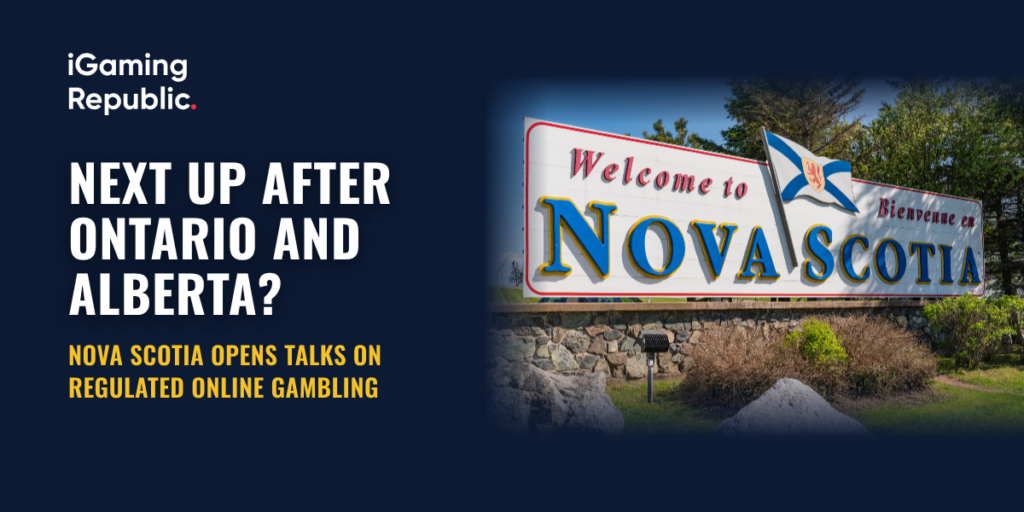
- Finance Minister John Lohr says conversations on expanding online gambling are underway.
- Opposition leaders demand a public health risk assessment before any change.
- Ontario’s September iGaming NAGGR rose 26.2% to C$416.3m.
Nova Scotia is studying an expansion of its regulated online gambling market, with Finance Minister John Lohr saying conversations are underway as the province watches the open markets in Ontario and Alberta.
No decision has been made, and opposition leaders want a public health review first.
Lessons from next door
Lohr told reporters last week that gaming is in “a time of incredible transformation,” Global News reported on October 30. He named Ontario and Alberta, the two Canadian provinces that have opened online play to private operators, as the markets under review.
John Lohr, Finance Minister, Nova Scotia, said:
“We’re watching what’s happening in Ontario and Alberta, in particular, very carefully. And obviously, those are conversations that are underway right now.”
Ontario launched its regulated iGaming market in April 2022. Alberta became the second province to follow on July 13, 2026, and booked C$122.1m in non-adjusted gross gaming revenue (NAGGR) between launch and September 30, according to its first market report.
That report counted 388,585 active player accounts in September, a figure that includes players holding accounts with more than one operator. It also excludes the government-run PlayAlberta.
Alberta also moved quickly on unlicensed operators. Its transition window for brands active without provincial approval closed on October 13, with 48 registered sites on the roster. By October 15, at least 51 licensed sites run by 30 companies were live.
Lohr stopped short of any commitment. He said Nova Scotia has not decided on an expansion, CBC News reported, and that the province would announce any decision once it is made.
No handle on it
The Atlantic Lottery Corporation runs the only government-authorized online gambling platform in Nova Scotia. It added online casino-style games in 2022, according to CBC.
One legal option has not kept players at home. Lohr said Nova Scotians already bet on offshore sites and on Ontario-regulated platforms, diverting potential tax revenue from the province, CBC reported.
Lohr added:
“I think anyone can access thousands of gaming sites on their phone through the internet and this is a very significant issue.”
For the minister, control matters as much as revenue. He continued:
“We don’t feel like we have any handle on it at all as a province. And I don’t know if anybody does. It’s just available on the internet and there are significant harms for people who become addicted to gambling through it.”
The regulated channel has had its own oversight problems. FINTRAC announced in September a C$231,826 penalty on Nova Scotia Gaming Corporation, imposed on July 23 for anti-money laundering failures that included unfiled suspicious transaction reports.
A Nova Scotia Finance and Treasury Board spokesperson told Canadian Gaming Business the case related to online casino operations run through Atlantic Lottery. The lottery received its own C$212,025 penalty, imposed on May 29 and announced in July. Neither body contested its fine.
Tread very carefully
The opposition is in no hurry. Claudia Chender, leader of the Nova Scotia NDP, said she does not want the government taking a bigger role in online gambling.
Claudia Chender, Leader, Nova Scotia NDP, said:
“I think that we should tread very, very carefully before we get more into that business as a government.”
Iain Rankin, interim leader of the Nova Scotia Liberals, said a public health risk assessment is “the first thing that should happen” before any expansion of gambling services.
ER visits double
Ontario has already produced the evidence both leaders are citing. A study by ICES, published on September 16 in the American Journal of Preventive Medicine, tracked 952 emergency department visits for gambling disorders by 757 people between 2012 and 2025.
By the end of the study period, visits among males aged 10 to 29 were 154% higher than expected. Among men aged 30 to 44 the figure was 116%, and researchers found no change among females.
More than 70% of those visits involved another mental health condition or heavy substance use. The researchers described the rise as accompanying the expansion, not as proof of a direct cause.
Daniel Myran, the study’s senior author and Gordon F. Cheesbrough Research Chair at North York General, said other regions are “considering or facing pressure to follow suit.” His warning was aimed squarely at provinces in Nova Scotia’s position.
Daniel Myran, Gordon F. Cheesbrough Research Chair, North York General, said:
“Jurisdictions considering expanding or offering online gambling through private operators should carefully weigh these potential risks and, if proceeding, consider additional safeguards, including restrictions on marketing and higher-risk forms of gambling, alongside better recognition and treatment of gambling-related harms.”
Dr. Peter Selby, senior scientist at the Centre for Addiction and Mental Health (CAMH), pointed to youth survey data in Ontario.
Peter Selby, Senior Scientist, CAMH, said:
“When we take a look in Ontario at the youth surveys [of] high school kids, [online gambling] went from about one per cent in 2019 to about nine per cent now. So I think the problem is the way age verification is done, the way sports betting is marketed by sports figures, celebrities, influencers, etc.”
Advertising sits at the center of that debate. A CBC News investigation counted roughly 3,000 gambling messages across seven televised 2026 playoff hockey games featuring Canadian teams. Some 95% made no mention of harm reduction or age restrictions.
Casino carries Ontario
The commercial case looks just as stark. iGaming Ontario reported C$9.71bn in cash wagers for September 2026, up 13.6% year over year, according to its monthly data. The figures exclude OLG’s own online offering.
NAGGR climbed 26.2% to C$416.3m. Online casino accounted for C$340.8m of that total, from C$8.50bn in casino wagers, roughly 88% of all handle.
Sportsbook handle barely moved, rising 1% year over year to C$1.07bn, according to Gaming Intelligence. Sports betting NAGGR still jumped 47.3% to C$69.1m.
Active player accounts reached a record 1.41 million, up 20.1% year over year and around 17% on August. The Canadian Gaming Association has pointed to Ontario’s channelization gains as proof that regulated brands can pull players away from offshore sites.
Atlantic strings attached
Nova Scotia cannot move alone. CBC reported that any expansion would affect Atlantic Lottery as well as provincial finances. The lottery is owned by the four Atlantic provinces through their provincial gaming corporations, including Nova Scotia Gaming.
The province would need to decide what role, if any, its shared lottery plays in an open market. Operators already licensed elsewhere in Canada would start ahead.
Betty Canada’s Alberta debut added nearly US$10m in its first partial quarter, as the operator posted record net revenue of US$111m.
Alberta also offers a funding template. Under its model, 2% of gross gaming revenue goes to First Nations and 1% to social responsibility programs, including mental health, addiction and research work.
If the government commissions the review Rankin wants, age verification, advertising rules and harm funding could shape any future framework.
Do you have a story worth sharing?
Send it over to our editors!