Maine moves to ban online sweepstakes casinos under new dual-currency law

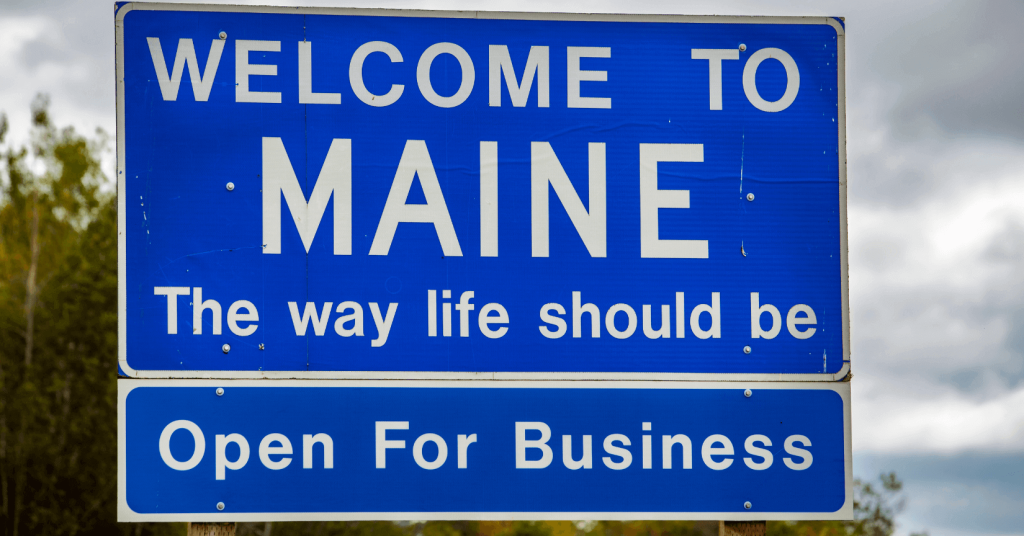
- On 3 December, LD 2007 was introduced by Senator Craig Hickman and refers to the use of dual-currency systems in online sweepstakes games.
- The bill would classify such online games as unlawful gambling, with civil fines from US$ 10,000 to US$ 100,000 per offence, and licence revocations for operators or promoters.
- The move follows a recent warning in June 2025 by the Maine Gambling Control Unit, which stated no online casino, iGaming or sweepstakes platform is licensed in the state.
New legislation outlines sweepstakes casino ban
LD 2007 (Legislative Document 2007), titled An Act Regarding the Prohibition of Online Sweepstakes Games, was submitted to the Senate and referred to the Committee on Veterans and Legal Affairs on December 3.
The bill defines an “online sweepstakes game” as any internet-based game or promotion accessible via mobile phone, computer or similar device that uses a “dual-currency system of payment” and simulates casino-style gaming, lottery, bingo or sports wagering.
The definition of “dual-currency system” covers both:
- direct consideration — a coin or token that may be purchased or awarded through a bonus or promotion; and
- indirect consideration — a coin or token provided for free that may nevertheless be exchanged for cash or cash equivalents.
Under the bill, operating or promoting such games would be a civil violation punishable by fines between US$ 10,000 and US$ 100,000 per offence. All collected fines would go to the Gambling Addiction Prevention and Treatment Fund.
If a licensed gambling operator is found in violation, their licence would be revoked. Those found in breach would also be barred from obtaining a regulated gambling licence in the future.
The bill also amends Maine’s criminal code (Title 17-A) to classify the operation or promotion of online sweepstakes games under unlawful gambling.
Preceding regulator warnings and sweeping scope
The MGCU issued a warning earlier this year, in June, stating that while advance-deposit wagering, fantasy contests and sports betting are legal, “online casino games like slots, blackjack, and roulette for real money remain strictly prohibited in the State.”
The statement emphasised that unlicensed sweepstakes or “social casino” platforms using dual-currency systems, virtual coins, gift cards or other substitutes are considered “illegal interactive gaming.”
The MGCU warned consumers that it cannot resolve disputes over winnings or account issues resulting from participation in such unlicensed platforms.
LD 2007 appears designed to enshrine the regulator’s position into statutory law, eliminating ambiguity for operators and consumers.
Where this fits in Maine’s gambling landscape
Maine currently permits online sports betting and fantasy contests, but does not license online casinos.
A separate bill, Legislative Document 1164, would allow the state’s four federally recognised tribes to offer regulated online casino games. That bill passed both legislative chambers earlier in 2025, but the governor has taken no action, postponing progress until at least 2026.
While tribal-run casino gaming remains under consideration, LD 2007 seeks to close off the unregulated workaround represented by sweepstakes casinos.
Reaction from regulators and lawmakers
Lawmakers backing LD 2007 argue it is needed to close regulatory loopholes used by sweepstakes casinos to evade licensing requirements.
The MGCU’s earlier warning, issued by Executive Director Milton Champion, asserted that no online casino, iGaming or sweepstakes site is licensed in Maine, urging users to avoid unregulated platforms.
“We strongly encourage everyone to avoid these websites; however, patrons who choose to engage with these unlicensed platforms do so at their own risk,” the press release reads.
Since the warning, several media and trade outlets have observed that platforms using dual-currency models, virtual-coin schemes or social casino mechanics may be directly targeted by the forthcoming law.
Implications for operators, affiliates and players
If adopted, LD 2007 could force unlicensed sweepstakes casino operators to exit Maine or face heavy fines and license revocations.
Affiliates, marketing partners or payment processors connected to sweepstakes models may also become ineligible for regulated licences, deterring involvement in the vertical.
For players, the bill would eliminate a contentious grey market for casino-style games, giving regulators stronger ground to take action against unlicensed platforms and possibly reducing legal uncertainty around payouts and consumer protection.
Decision in 2026
LD 2007 now awaits review by the Legislature’s Committee on Veterans and Legal Affairs. If approved, it could be debated and voted on during the 2026 session.
At the same time, lawmakers may revisit LD 1164 and consider legalising tribal-run, regulated online casinos. The coexistence of both reforms could reshape Maine’s iGaming environment, with licensed casino options on one hand and a clampdown on unregulated sweepstakes platforms on the other.
Sweepstakes status across US states
Sweepstakes casinos operate in a legal grey area across the United States. No state explicitly licences these platforms, but many continue to function by offering no-purchase-necessary promotions and virtual coins.
Some jurisdictions have introduced bans on sweeps. California’s Assembly Bill 831 bans dual-currency sweepstakes models effective 1 January 2026 following unanimous legislative approval. Governor Gavin Newsom has signed the bill into law in October 2025.
In New York, Attorney General Letitia James issued cease-and-desist orders to 26 platforms in June 2025, stopping the sale of sweepstakes coins due to risks associated with unregulated play. Governor Kathy Hochul has signed Senate Bill 5935A in December, immediately banning online sweepstakes casinos and sportsbooks that use dual-currency models across New York.
Other states with targeted restrictions include Washington, Michigan, Montana, Connecticut, Nevada and New Jersey. Attempts in places like Louisiana were unsuccessful, with vetoed bills leaving the status of sweepstakes operations unresolved.
This patchwork of enforcement and regulation keeps operators in a precarious position. The Maine LD 2007 proposal is part of a broader trend in which states are increasingly clarifying their stance on these platforms and reducing legal uncertainty for consumers and regulators.
About the author
Bianca Máthe
Bianca Máthe is Publisher of iGaming Republic. She spent close to a decade on the supplier side of iGaming, working across the sector's core verticals: platform and player-engagement technology and crypto payments. That mix gave her a working knowledge of how operators, suppliers and payment providers actually run. In 2025 she started a media project, bringing that operational grounding to her editorial work. Her output includes interviews with high-profile iGaming executives, original reports, and in-depth features covering licensing, M&A, and the operators and suppliers shaping the sector. Based in Malta, she spends much of her time getting closer to emerging sectors like prediction markets, tracking how they're developing before the rest of the industry catches up.
Do you have a story worth sharing?
Send it over to our editors!