AGA takes prediction market fight to Capitol Hill
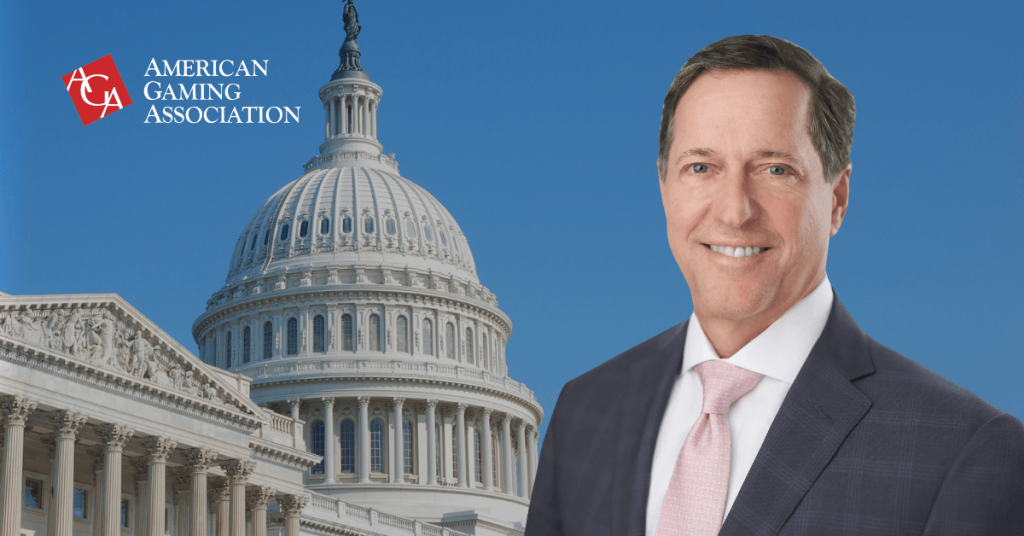
- AGA President & CEO Bill Miller testified before the Senate Commerce Committee on May 20, urging Congress to bring prediction markets under state gaming law.
- Kalshi sports event contracts now account for approximately 86% of the platform’s business, generating more than $47bn in trading volume this year alone, per the AGA.
- Prediction markets could deprive states of an estimated $1bn in sports betting tax revenue annually, the AGA warned.
The American Gaming Association (AGA) has called on Congress to classify prediction market sports event contracts as gambling.
Bill Miller, President and CEO of the AGA, appeared before the Senate Commerce Subcommittee on Consumer Protection, Technology, and Data Privacy yesterday on May 20 as part of a hearing titled “No Sure Bets: Protecting Sports Integrity in America.”
He warned that platforms operating under Commodity Futures Trading Commission (CFTC) oversight are bypassing consumer protections and eroding state and tribal gaming frameworks.
Kalshi’s rapid pivot
The AGA’s testimony drew attention to how quickly prediction market platforms have shifted away from their stated purpose. In 2024, sports-related contracts on Kalshi represented just $227,000 in volume, per the written testimony.
Today, sports betting accounts for approximately 86% of Kalshi’s business, generating more than $47bn in trading volume so far in 2026, the AGA said.
Crypto, financial, agriculture, and economic contracts — the types the CFTC was created to oversee — have collapsed from more than 93% of Kalshi’s volume in 2023 to less than 1% today, according to the testimony.
Miller argued the shift was not incidental, pointing to Kalshi’s national marketing campaign promoting “sports betting legal in all 50 states.”
Nearly half of all digital sports betting ad impressions now come from prediction markets, the AGA said. None carry the responsible gaming messaging required of licensed sportsbook operators.
Integrity and regulatory gaps
On consumer protection, 81% of Americans say prediction market sports products are gambling, per AGA polling. Yet 78% of sports event contract bettors incorrectly believe state gaming regulators can resolve their disputes.
Most licensed sportsbooks require customers to be at least 21 years old. The AGA’s testimony states that prediction market platforms permit 18-year-olds to participate nationwide, and 77% of Americans surveyed expressed concern that the lower threshold could increase gambling harm among young adults.
On sports integrity, Miller cited recent match-fixing investigations in Major League Baseball and the UFC, noting suspicious activity was identified because regulated operators were monitoring markets and reporting to leagues and law enforcement.
He warned that prediction markets, operating outside those frameworks, present a growing match-fixing vulnerability.
Miller also referenced a US soldier charged with using classified information to profit from prediction market positions, and suspiciously timed trades linked to the Iran conflict.
CFTC Chairman Michael Selig was cited in the testimony as having stated earlier this year:
“The CFTC is not a merit-based regulator – we do not decide what people should be able to trade. Nor are we going to regulate through enforcement.”
Senators from both parties sharply questioned the rapid expansion of prediction markets during the hearing. Lawmakers clashed over whether platforms operating under CFTC oversight are effectively circumventing state gaming laws and tribal regulatory frameworks.
Minnesota this week became the first state to ban prediction markets from operating within its borders. More than a dozen other states have introduced legislation targeting the sector.
Legislative asks
The AGA outlined four specific requests for Congress:
- reaffirming that sports wagering is subject to state and tribal gaming law;
- supporting the bipartisan Prediction Markets Are Gambling Act, introduced by Senators Schiff and Curtis;
- prioritising the Department of Justice enforcement against illegal and offshore operators;
- and strengthening federal match-fixing penalties.
Miller also called for a review of the federal excise tax on legal sports wagering, which he argued continues to disadvantage licensed operators against untaxed competition.
With the CFTC already litigating against multiple states and the Prediction Markets Are Gambling Act advancing on Capitol Hill, congressional action on federal classification could determine whether the $329bn legal gaming industry retains its regulatory architecture.
Do you have a story worth sharing?
Send it over to our editors!