AGA CEO calls CFTC boss “a joke” over prediction markets

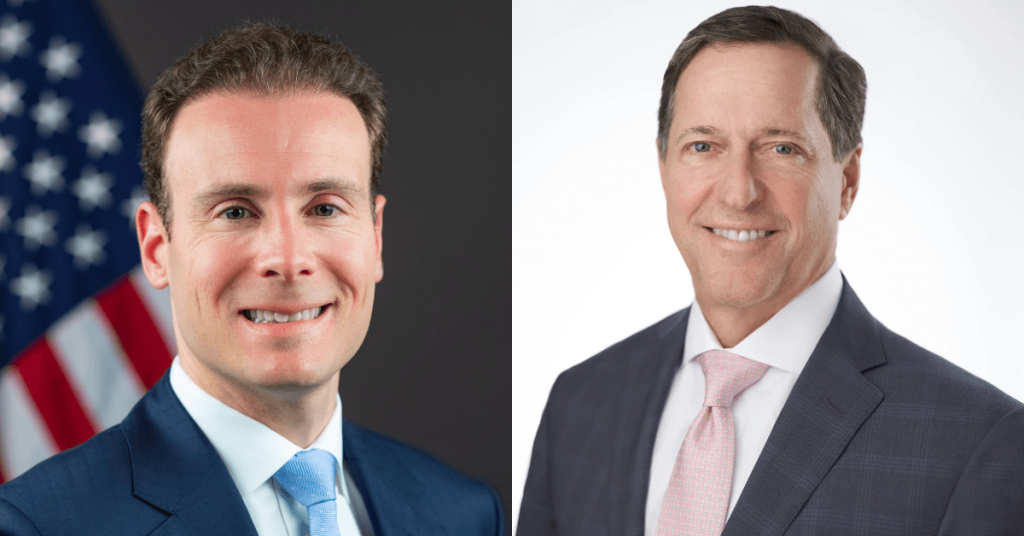
- American Gaming Association CEO Bill Miller told a Las Vegas audience on May 6 that the casino industry and states will prevail in their legal conflict with the CFTC over prediction markets.
- Miller accused CFTC chair Michael Selig of reversing course after taking office, alleging he became an active advocate for prediction market operators despite earlier signals of neutrality.
- Nevada Gaming Control Board Chair Mike Dreitzer warned that prediction markets could evolve into unregulated, distributed gaming networks sitting outside the established state-licensed framework.
American Gaming Association CEO Bill Miller has delivered his most direct public attack yet on the leadership of the Commodity Futures Trading Commission, calling its chair “a joke” as tensions over prediction markets in the US reach a new peak.
Speaking at the Economic Club of Las Vegas at Park MGM on May 6, Miller told an audience of business leaders and gaming executives that the casino industry and states will ultimately prevail in their escalating conflict with federal regulators.
Bill Miller, President and CEO of the American Gaming Association, said:
“The head of the CFTC, quite frankly, is a joke. He believes somehow that what he’s doing is Uber and the rest of the country is the taxicab industry. That’s not the case. He’s not facilitating something that’s a public good. A federal regulator charged with regulating derivatives around agricultural contracts should not be engaged in it.”
Miller accused CFTC chair Michael Selig, confirmed in December 2025, of reversing course after taking office. Miller alleged that Selig had signalled during his confirmation process that he would allow Congress or the courts to resolve the jurisdictional question over prediction markets, but subsequently became an active advocate for the industry.
The CFTC has taken Arizona, Connecticut, and Illinois to court over the matter, and has since extended its legal campaign to New York and Massachusetts.
Selig’s court challenge
Selig has made little effort to conceal his position. In a video statement posted to X in February, the CFTC chair declared that the commission would defend its exclusive jurisdiction over prediction markets, directing a pointed message at any state seeking to challenge that authority.
“To those who seek to challenge our authority in this space, let me be clear — we will see you in court,” Selig said.
The CFTC subsequently filed an amicus brief in the Massachusetts Supreme Judicial Court in late April, reiterating the same position.
In a Wall Street Journal op-ed published around the same time, Selig argued that event contracts serve legitimate economic functions and that state enforcement actions encroach on federal jurisdiction.
Data gaps, early signals
Miller acknowledged that the AGA does not yet have firm data quantifying the impact of prediction markets on the broader gaming sector. He pointed to Tennessee as an early warning sign, where mobile wagering volumes have weakened in a market he suggested may be facing competition from prediction market platforms.
Nevada Gaming Control Board Chair Mike Dreitzer, who appeared alongside Miller at the event, said he has observed softness in sports betting nationally. He characterised the trend as a sign that prediction market platforms may be drawing wagers away from licensed sportsbooks by offering equivalent products under a different regulatory label.
Warning on unregulated spread
Dreitzer reserved his sharpest remarks for the potential long-term consequences of unchecked prediction market expansion. He warned that without proper oversight, prediction market operators could build what amount to unregulated online casino networks operating entirely outside state-licensed frameworks.
Mike Dreitzer, Chair of the Nevada Gaming Control Board, said:
“Make no mistake, that’s what it’s all about. They will take these prediction algorithms, put it in a cabinet, and have distributed gaming casinos that are unregulated and untaxed sitting right next to Bellagio on Las Vegas Boulevard. They will be sitting in Dallas, Los Angeles, and Hawaii. That’s where this goes.”
He stressed that state regulation exists for concrete reasons, including preventing underage access and ensuring game fairness. Dreitzer said CFTC oversight has been too lax, and said concerns are emerging that prediction market products may not be operating fairly.
Legal battle ahead
The AGA, tribal groups, and state attorneys general are engaged in litigation challenging CFTC oversight and federal jurisdiction over prediction market operators. Miller expressed confidence the industry will succeed.
Both he and Dreitzer acknowledged the dispute may ultimately require Supreme Court resolution as federal cases begin to diverge.
The remarks come as the US Senate voted unanimously to bar members and staff from participating in prediction markets, a signal that legislative pressure on the sector is intensifying.
The trajectory of this dispute carries significant potential consequences. Should a court or legislative ruling place prediction market products under state gambling frameworks, it would likely trigger licensing requirements, tax obligations, and compliance costs currently avoided by CFTC-regulated platforms.
The AGA has estimated that states have already lost more than $500m in tax revenue since sports event contracts were introduced.
Keep Reading
About the author
Bianca Máthe
Bianca Máthe is Publisher of iGaming Republic. She spent close to a decade on the supplier side of iGaming, working across the sector's core verticals: platform and player-engagement technology and crypto payments. That mix gave her a working knowledge of how operators, suppliers and payment providers actually run. In 2025 she started a media project, bringing that operational grounding to her editorial work. Her output includes interviews with high-profile iGaming executives, original reports, and in-depth features covering licensing, M&A, and the operators and suppliers shaping the sector. Based in Malta, she spends much of her time getting closer to emerging sectors like prediction markets, tracking how they're developing before the rest of the industry catches up.
Do you have a story worth sharing?
Send it over to our editors!