US senators barred from prediction market bets
- The US Senate on April 30 passed a unanimous resolution amending its Standing Rules to prohibit senators, staff and officers from trading on prediction markets, with immediate effect.
- The measure is an internal rule change and did not require House passage or presidential signature; violations are policed by the Senate itself.
- Both Kalshi and Polymarket backed the restriction, as multiple bipartisan bills targeting the broader federal government move through Congress.
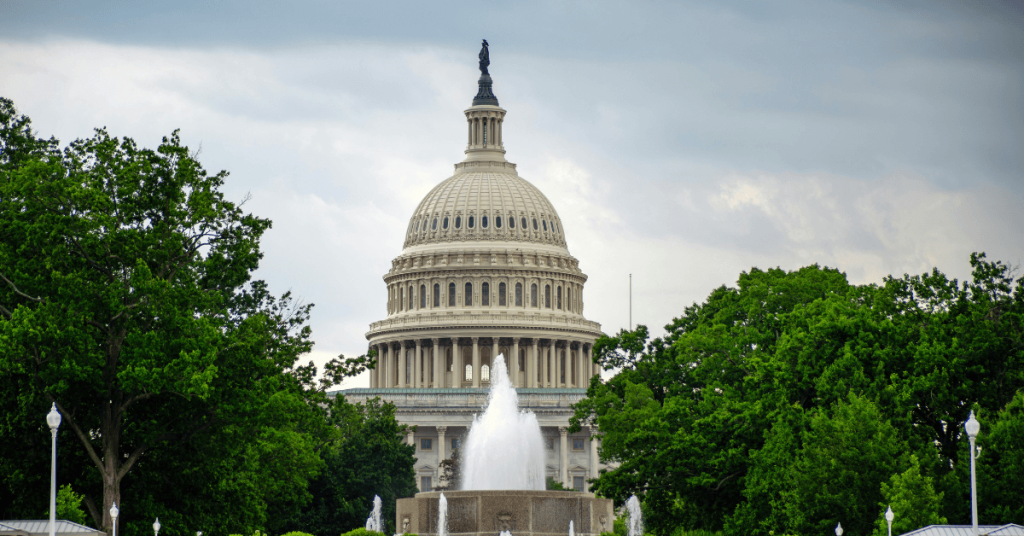
The US Senate voted unanimously on April 30 to amend its Standing Rules to bar senators, staff and officers from trading on prediction markets, an internal rule change that took immediate effect without requiring approval from the House or the president.
Inside the resolution
The measure was introduced by Senator Bernie Moreno, R-Ohio, who pushed for an immediate floor vote. An amendment from Senator Alex Padilla, D-Calif., extended the ban to Senate staff.
Because the resolution amends the Senate’s own procedural rules rather than creating statute, it applies exclusively to the Senate chamber, carries no force of law beyond that body, and enforcement rests with the Senate itself.
Moreno said:
“United States senators have no business engaging in speculative activities like prediction markets while collecting a taxpayer-funded paycheck, period.”
Senate Minority Leader Chuck Schumer, D-N.Y., called it a “no-brainer” and encouraged House Speaker Mike Johnson to adopt an equivalent measure.
“We must never allow Congress to turn into a casino where members representing the public can gamble on wars or economic crises or elections.”
The vote came days after Gannon Ken Van Dyke, a 38-year-old US Army Special Forces master sergeant, pleaded not guilty to charges that he used classified information about the military operation to capture Venezuelan leader Nicolás Maduro to win more than $400,000 on Polymarket.
Separately, reports emerged in April of new Polymarket accounts making well-timed, highly profitable bets linked to the US-Iran ceasefire talks. The White House warned its own staff against using private government information to trade on prediction markets on the same day those reports published.
The Senate action also arrives as the sector faces mounting legal pressure on multiple fronts. Coinbase and Gemini are currently contesting a New York gambling lawsuit that argues prediction market activity constitutes illegal gambling under state law.
Industry and House response
Both major US prediction market operators publicly supported the Senate’s action.
Tarek Mansour, CEO of Kalshi, said:
“Kalshi already proactively blocks members of congress and enforces against insider trading. This is a great step to increase trust in our markets by making it an industry standard. Now, let’s pass this in the House!”
Polymarket posted:
“We’re in full support of this. Our Rulebook & Terms of Service already prohibit such conduct, but codifying this into law is a step forward for the industry.”
The operators’ show of support follows a difficult period for the sector. Kalshi faces a potential $5m fine from the Ohio Division of Securities over its political event contracts, one of several state-level enforcement actions that have escalated alongside the platforms’ growth.
Pressure on the House is already building from multiple directions. Representative Ashley Hinson, R-Iowa, said she plans to introduce a parallel resolution. Beyond that, a substantial pipeline of bipartisan legislation is already moving through Congress.
The PREDICT Act, introduced in March by Representatives Adrian Smith, R-Neb., and Nikki Budzinski, D-Ill., would extend trading prohibitions to members of Congress, their families and senior executive branch officials.
Senators Todd Young, R-Ind., and Elissa Slotkin, D-Mich., have introduced a bill targeting all federally elected officials and government employees who use non-public information to profit from prediction market contracts. A separate Event Contract Enforcement Act from Representatives Blake Moore and Salud Carbajal would empower the CFTC to prohibit contracts tied to terrorism, war and other national security events.
A group of Democratic House members also called on the Commodity Futures Trading Commission on Thursday to issue rules prohibiting event contracts tied to elections, military actions and government decisions where no valid economic hedging interest exists.
For prediction market operators, the Senate resolution offers a short-term credibility boost. A Bank of America analysis recently valued the sector at up to $1.1trn, a figure that reflects the commercial stakes of the regulatory trajectory now taking shape in Washington.
With 15% of Americans already trading prediction contracts according to recent survey data, the volume and bipartisan character of legislative proposals in both chambers suggests that statutory restrictions covering a much wider set of federal actors are increasingly likely to advance before the end of 2026.
Do you have a story worth sharing?
Send it over to our editors!