Louisiana issues warning: prediction markets are illegal sports betting

- Louisiana Gaming Control Board issues advisory on December 5 stating sports event contracts constitute sports wagering under state law.
- Board chairman warns that any direct or indirect involvement in prediction markets could affect operators’ license suitability.
- Move follows similar actions by multiple US states as licensed sportsbooks prepare to launch prediction market products.
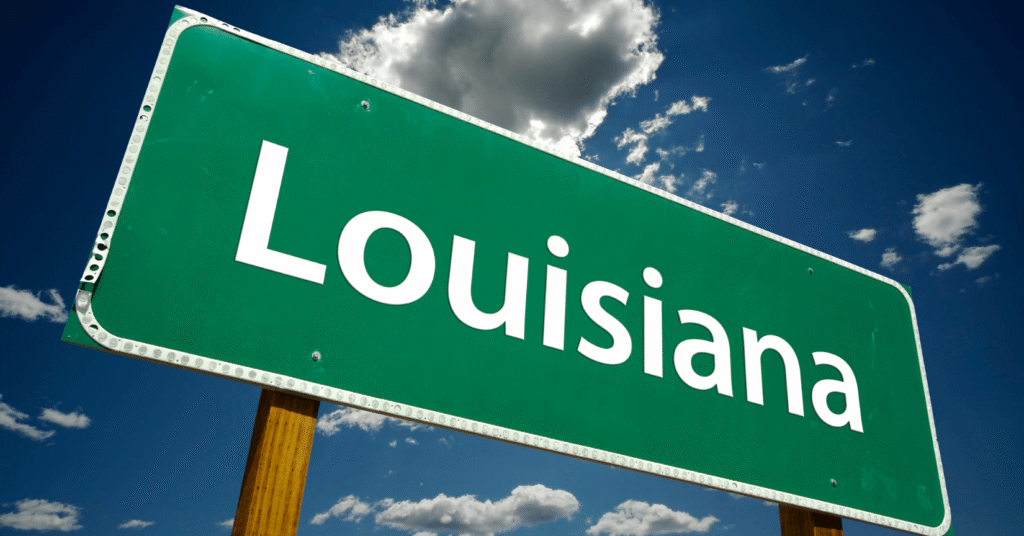
Louisiana gaming regulators have declared that sports event contracts offered through prediction markets constitute illegal sports betting under state law.
The Louisiana Gaming Control Board issued an advisory on December 5 to licensed operators warning that involvement with such platforms could threaten their regulatory standing.
Board chairman Christopher Hebert sent the letter addressing licensees who “may be exploring opportunities to operate, offer or otherwise facilitate access to prediction markets, platforms or event-based contracts.”
“It is the Board’s position that such activities constitute sports wagering under Louisiana law and are not being conducted in compliance with Louisiana Gaming Control law or under a valid Louisiana issued license or permit,” the letter states.
The advisory makes clear that involvement in these activities could have serious consequences.
“The Board issues this advisory to make it clear that any direct or indirect involvement in the operation, offering, or facilitation of sporting event contracts may affect a Regulated Party’s suitability for licensure or permitting in Louisiana,” the letter reads.
By treating sports event contracts as illegal sports betting and warning that even indirect involvement could threaten licenses, Louisiana joins a growing number of states attempting to bring prediction markets under traditional gambling law.
How prediction markets differ from sports betting
Prediction markets function similarly to stock exchanges rather than traditional sportsbooks. Users buy and sell contracts priced between $0 and $1, with prices representing the market’s estimated probability of an event occurring. A contract at $0.65 suggests a 65% chance of that outcome.
In sports betting, operators set fixed odds using oddsmakers and risk management models. Bettors wager against the house at those predetermined odds, with the sportsbook maintaining an edge through the vigorish.
Prediction markets allow peer-to-peer trading where participants can enter and exit positions at any time, similar to stock trading. Contract prices shift dynamically based on trading activity rather than operator adjustments.
When an event resolves, winning contracts pay out $1 per share. Losing contracts settle at zero. This creates a binary outcome market where traders can profit from price movements before resolution or hold positions until the event concludes.
Strict licensing boundaries under Louisiana law
The Louisiana Gaming Control Board emphasized that only properly licensed entities may operate these products within state borders.
“Sports and other event contracts may be offered in Louisiana only if the offering entity possesses a sports wagering gaming license,” the advisory states.
The board noted that established operators often partner with third parties to deliver event contract formats, but such arrangements do not exempt them from state licensing requirements.
Louisiana law establishes clear boundaries for what constitutes legal wagering.
“No person or entity may offer, accept, facilitate or in any way enable sports wagering in Louisiana unless the activity is conducted by a licensed or permitted operator through an approved sports wagering platform and exclusively on events included in the Board’s Sports Wagering Catalog,” the letter states.
The advisory defines illegal gambling broadly.
“Any event-style ‘contract,’ ‘swap,’ ‘market’ or other ‘financial instrument’ that allows individuals to stake value on the outcome of a sporting event, other than a Board licensed or permitted sports wagering operators, constitutes illegal gambling.”
Louisiana operates tethered licensing model
Louisiana operates a tethered licensing model for sports betting. The state authorizes up to 20 sportsbook operator licenses, prioritizing the state’s 15 riverboat casinos, four racetracks and one land-based casino.
Each licensed operator may partner with up to two platform providers for online betting operations, creating the possibility of 41 total “skins” including one for the Louisiana Lottery Corporation. All computer servers must be physically located within Louisiana.
Operators must submit detailed documentation to the State Police Gaming Enforcement Division before receiving final approval from the Louisiana Gaming Control Board. Sports betting is permitted in 55 of 64 parishes following a 2020 referendum.
The board maintains a Sports Wagering Catalog of approved events. Operators cannot accept wagers on events outside this catalog without board approval. All house rules require board authorization.
Federal versus state oversight rejected
The Louisiana Gaming Control Board explicitly rejected arguments that prediction markets fall under federal commodities regulation rather than state gambling law.
Prediction market operators like Kalshi argue their platforms are overseen by the Commodity Futures Trading Commission, which granted Kalshi approval as a designated contract market in 2020.
Louisiana stated it does not view sports event contracts as commodities transactions regulated by the CFTC.
“Not only is such activity illegal under Louisiana law, but the Commodities Exchange Act and the CFTC’s regulations prohibit event contracts related to gaming and activities which are illegal under state law,” the letter reads.
“As it is the Board’s position that these contracts are both gaming and illegal, the Board sees no defense to offering such activity pursuant to a CFTC license,” the advisory states.
Multiple federal courts have issued conflicting rulings on whether CFTC registration pre-empts state gambling laws. A Nevada judge recently reversed an earlier decision favoring Kalshi, finding that federal derivatives oversight does not prevent states from enforcing gambling regulations.
The advisory concluded by warning that violations could extend beyond Louisiana borders. Gambling law breaches in other states could also affect suitability for licensure in Louisiana, according to the board.
Timing coincides with major operator launches
The letter arrives as several major sports betting operators launch prediction market products. Fanatics Markets went live last week across 24 US states, becoming the first major sportsbook to offer prediction markets.
DraftKings and FanDuel have both announced plans to launch similar products in the coming weeks, after leaving the American Gaming Association due to confliect of interest.
Both companies have also exited Nevada for the same reason, after the regulator described prediction market bets as “unlawful activities related to sports event contracts” incompatible with holding a Nevada licence.
Daily fantasy sports operators PrizePicks and Underdog have also entered the space through partnerships with Polymarket and Crypto.com respectively.
Strong enforcement track record
The Louisiana Gaming Control Board has demonstrated a robust approach to illegal gambling enforcement this year. After Governor Jeff Landry vetoed a sweepstakes casino ban bill in June, saying existing regulatory powers were sufficient, the board issued more than 40 cease-and-desist letters to illegal gambling operators.
Hebert, who became Louisiana’s first African American Gaming Control Board chairman in July 2024, has maintained a firm stance against illegal and unregulated gaming throughout his tenure.
Nationwide regulatory resistance
Louisiana’s position reflects broader regulatory opposition to prediction markets across the United States. Connecticut issued cease-and-desist orders to Kalshi, Robinhood and Crypto.com last week, accusing them of conducting unlicensed online gambling.
At least 10 states have now taken legal action or issued warnings regarding prediction markets. These include Illinois, Maryland, Nevada, New Jersey, New York, Ohio, Arizona, Montana and Massachusetts.
More than 20 lawsuits are currently active, with prediction market operators arguing that federal oversight from the Commodity Futures Trading Commission pre-empts state gambling regulations.
State gaming commissions maintain that these platforms must comply with local licensing requirements, taxes and consumer protections that apply to traditional sports betting operators.
The Louisiana Gaming Control Board’s advisory does not specify what penalties might apply to licensed operators who engage with prediction markets, but the warning about license suitability suggests serious consequences could follow.
About the author
Bianca Máthe
Bianca Máthe is Publisher of iGaming Republic. She spent close to a decade on the supplier side of iGaming, working across the sector's core verticals: platform and player-engagement technology and crypto payments. That mix gave her a working knowledge of how operators, suppliers and payment providers actually run. In 2025 she started a media project, bringing that operational grounding to her editorial work. Her output includes interviews with high-profile iGaming executives, original reports, and in-depth features covering licensing, M&A, and the operators and suppliers shaping the sector. Based in Malta, she spends much of her time getting closer to emerging sectors like prediction markets, tracking how they're developing before the rest of the industry catches up.
Do you have a story worth sharing?
Send it over to our editors!