CFTC takes trio of states to court over event contracts
- The Commodity Futures Trading Commission filed lawsuits against Arizona, Connecticut, and Illinois on April 2, 2026, asserting exclusive federal authority over prediction market operators including Kalshi and Polymarket.
- All three states had issued cease-and-desist orders to prediction market platforms, and Arizona had already filed criminal charges against Kalshi.
- The federal action comes as tribal nations, state attorneys general, and international regulators all push back against the CFTC’s jurisdictional claims.
The Commodity Futures Trading Commission has filed simultaneous lawsuits against Arizona, Connecticut, and Illinois in what marks the first time a federal agency has sued US states over the regulation of prediction market operators.
The actions, filed on April 2, 2026, ask federal courts to declare state gambling laws unconstitutional and invalid when applied to designated contract markets (DCMs) registered with the CFTC.
The suits represent a sharp escalation in a dispute over jurisdiction that has been building across courtrooms nationwide for more than a year.
Federal vs state clash
The CFTC contends it holds exclusive jurisdiction to regulate event contracts under the Commodity Exchange Act, and that states have attempted to outlaw, regulate, or otherwise restrain the activities of DCMs facilitating trading in lawful event contracts.
The Illinois lawsuit, filed in a Chicago federal court, names the state governor, attorney general, and five members of the Illinois Gaming Board as defendants. It alleges the state’s cease-and-desist orders against multiple prediction market platforms directly interfere with the federal regulatory scheme established by Congress.
Arizona has taken the most aggressive stance. Attorney General Kris Mayes filed criminal charges against Kalshi on March 17, 2026, making Arizona the first state in the US to pursue a criminal case against a prediction market platform.
Kalshi had moved preemptively on March 12, suing Arizona in federal court in an attempt to forestall state enforcement.
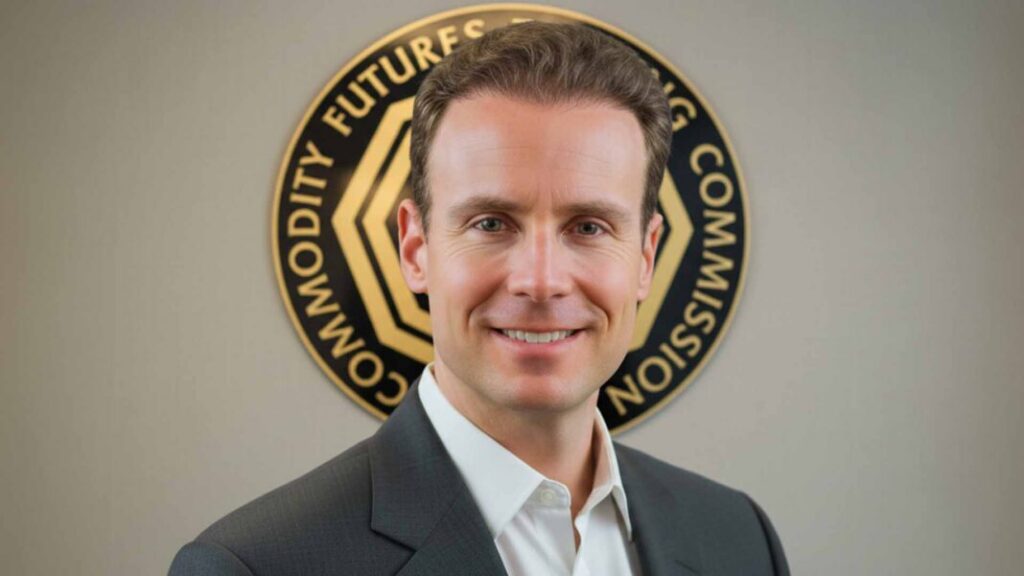
CFTC Chairman Michael S. Selig said in the commission’s April 2 release:
“The CFTC will continue to safeguard its exclusive regulatory authority over these markets and defend market participants against overzealous state regulators,” Selig noted.
“This is not the first time states have tried to impose inconsistent and contrary obligations on market participants, but Congress specifically rejected such a fragmented patchwork of state regulations because it resulted in poorer consumer protection and increased risk of fraud and manipulation.”
Selig had previously signaled the move in February, warning those challenging the agency’s authority:
“We will see you in court.”
States and tribes push back
The states are not conceding. Connecticut Attorney General William Tong, named as a defendant in the Connecticut suit, said in a statement:
“The Trump Administration is recycling industry arguments that have been rejected in district courts across the country.”
“These contracts are plainly unlicensed illegal gambling under time-worn state law, and we will aggressively defend Connecticut’s commonsense consumer protection laws,” he added.
Courts have so far returned mixed results.
A Nevada state court forced Kalshi to shut down in March after issuing a 14-day temporary restraining order, with the court finding the Nevada Gaming Control Board had a strong likelihood of prevailing on the merits.
Courts in New Jersey and Tennessee had earlier ruled in Kalshi’s favor. Washington state also sued Kalshi over alleged gambling law violations, further widening the legal front.
The opposition extends beyond state regulators. The Indian Gaming Association announced a $3m to $5m litigation fund at its annual convention on March 31, explicitly targeting the CFTC over its authorization of sports event contracts.
IGA Chairman David Z. Bean said the fund “will be as big as it needs to be to last for years,” warning that prediction markets are eroding the $43.9 billion in tribal gaming revenue generated in fiscal year 2024 by operating sports wagering in all 50 states without equivalent licensing obligations.
Growing scrutiny is also spreading internationally. Polymarket tightened its trading rules following concerns over Iran-related bets, and Canada has reiterated that securities rules apply to prediction markets, adding a cross-border dimension to the regulatory debate.
Rulemaking and what comes next
The CFTC issued an Advanced Notice of Proposed Rulemaking on March 12, 2026, seeking public comment on how the Commodity Exchange Act applies to prediction markets, with a comment deadline of April 30, 2026.
A bipartisan bill introduced in the Senate on March 23, the Prediction Markets Are Gambling Act, would separately amend federal law to prohibit sports and casino-style event contracts from being offered on CFTC-regulated platforms. It remains at an early stage.
The CFTC is also due to appear before the Ninth Circuit Court of Appeals later this month in a consolidated case involving Kalshi, Robinhood, and the North American Derivatives Exchange (Crypto.com).
With appellate courts set to hear multiple related cases and a Supreme Court resolution looking increasingly inevitable, the fundamental question for operators is if this sustained legal uncertainty becomes an obstacle to growth.
Do you have a story worth sharing?
Send it over to our editors!