Stanislav Kriuk, ICONIC21: Inside a live casino Halloween transformation

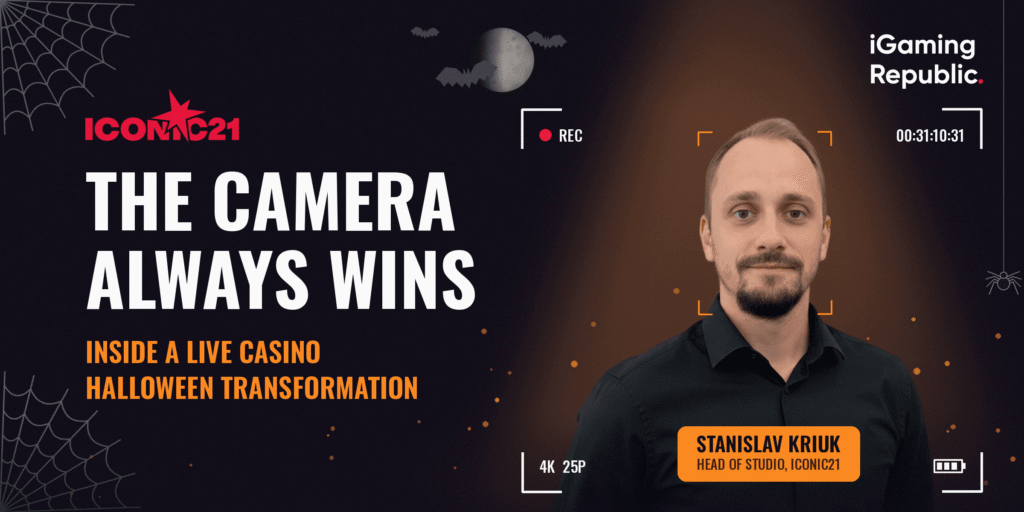
Stanislav Kriuk, Head of Studio at ICONIC21, explains what a Halloween studio transformation actually involves, from concept in August to camera checks, and why the best seasonal sets hide all the engineering behind them.
Seasonal content has become a standard lever in live casino. Operators expect themed tables and refreshed environments around Halloween, Christmas and major sporting moments.
What players see as a festive backdrop is, behind the scenes, a broadcast production problem. Every change has to work through the camera, fit around dealer shifts and avoid interrupting a game that never stops running.
Stanislav Kriuk, Head of Studio at ICONIC21, oversees that work for the iGaming content provider, including the dedicated studios it builds around individual operator brands.
He explains how early planning really starts, why the camera always gets the final say on design, and how a studio can be transformed overnight without players ever seeing the work behind it.
iGaming Republic: How far in advance does planning for Halloween in a studio begin, and what does that timeline look like?
SK: Usually, we start around two months before going live. So if players see Halloween decorations in October, we’ve probably been talking about “pumpkins” since August. We start with the idea: what kind of experience do we want to create, and how should it fit the client’s brand?
We don’t really like the approach of putting the same Halloween decorations everywhere. Especially in dedicated studios, it should still feel like that particular brand.
Then design develops the concept, and production checks whether it actually works in a live studio – cameras, lighting, presenters, gameplay visibility, safety and so on.
After approval, we produce and pre-assemble as much as possible outside the live environment. The actual installation should be the shortest part of the process. Then we adjust lighting, check all camera angles and make sure everything looks good on stream.
iGR: What is the biggest operational challenge when preparing a live casino studio without disrupting stream quality or dealer performance?
SK: The main thing to remember is that a live casino studio isn’t just a nice-looking room. It’s a broadcast environment running a real game. Something can look great when you’re standing in front of it and look completely wrong through the camera. And the camera always wins that argument.
So yes, we think about camera angles, lighting, reflections, shadows, dealer sightlines, monitors, microphones, gameplay visibility and technical equipment. Even the colour or material of a decoration can create unexpected problems.
At the same time, the dealer still needs to feel comfortable and perform exactly as before. Our basic rule is that creativity should never interfere with the game. For the client, ideally, all this complexity should be invisible. They tell us what they want to achieve, and our job is to figure out how to make it happen without compromising the player experience.
iGR: What is a constraint that surprised you when you first became involved in seasonal studio transformations?
SK: Probably how differently you start looking at space once you work with cameras. Sometimes you can have a beautifully decorated wall, but if it’s outside the camera frame, it basically doesn’t exist for the player.
At the same time, moving one object 20 centimetres can completely change the shot. Materials can also surprise you. Glitter, LEDs, glossy surfaces or very saturated colours might look great in person but create reflections, exposure problems or colour contamination on camera.
And then there are all the boring but very important things nobody thinks about – fire safety, ventilation, cable routes, emergency exits and access to technical equipment.
Good studio design is when the player sees the atmosphere but doesn’t see any of the engineering behind it.
“Good studio design is when the player sees the atmosphere but doesn’t see any of the engineering behind it.”
Stanislav Kriuk, Head of Studio at ICONIC21
iGR: How do you schedule set changes around live operations, dealer shifts, and table availability?
SK: We try to do almost everything before we touch the live table. Elements are produced, assembled and tested in advance, and the installation sequence is planned beforehand. Then we coordinate with Operations and use maintenance windows or periods where the impact is minimal. If possible, we work table by table instead of closing a larger area.
Once the installation is finished, we still need time for camera checks, lighting, sound, gameplay visibility and a quick test with the presenter. The ideal result is actually quite boring operationally: the player leaves one day, comes back the next day and suddenly the studio looks different.
No drama, no downtime, no idea what happened backstage. That’s exactly what we want.
iGR: Looking back at previous seasonal transformations, what is one detail viewers notice immediately, and one critical piece of work they never see?
SK: Players notice the atmosphere immediately – usually the background, lighting or one strong visual element that tells them something special is happening.
What they don’t see is probably 80% of the work. Camera tests, lighting adjustments, rehearsals, safety checks, dealer scheduling, technical checks, cable management – and sometimes five people discussing why something needs to move five centimetres to the left. But that’s part of the job.
For us, service is really about making this complexity invisible. Our clients want to create something interesting and relevant for their players. Our responsibility is to understand the idea, adapt it to their brand, solve the technical and operational problems behind it and deliver it quickly.
The player shouldn’t be thinking about production. They should just open the game and think, “Oh, this is cool.” If that happens, we’ve done our job. And if nobody notices the cables, we’ve done an exceptionally good job.
“If that happens, we’ve done our job. And if nobody notices the cables, we’ve done an exceptionally good job.”
Stanislav Kriuk, Head of Studio at ICONIC21
About the author
Bianca Máthe
Bianca Máthe is Publisher of iGaming Republic. She spent close to a decade on the supplier side of iGaming, working across the sector's core verticals: platform and player-engagement technology and crypto payments. That mix gave her a working knowledge of how operators, suppliers and payment providers actually run. In 2025 she started a media project, bringing that operational grounding to her editorial work. Her output includes interviews with high-profile iGaming executives, original reports, and in-depth features covering licensing, M&A, and the operators and suppliers shaping the sector. Based in Malta, she spends much of her time getting closer to emerging sectors like prediction markets, tracking how they're developing before the rest of the industry catches up.
Do you have a story worth sharing?
Send it over to our editors!