Overview
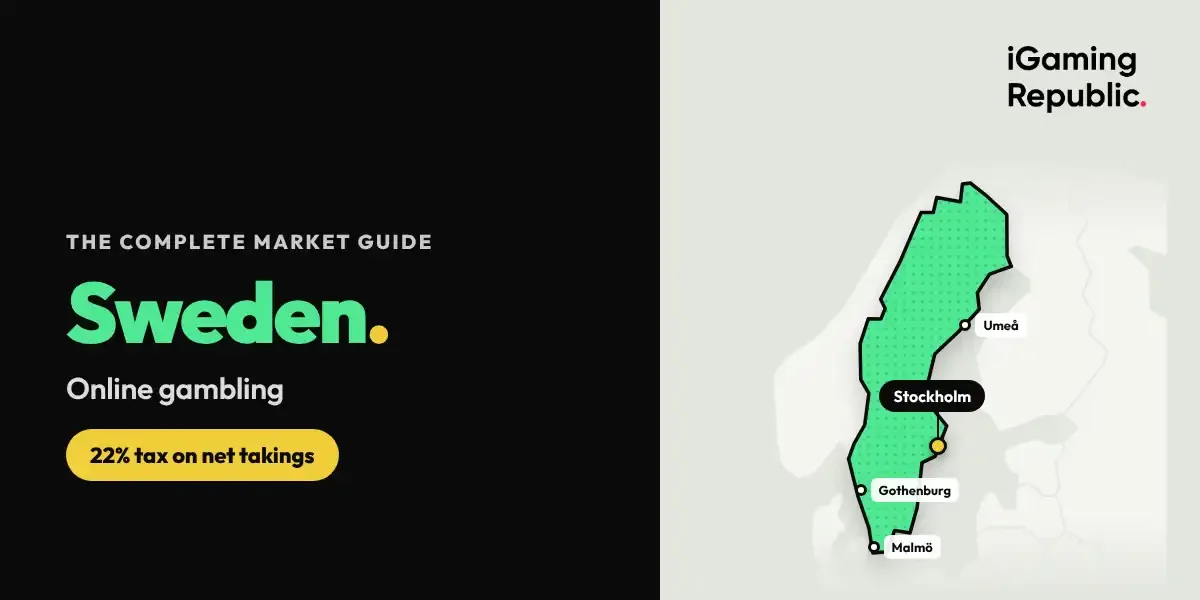
- Sweden opened its online gambling market to licensed competition on 1 January 2019, ending the state’s grip on online casino and betting.
- Licensed operators turned over SEK 28.2 billion in 2025, with commercial online casino and betting at about SEK 18.4 billion. Operators pay 22% tax on net takings.
- The big problem is leakage: channelisation fell to about 84% in 2025, and the regulator counted 2,186 active unlicensed sites.
Sweden re-regulated gambling under the Gambling Act (2018:1138), in force since 1 January 2019. Before that, the state-owned Svenska Spel and horse racing operator ATG held most of the legal market, while international brands served Swedes from abroad. The new law let licensed private operators offer online casino and betting.
The regulator is the Swedish Gambling Authority (Spelinspektionen). It issues licences, supervises operators and runs Spelpaus.se, the national self-exclusion register, which had just under 138,000 people registered at the end of June 2026.
Sweden is known for strict consumer protection. Operators may give a bonus only the first time a player plays with them. Every online player must set daily, weekly and monthly deposit limits. Gambling on credit has been banned outright since 1 May 2026.
Tax rose from 18% to 22% of net takings on 1 July 2024. In 2025 licensed operators turned over SEK 28.2 billion, up 1.3%, and commercial online casino and betting grew 3.3% to about SEK 18.4 billion.
The weak spot is channelisation, the share of play that stays with licensed operators. Spelinspektionen put it at about 84% for 2025, down from 86% in 2023 and well short of the government’s 90% goal. Online casino leaks far more than sports betting.
A Ministry of Finance memorandum from September 2025 proposes applying the law to any online gambling Swedes can join, not only sites aimed at Sweden. It suggested 1 January 2027, but no government bill had been published by late September 2026.
Key market statistics
- One bonus only. An operator may give a bonus only the first time a player plays with it.
- Mandatory deposit limits, daily, weekly and monthly. Increases take 72 hours to apply.
- No gambling on credit. A full ban on credit-financed gambling applies from 1 May 2026.
- Spelpaus.se self-exclusion is checked at registration and at every login.
- Minimum age 18 for all licensed gambling.
- Unlicensed sites may not be advertised, and promoting them in business is an offence.
Figures from Spelinspektionen and trade press reports of its data. Turnover means stakes minus winnings. Our calculations are labelled (calc.).
Legislative history and timeline
Sweden moved from a state-dominated market to licensed competition in 2019, then spent the following years tightening consumer protection while trying to keep players inside the licensed system.
Scroll sideways for the full table →
Licensed operators
Spelinspektionen lists 141 active licences (76 online gambling, 65 betting) held by 81 companies as of 23 September 2026. The table shows the main groups. Licences run for up to five years.
The ten largest licence holders account for about 73% of total turnover. State-owned Svenska Spel competes through its commercial arm, Svenska Spel Sport & Casino, alongside ATG and international groups.
Scroll sideways for the full table →
Operator groups compared
The main groups in the Swedish licensed market, their owners and the products they offer. Revenue by operator is not published by the regulator.
Scroll sideways for the full table →
Revenue and channelisation
Spelinspektionen reports turnover (stakes minus winnings) for licensed operators and estimates channelisation each year. 2024 turnover figures are our calculation from the reported 2025 growth rates.
Scroll sideways for the full table →
Spelinspektionen counted 2,186 active unlicensed gambling websites on 30 April 2026, most of them online casinos: 976 offered only casino games and 800 offered casino and sports betting. About 42% of visits to unlicensed sites went to skin-betting platforms, which are left out of the main channelisation figures. Players cite Spelpaus self-exclusion, better perceived odds and games not available on licensed sites as reasons for playing offshore.
Land-based gambling
Land-based gambling is a small part of the Swedish market. Slot machines and lotteries are reserved for the state and public-benefit organisations, and state casinos were removed from the Gambling Act on 1 January 2026.
Scroll sideways for the full table →
Quarterly figures are preliminary Spelinspektionen data for Q2 2026.
Regulatory framework
The Swedish Gambling Authority (Spelinspektionen) licenses and supervises the market. The Swedish Consumer Agency (Konsumentverket) shares supervision of marketing rules.
Scroll sideways for the full table →
The one-bonus rule. Since 2019 operators can give a bonus only the first time a player plays with them, which removed most of the promotional tools used in other markets. Licensed operators say it, together with deposit limits and the 22% tax, pushes some players to unlicensed sites.
Quarterly revenue reference
Spelinspektionen publishes quarterly turnover data. Figures are preliminary and may be revised. All figures in SEK.
Scroll sideways for the full table →
Products and what is allowed
Licensed operators can offer online casino, sports and horse betting, and poker. Lotteries and slot machines in venues are reserved for the state and public-benefit organisations.
Scroll sideways for the full table →
Rule changes and market outlook
Sweden is reviewing how far its law reaches. The aim is to win back channelisation without loosening the consumer protection rules that define the market.
Changes in the pipeline
Scroll sideways for the full table →
The channelisation problem
Channelisation slipped to about 84% in 2025 from 86% in 2023, against a government goal of 90%. The gap is almost all online casino: sports betting stays at about 95%, while online casino is about 68% on the web-traffic measure. Sector lobbying led to a government review of the Gambling Act, and the regulator supports widening the law to cover any site Swedes can use.
Consumer protection keeps tightening
The credit ban from 1 May 2026, mandatory Spelpaus checks at every login from 1 August 2026, and new draft rules on responsible gambling and technical requirements all point the same way. A government inquiry into youth gambling was appointed on 3 September 2026 and reports by 29 February 2028.
For operators, the question is whether a wider law and better enforcement against unlicensed sites can offset rules that limit how they compete.
Sweden vs the Nordics
The Nordic markets have taken different paths. Sweden and Denmark license private operators, Finland opens to licensed competition in July 2027, and Norway keeps its state monopoly.
Scroll sideways for the full table →
Sweden’s 22% tax sits below Denmark’s rate and level with Finland’s planned rate. Its strict bonus and deposit rules are the main difference from its neighbours.
Finland is the next test. It opens on 1 July 2027 with a 22% tax and bans on welcome bonuses and influencer deals, and operators already licensed in Sweden are among its first licensees.