Mexico City targets youth risk from online betting
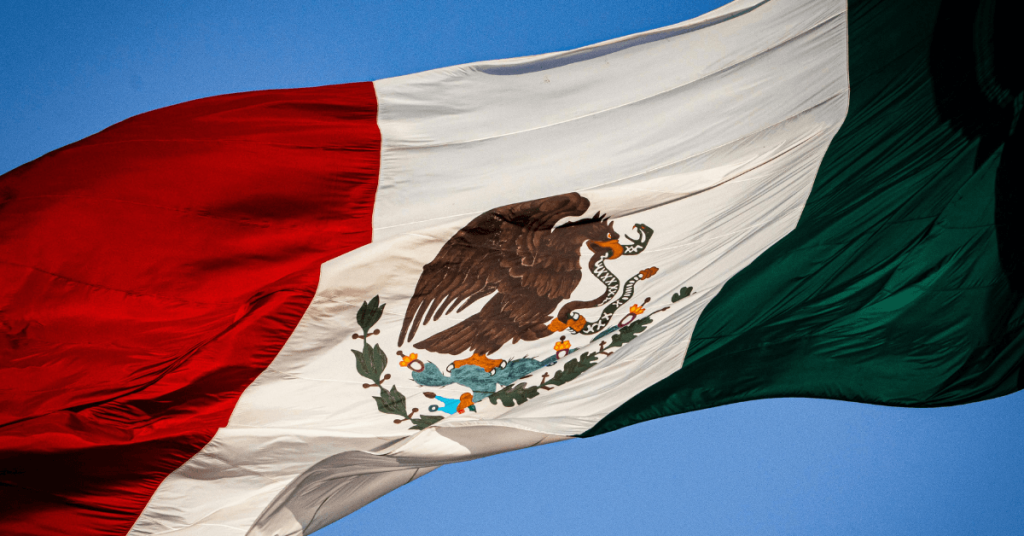
- Alberto Martínez Urincho, a deputy in the Mexico City Congress, has proposed reforms to the Federal Law on Games and Sweepstakes.
- The bill would formally recognize gambling addiction as a mental health disorder and add stricter rules for betting platforms.
- Citing UNAM Global estimates, the proposal cites figures suggesting up to 3.9 million Mexicans could suffer from gambling addiction.
Deputy Alberto Martínez Urincho has presented a proposal before the Mexico City Congress to reform the Federal Law on Games and Sweepstakes, aiming to formally recognize gambling addiction as a mental health disorder and impose stricter rules on betting platforms.
The initiative, introduced during a session of the Permanent Commission, is intended to counter what the lawmaker described as the exponential growth of online betting and its impact on young people.
Addiction reclassified
The proposal would add an Article 1 Bis and amend Article 3 of the law, formally defining gambling addiction as an addictive disorder rather than a matter of leisure or entertainment. It would also require betting and gambling providers to display mandatory health and risk warnings, similar to those used on other products known to cause addiction.
Martínez Urincho, a member of the Morena party, argued that gambling addiction deserves treatment as a public health priority, addressing the anxiety, distress, loneliness and depression that often accompany the condition.
Alberto Martínez Urincho, deputy at the Congress of Mexico City, said:
“We are witnessing an exponential growth in gambling addiction in Mexico; this is not simply a matter of leisure or entertainment. We are talking about a disorder that causes changes in brain circuits, leading to compulsive behavior despite serious physical, psychological and social consequences.”
Tighter platform rules
Beyond the mental health framing, the initiative would impose strict identity verification controls designed to keep minors off gambling platforms.
It would also ban misleading advertising and eliminate commercial tactics that specifically target vulnerable users, an approach that builds on an earlier primetime gambling ad ban proposal put forward ahead of the World Cup.
Martínez Urincho pointed to the shift toward mobile betting as part of the problem, arguing that round-the-clock access through smartphones has removed the natural limits that once existed around gambling. Advertising on social media and streaming platforms, he said, increasingly reaches audiences under the age of 18.
The bill also targets prediction betting directly, seeking to restrict wagers on political events, armed conflicts, natural disasters, humanitarian crises, and other events that could violate human dignity.
The move echoes debates elsewhere in the Americas, where New Jersey lawmakers have pursued a similar political-event betting ban. Brazil has also moved to block dozens of unauthorized prediction platforms.
The restrictions arrive as operators expand their footprint in the country. Stake launched a licensed Mexico sportsbook ahead of the 2026 FIFA World Cup, part of a broader wave of operator entries into the market that regulators are now moving to bring under tighter oversight.
Long legislative road
Because the underlying legislation is federal, the proposal cannot move straight to a vote. It must first be reviewed and approved by the Local Public Administration Commission, then pass Mexico City’s Legislative Plenary, before the resulting bill is sent on to the Congress of the Union for the full federal legislative process. That path leaves considerable room for amendment, and no timeline has been set for a final vote.
Martínez Urincho cited official figures indicating that between 4% and 8% of Mexico’s adolescent population shows problematic or dependent gambling behavior.
He also pointed to academic estimates from UNAM Global suggesting that up to 3.9 million Mexicans could suffer from gambling addiction, a condition in which those affected are reportedly up to 15 times more likely to die by suicide than the general population.
The scale of those figures explains why lawmakers across Latin America increasingly frame betting regulation as a public health question rather than a purely licensing matter.
Mexico has already moved on the fiscal side, having raised its online gambling tax to 50% last year. Tighter identity checks and advertising limits could reshape operator marketing budgets well before the bill reaches committee, and the prediction market restrictions add a fresh layer of uncertainty for platforms eyeing event-based products in the region.
Do you have a story worth sharing?
Send it over to our editors!