Dominican online market starts with seven operators
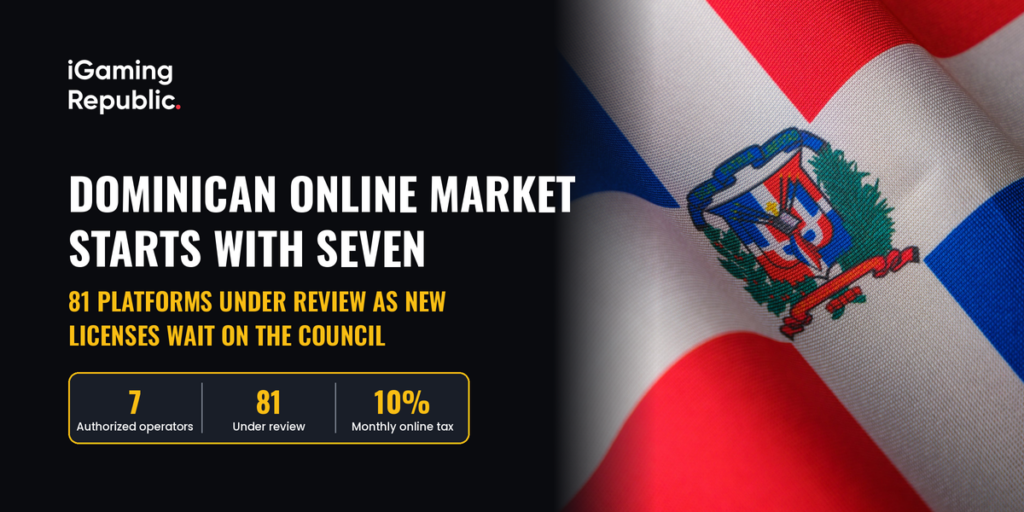
- DGJA confirms seven authorized online operators, including Betcris and SuperBets.
- Around 81 platforms and companies face review for operating without permits.
- New online licenses must wait for the Council of Gambling to set fees and rules.
The Dominican Republic’s new gambling regulator has named the seven companies authorized to take online bets in the country.
The Directorate General of Gambling (DGJA) has also identified around 81 platforms and companies operating without state permission, and is deciding whether to act against them under Law 86-26.
Who made the cut
The seven operators appear on the official portal of the Ministry of Finance and Economy, the DGJA said in a statement sent to El Nuevo Diario.
They are Game Technology International (SuperBets), Betcris Banca de Apuesta (Betcris), Juancito Sport, Gogo Sport (Gogo Banca), Orobet, Breeze Management (VIP987) and Drbets (Appuesta). None is a new entrant. All seven were already recognized, and the list grants no new licenses.
Law 86-26 was promulgated on September 22 and published in the Official Gazette on October 2. It replaced the Directorate of Casinos and Games of Chance (DCJA) with the DGJA, an autonomous regulator under the finance ministry. Teófilo “Quico” Tabar Manzur leads it as transitional director general, appointed under Decree 684-26.
81 under review
The DGJA is reviewing each of the 81 cases to decide whether to open legal or administrative proceedings. It has also asked the public and the media to send in information and evidence on unauthorized operators.
Offshore supply is not a new problem. In 2024, the DCJA barred 41 operators, including bet365, William Hill, 888Sport and Betsson, when it introduced Resolution 136-2024.
The DCJA also warned players about fake ads that used authorized brands to steer them to copycat sites. In April, it said that no prediction market platform held a Dominican license or registration. Brazil acted the same month and blocked around 28 prediction platforms.
Other regulators have stepped up too. In the US, Michigan sent cease-and-desist letters to 33 offshore sites in October.
Blocking and penalties
The new law gives the DGJA tools its predecessor lacked. It must publish both its register of authorized operators and a list of blocked sites.
For suppliers and payment partners, that register becomes the reference point for checking who they can work with.
The DGJA can also block domains and restrict financial transactions linked to unauthorized platforms. Cutting off payments puts pressure on offshore brands with no local presence to target.
Under Law 86-26, penalties include fines of up to 400 minimum wages, closure orders and license revocation. The most serious offenses can carry prison terms of five to 10 years; operating without a license carries one to two years.
A tenth of fine revenue will fund gambling addiction prevention and treatment. The law also creates a National Self-Exclusion Register. Neighboring Puerto Rico joined a multi-state self-exclusion program in June.
Two licenses, one wait
The law sets up two online license categories, both issued by the Council of Gambling. Internet gaming licenses run for 10 years under Article 77. Virtual gaming licenses, covered by Articles 95 and 96, run for five years.
The DGJA says the fees, requirements and conditions for virtual gaming licenses will be set by council resolution under Article 97. The council has not yet held its first session, so there is no route in for new applicants.
The tax is already fixed. Article 78 sets a 10% monthly tax on gross operations from internet games, linked to an authorized .do domain. Until the DGJA and the tax office have a collection system running, each operator pays a flat RD$5 million a month.
The .do rule dates back to Resolution 136-2024. The country first regulated online gambling in 2006, but issued its first license only in 2011, to Amaya.
Bancas on the clock
On the retail side, the DGJA’s first resolutions barred new gambling establishments and gave existing outlets 30 days to make a voluntary declaration.
On October 19, it sent the Directorate General of Internal Taxes (DGII) a provisional database of establishments in its regularization program. Outlets left out have until November 15 to file. A declaration does not automatically allow an outlet to keep operating.
Article 191 adds a longer freeze. Once the register of licensees is published, no new establishment licenses will be issued for 10 years, except for casinos in hotels and tourist areas.
When the council sits
The council’s first meeting is the next step for the online market. Its resolution will set what a license costs and what technical standards platforms must meet, which will decide how many international operators apply and how much work follows for certified B2B suppliers.
Enforcement may move first. Decisions on the 81 cases will show whether the DGJA uses its blocking and payment powers early, or waits until offshore brands have a way to apply.
Until then, the seven operators remain the only businesses the DGJA has publicly identified as authorized for online gambling.
Across the Caribbean, Curaçao is bringing licensing in-house after a nine-month breach. Further south, Brazil’s betting ban remains in force pending a Supreme Court ruling.
Do you have a story worth sharing?
Send it over to our editors!