CFTC chairman: unlike sportsbooks, prediction markets cannot limit winners

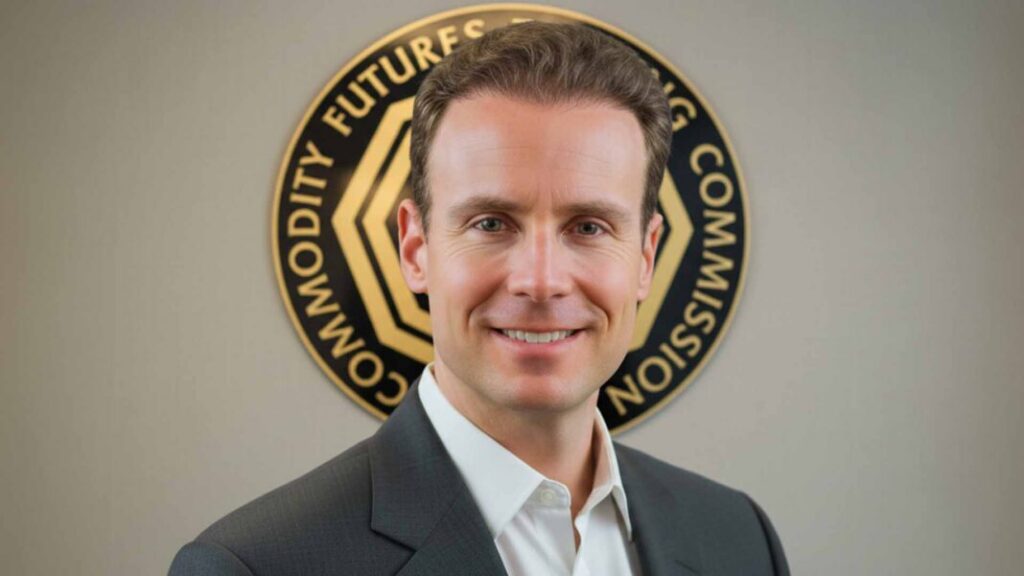
- CFTC Chairman Michael Selig describes prediction markets as financial products regulated under derivatives law, not entertainment.
- Selig argues sportsbooks can restrict winning customers; derivatives platforms are prohibited from doing so.
- Many legal experts expect the federal-state jurisdictional dispute to ultimately reach the Supreme Court.
CFTC leadership has drawn a firm line between prediction markets and traditional sports betting, arguing the two operate under fundamentally different models and should be regulated accordingly.
In an interview with Axios published on May 12, Michael Selig, Chairman of the Commodity Futures Trading Commission, described prediction markets as financial products regulated under derivatives law, distinct from the entertainment model he attributed to sports betting.
Markets vs entertainment
Selig’s central argument turns on how each model treats winning customers. He noted that conventional sportsbooks have broad authority to restrict bettors who consistently beat the house.
Derivatives platforms, he argued, operate differently: consistent winners keep their earnings and face no equivalent restrictions.
He cited Nate Silver’s account in his book On the Edge, which describes how Silver’s NBA betting account was limited after he began winning regularly, as an illustration of the contrast.
Michael Selig, Chairman, Commodity Futures Trading Commission, said:
“What you’re seeing is markets versus entertainment. For those that want the discipline and integrity of a market, it’s a better model. For those that want entertainment, the casinos might be the model for them.”
Selig also addressed concerns around insider trading, saying the CFTC’s restrictions in derivatives markets are “nearly identical” to SEC rules on securities.
Michael Selig, Chairman, Commodity Futures Trading Commission, said:
“We’ll continue to be an aggressive policeman when it comes to insider trading on our markets, as will the DOJ.”
He acknowledged, however, that questions remain about where liability falls when information passes indirectly through multiple parties.
A high-stakes regulatory battle
Selig is currently the only sitting member of the CFTC, a body that normally comprises five commissioners with bipartisan representation. That leaves him with unusually concentrated authority over the direction of prediction markets regulation, with four commissioner seats currently vacant.
The agency has already filed legal actions to block state attempts to restrict prediction market operators. The CFTC sued Arizona, Connecticut, and Illinois in April, asserting exclusive federal authority over platforms including Kalshi and Polymarket.
Speaking at a Financial Industry Regulatory Authority conference on May 13, Selig signaled that legal challenges from states will continue to be contested by the CFTC.
Many legal experts consider a Supreme Court ruling the likely endpoint of the dispute.
The AGA has been vocal in its opposition. The American Gaming Association argues prediction platforms offer wagering outside the consumer-protection frameworks that govern state-licensed and tribal operators, bypassing licensing requirements, tax obligations, and voter decisions on gambling expansion.
A key commercial dimension is access: CFTC-licensed prediction markets are available nationwide, including in states that have not legalized sports betting, such as California and Texas, while state-regulated sportsbooks remain limited to jurisdictions that have passed enabling legislation.
Minnesota voted in late April to ban prediction market wagers, a measure likely to face a federal legal challenge under the CFTC’s current posture.
What it means for operators
Selig’s public comments crystallize the CFTC’s position at a moment when incumbents are already feeling the competitive pressure.
BetMGM cited prediction market competition when trimming its full-year revenue guidance in April, and Bank of America has estimated annual US sports event contract volume could eventually reach $1.1trn.
For state regulators and licensed operators, the federal-state divide shows no sign of narrowing. Congress has yet to legislate on the question, and with four CFTC commissioner seats vacant, Selig is positioned to advance rulemaking on prediction markets without a commission vote.
Keep Reading
About the author
Bianca Máthe
Bianca Máthe is Publisher of iGaming Republic. She spent close to a decade on the supplier side of iGaming, working across the sector's core verticals: platform and player-engagement technology and crypto payments. That mix gave her a working knowledge of how operators, suppliers and payment providers actually run. In 2025 she started a media project, bringing that operational grounding to her editorial work. Her output includes interviews with high-profile iGaming executives, original reports, and in-depth features covering licensing, M&A, and the operators and suppliers shaping the sector. Based in Malta, she spends much of her time getting closer to emerging sectors like prediction markets, tracking how they're developing before the rest of the industry catches up.
Do you have a story worth sharing?
Send it over to our editors!