Sam Jones, 155.io: Betting on chaos with real-world unpredictability

The iGaming content space has matured rapidly. Casino lobbies now host thousands of titles that look and feel alike, and with cloning on the rise, meaningful differentiation requires either a massive budget or an already-loyal player base.
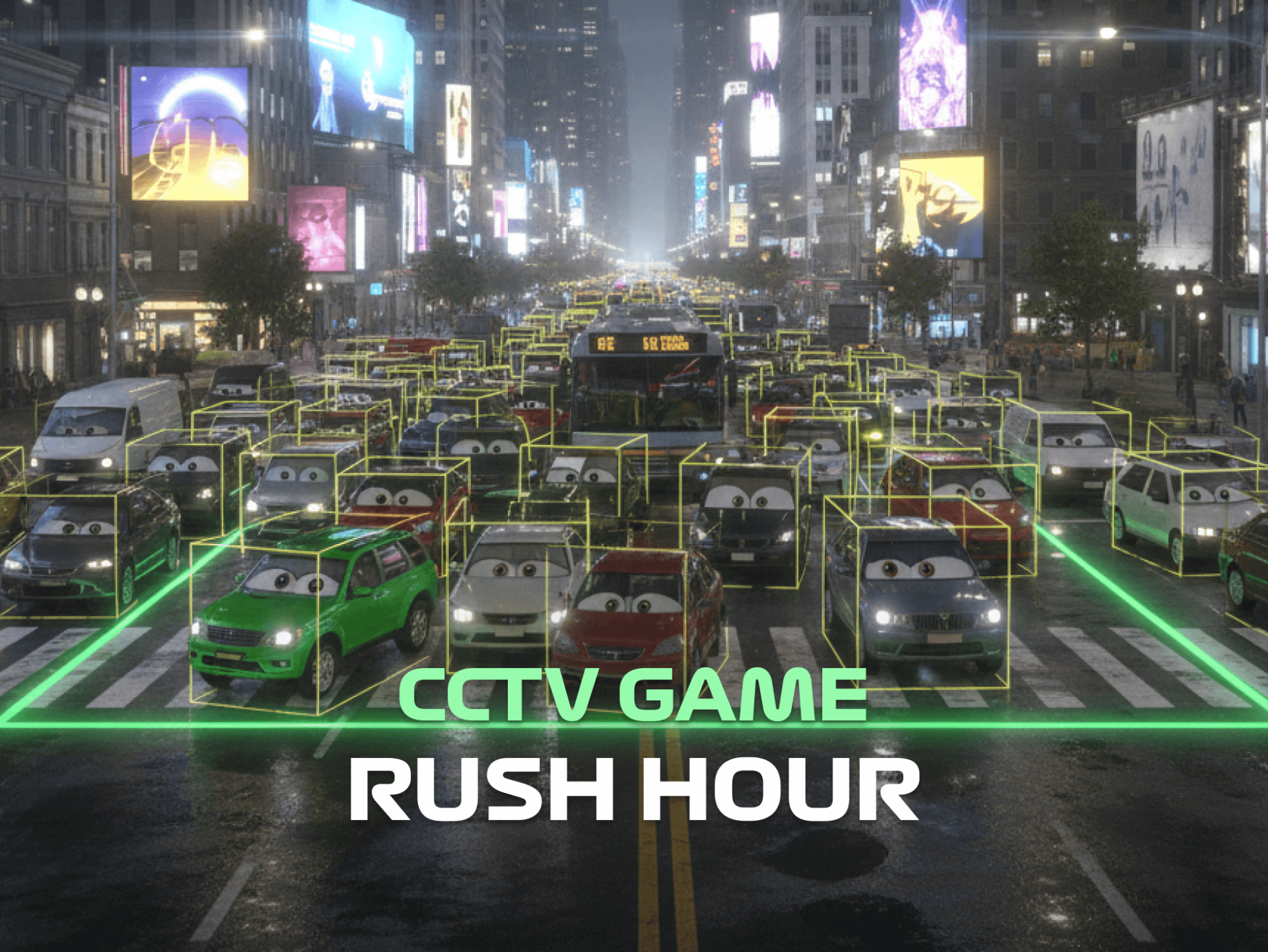
155 flips this script entirely. Sam Jones, Founder of 155.io, built his studio on a simple conviction: that authentic, unscripted real-world chaos will outperform even the most polished digital content. That instinct led to marble racing on physical tracks, duck races, coin flips, and now Rush Hour, the first release under a brand new content vertical: CCTV Game.
The concept turns live real-world footage, AI-driven tracking, and genuine environmental unpredictability into fully playable betting experiences, and it’s unlike anything else in the market.
This Q&A gets into the thinking behind it all:
- Why real-world chaos resonates with players in ways digital formats can’t replicate
- How Rush Hour became the blueprint for an entirely new content category
- What benchmarks 155.io uses to distinguish genuine innovation from novelty
- How the studio designs for global scale without losing local relevance
- And where the next breakthrough is coming from
Let’s dive in.
iGaming Republic: Why do you believe real-world unpredictability translates so effectively into modern betting and gaming experiences?
Sam Jones: Over the past five to ten years, the industry has seen an influx of high-quality content studios producing slots, crash games and live dealer products — a space that has now become highly mature and extremely competitive. With well-funded companies investing heavily in development and marketing, and digital games relatively easy to replicate, standing out has become increasingly difficult.
Because these products exist purely in the digital world, cloning is common — sometimes even enhanced through AI — and casino lobbies are now saturated with thousands of similar titles. Launching a successful new slot today often requires a major budget, strong brand recognition, or an existing player base.
We realised we couldn’t compete by doing more of the same, so we chose a fundamentally different path: real-world formats. This led to concepts such as marble racing on physical tracks, chaotic live-filmed experiences, and later games like Star Pong, duck racing and coin flipping.
“Launching a successful new slot today often requires a major budget, strong brand recognition, or an existing player base.”
Sam Jones, Founder of 155.io
What quickly became clear was that players were craving authenticity. Real-world chaos creates outcomes that feel genuinely unscripted, unpredictable and trustworthy — something digital formats often struggle to replicate. More recently, we’ve explored sourcing real-world content beyond our own studio. While operationally more scalable, the real surprise was how strongly players responded to the raw, unscripted nature of this content.
Ultimately, innovation comes through experimentation. By testing multiple concepts, we discovered that real-world unpredictability is what truly resonates — and where meaningful differentiation lies.
iGR: Rush Hour marks the launch of CCTV Game and a new content vertical for 155.io, turning live real-world feeds into fully playable betting experiences. What was the thinking behind this change in direction, and how does Rush Hour set the blueprint for what CCTV Game will become?
SJ: Several factors came together over time that ultimately led to the launch of CCTV Game. The initial spark came from a conversation with a casino operator friend whose brand mascot is an animal.
He suggested creating a live game where players could bet on what the animal might do next. While interesting, involving animals in controlled environments wasn’t something we felt comfortable pursuing. However, the idea triggered a broader thought — sourcing real-world content beyond our own studio.
Around the same time, I was seeing rapid advances in tracking technology at industry events, from retail and casino monitoring systems to sports broadcasting and autonomous vehicles using AI to identify and track movement in real time. That raised a simple question: could live real-world environments be filmed, analysed by AI, and turned into a playable betting experience?
“That raised a simple question: could live real-world environments be filmed, analysed by AI, and turned into a playable betting experience?”
Sam Jones, Founder of 155.io
As AI-driven interaction with live media continued to evolve, the concept developed into combining real-world footage, live data and AI interpretation within a gaming format. Traffic became the logical starting point. It’s universally understood, naturally unpredictable, and allows us to avoid privacy concerns while delivering continuous unscripted action.
This became the foundation for Rush Hour, the first CCTV Game category, capturing live vehicle movement in real time. While the long-term vision spans multiple real-world environments, Rush Hour establishes the blueprint for how CCTV Game will evolve moving forward.
iGR: When you’re developing a new game, what internal benchmarks tell you that an idea is genuinely innovative rather than simply different?
SJ: From the beginning, we’ve viewed our studio as a sandbox for experimentation. So far, we’ve developed around 25–30 concepts — from marble racing and Plinko variations to coin flips, bottle flips and other formats — with the goal of testing ideas rather than assuming we know what will work.
We closely study successful games across the industry. I’m personally a big admirer of Aviator by Spribe, which demonstrates how simplicity, pacing and social mechanics can align effectively. While there’s a lot to learn from these successes, our objective is never replication. Instead, we focus on real-world formats that stand out in an environment where players face thousands of choices.
For us, innovation sits at the intersection of player psychology and genuine novelty — creating experiences that feel instantly different while remaining intuitive and accessible. Experimentation, however, requires discipline. Every concept is built with optimism, while recognising that success is never guaranteed. Even strong ideas can fall short once released to the market.
Ultimately, our benchmarks are simple: player engagement, retention, and repeat play. Our live dashboards provide immediate insight into player numbers, session behaviour and long-term confidence in the experience — clear signals of whether a concept is truly resonating, rather than simply being different.
CCTV Rush Hour
iGR: What shifts in attention, risk appetite, or engagement have most influenced how you design games today?
SJ: When I was young, my grandfather used to bet on the football pools — placing predictions ahead of the weekend and then waiting days to see the outcome. Compared to today’s betting behaviour, it was a much slower experience.
Modern players now consume entertainment primarily through video, with engagement overwhelmingly mobile-first. Players increasingly want to place a bet and see the outcome unfold within seconds or minutes, not hours or days.
That’s the market we’re designing for: live, video-led experiences built for smartphones, where interaction feels immediate and outcomes resolve quickly. At the same time, player risk appetite has evolved. Traditional even-money bets no longer deliver the same excitement — many players are chasing “moonshot” moments, with the potential for 100x or 200x returns. This shift helps explain the rise of Aviator.
Ultimately, speed, mobile engagement, video consumption and higher volatility are the behavioural changes shaping how we approach game creation today.
iGR: How do you approach building concepts that scale globally without losing their local relevance or regulatory integrity?
SJ: When designing games for global scalability, simplicity is the starting point. Concepts like marble racing, ping pong, stair races or coin flips are universally understood — you don’t need cultural context or prior gaming knowledge to immediately grasp how they work. We deliberately focus on formats that are intuitive across markets and accessible to players anywhere in the world.
With CCTV Game, scalability comes from variety. Different locations, road types and environments allow us to create content that feels locally relevant while still operating within a consistent global framework. Beyond traffic-based formats, there are also opportunities to expand into entirely new real-world categories that appeal to different regional audiences.
“Concepts like marble racing, ping pong, stair races or coin flips are universally understood — you don’t need cultural context or prior gaming knowledge to immediately grasp how they work.”
Sam Jones, Founder of 155.io
From a regulatory perspective, certification is critical. We work closely with leading testing and compliance partners to ensure our products meet regulatory standards across multiple jurisdictions. The goal is to certify as much of our content as possible so that the addressable market for our games remains as broad as it can be.
iGR: Which technical or operational breakthrough has had the biggest impact on your ability to deliver fast, reliable, mobile-first experiences?
SJ: The biggest breakthrough has been building the right team and combining it with the right technology over time.
When we first developed marble racing, creating the track was only the starting point. Filming live physical gameplay introduced entirely new technical challenges — from embedding tracking systems to detect race progress in real time, to synchronising cameras and accurately capturing key moments. It took months of experimentation to refine how live formats like marble and duck racing should be filmed.
Interestingly, when we initially used high-end cameras and automated systems, some players felt the footage looked too perfect and assumed it was AI-generated. That led us to simplify our approach, filming with smartphones to create a more organic and authentic viewing experience. In some cases, stepping back technologically made the content feel more real and trustworthy.
Today, our advantage lies in the operational foundation we’ve built. With infrastructure, technology and expertise already in place, we can move rapidly from idea to launch — for example, taking a recent fish tank game from concept to live deployment in just two weeks. That speed is the result of years of accumulated know-how, now enhanced by AI and automation that help track activity, verify outcomes and process results with minimal manual input.
Ultimately, our breakthrough has been learning how to capture real-world unpredictability in a way that is accurate, scalable and mobile-first, while still feeling authentic to players.
iGR: Looking ahead, where is the next meaningful innovation emerging within the 155.io studio pipeline?
SJ: There are two areas I’m particularly excited about as we move further into this journey. The first is CCTV Game. We genuinely believe this represents a content format the industry hasn’t seen before, and the early response from both players and our operator and aggregator partners has been extremely encouraging. Our focus now is on expanding the range of content categories within CCTV while progressing certification, allowing us to bring these games into as many regulated markets as possible.
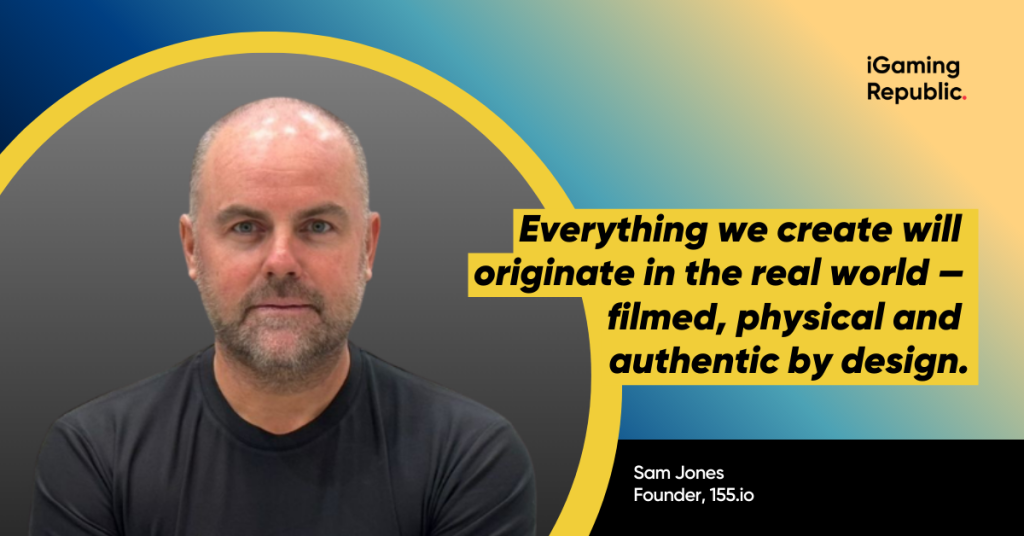
The second area is continuing to use our studio environment to create new forms of real-world chaos that can evolve into compelling game experiences. We’re far less interested in building traditional digital products. Everything we create will originate in the real world — filmed, physical and authentic by design.
“Everything we create will originate in the real world — filmed, physical and authentic by design.”
Sam Jones, Founder of 155.io
We’re not trying to build the next crash game or slot title; there are already outstanding studios specialising in those areas. Instead, our focus is on experiences rooted in real-world activity. As software creation becomes increasingly shaped by AI, we believe the appeal of genuine, unscripted real-life content will only grow — and that’s exactly where we want to position ourselves.
About the author
Bianca Máthe
Bianca Máthe is Publisher of iGaming Republic. She spent close to a decade on the supplier side of iGaming, working across the sector's core verticals: platform and player-engagement technology and crypto payments. That mix gave her a working knowledge of how operators, suppliers and payment providers actually run. In 2025 she started a media project, bringing that operational grounding to her editorial work. Her output includes interviews with high-profile iGaming executives, original reports, and in-depth features covering licensing, M&A, and the operators and suppliers shaping the sector. Based in Malta, she spends much of her time getting closer to emerging sectors like prediction markets, tracking how they're developing before the rest of the industry catches up.
Do you have a story worth sharing?
Send it over to our editors!