Dutch gambling authority names Carol Verheij as new vice-chair
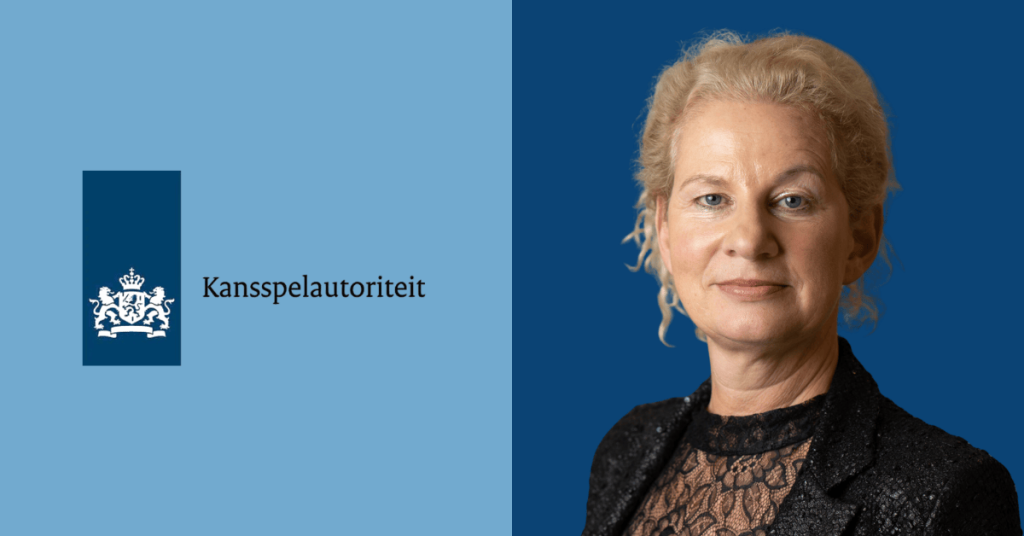
- Carol Verheij joins the Kansspelautoriteit Board of Directors on 1 March 2026, succeeding Bernadette van Buchem as vice-chair.
- Verheij brings deep public sector experience, including senior roles at the Dutch Safety Board, Justis, and the Council for Child Protection.
- The appointment fills a key vacancy in the KSA’s restructured three-member board, which took effect from 1 January 2026.
The Kansspelautoriteit (KSA), the Netherlands’ gambling regulator, has appointed Carol Verheij as a member of its Board of Directors and vice-chair, effective 1 March 2026. The KSA confirmed the appointment on 10 February.
Verheij replaces Bernadette van Buchem, who departed from the board on 1 January after serving since 2018. Van Buchem’s exit coincided with the KSA’s transition to a new governance structure, leaving Chairman Michel Groothuizen temporarily as the regulator’s sole board member.
A career in public administration
Verheij is currently secretary-director of the Dutch Safety Board (Onderzoeksraad voor Veiligheid), a position she has held since March 2016. Before that, she led Justis, the government’s screening and integrity authority operating under the Ministry of Justice and Security. She also served as acting director general of the Council for Child Protection, another ministry body focused on child welfare.
Earlier in her career, Verheij held senior management roles across the Ministries of Economic Affairs, Finance, Home Affairs and Kingdom Relations, and Infrastructure and Water Management.
She began her professional life in the field of foreign economic relations. Academically, she holds qualifications in both Dutch law and European and international law.
Michel Groothuizen, Chairman of the KSA Board of Directors, welcomed the appointment:
“With Carol, an experienced public administrator is joining our Board of Directors. She will focus primarily on issues related to legal frameworks, governance, integrity, and compliance,” said Groothuizen.
“These are topics that are constantly evolving within the dynamic field of the Netherlands Gambling Authority. With her appointment, the Netherlands Gambling Authority is further developing a future-proof organisational structure that optimally supports its ambitions and strategy.”
Verheij herself commented on taking up the role:
“I am very much looking forward to dedicating my energy, knowledge, and experience to the Netherlands Gambling Authority. The Netherlands Gambling Authority has an important social responsibility: ensuring that people, and certainly young people, can gamble safely,” said Verheij.
The online gambling offering, which is by definition cross-border, has added an unprecedented dimension to this task. Together with my colleagues at the Netherlands Gambling Authority and all other partners, I am going to make a positive impact on the reliability and safety of the gambling market.”
KSA January restructuring
The appointment is the first concrete outcome of the KSA’s new leadership model, announced in late 2025 and live from 1 January 2026. Under the revised structure, the board consists of one full-time chairman supported by two part-time directors. Groothuizen remains the sole full-time executive, with Verheij becoming the first of two part-time board members to be named.
The identity of the second part-time board member has not yet been confirmed publicly.
Alongside the new board configuration, the KSA has consolidated its operations into three directorates: Player Protection & Management Advice, led by Roos Lawant; Permits & Supervision, headed by Ella Seijsener; and Digitalisation, Analysis & Business Operations, under Daniël Palomo van Es.
The regulator stated the restructure was designed to respond to the “increasing complexity of gambling oversight, driven by technological developments such as artificial intelligence, the growth of illegal gambling supply, and intensified international regulatory cooperation.”
Illegal market outpaces regulated sector
Verheij takes her seat as the KSA navigates one of its most challenging periods since the Dutch online gambling market launched in October 2021.
Channelisation — the share of gambling revenue captured by licensed operators — has become a pressing concern. Audits show the illegal market outpaced the regulated sector for the first time in the first half of 2025, with offshore operators accounting for more revenue than their licensed counterparts during that period.
The regulator has responded with an active enforcement campaign. It recently contacted multiple sports betting operators over misleading early payout terms, and took action against One Casino and bet365 for offering prohibited youth football betting.
The KSA has also ordered bet365 to strengthen affordability checks and fined two operators a combined €4.98 million for regulatory breaches. Unibet received one of the market’s largest individual penalties — a €4 million fine for failing to protect players. JOI Gaming was also fined €400,000 for a role model advertising breach.
Looking ahead, the KSA has signalled it will extend scrutiny to B2B suppliers in 2026, broadening the scope of its enforcement activity beyond operators.
Legislative overhaul under new government
Verheij’s expertise in legal frameworks and compliance carries particular weight given the upcoming revision of the Remote Gambling Act (KOA). That overhaul was paused after the previous Dutch coalition collapsed and snap elections followed in late 2025.
The first wave of five-year online gambling licences — issued in September 2021 — expires in October 2026. Operators seeking renewal face tighter requirements, including mandatory exit plans and anti-money laundering risk assessments under Dutch law.
The KSA has made clear that operators with compliance failures during the initial licence period will face additional scrutiny at renewal.
Do you have a story worth sharing?
Send it over to our editors!