Romania to settle gambling advertising reforms by early 2026

- Senate authorises review of gambling advertising laws to begin in January 2026.
- Proposals include restrictions on street-level promotions and time-based limits for online campaigns.
- Chamber of Deputies expected to restart debates when parliamentary session opens in February.
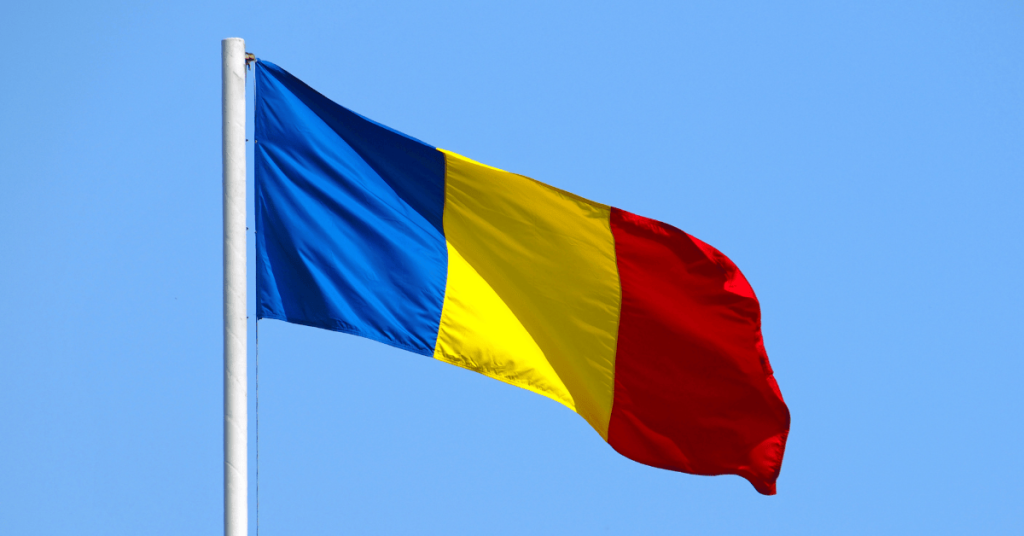
Romania will begin its review of federal laws and standards related to gambling advertising as of the beginning of January 2026.
At the close of 2025, the Senate of Romania authorised a series of legislative proposals to allow advertising reforms to be reviewed by the Chamber of Deputies and associated committees. The decision was authorised to allow Parliament to settle on new advertising rules by early 2026.
The advertising review comes as Romania’s gambling sector faces mounting regulatory pressure following a Court of Accounts audit revealing the country lost between €630 million and €900 million in gambling tax revenue between 2019 and 2023 due to inadequate oversight by ONJN.
Current advertising restrictions in force
Romania already enforces several advertising restrictions that took effect on 6 October 2025.
The National Audiovisual Council (CNA) implemented a prohibition on the use of public figures, athletes, and cultural personalities in gambling advertising campaigns across television, radio, and online platforms through Decision 573/2025.
The regulation aims to break the association between fame and gambling attractiveness, particularly among younger audiences. Previously, around 70 licensed gambling websites in Romania utilised celebrity endorsements, with operators frequently collaborating with singers, influencers, and football players for highly recognisable media campaigns.
Current Romanian gambling legislation also contains provisions requiring that advertising materials display the interdiction for minors’ participation in gambling activities, details of the gambling licence, and the logo of the National Gambling Office.
Advertising of bonuses offered by online operators may only be shown on their own operating platforms, or the platforms of their licensed affiliates, in addition to direct marketing messages to opted-in active players.
Parliamentary proposals currently under review include raising the minimum gambling age to 21 and implementing additional restrictions on online gambling promotions during daytime hours.
The review period begins in January 2026, with the Chamber of Deputies, the decisional chamber in this process, expected to restart debates once the next parliamentary session opens in February. The measures being discussed span several fronts, but the headline items are familiar to anyone tracking Romania’s recent policy direction.
Key proposals under review
Among the key measures under discussion are the prohibition of street-level gambling advertising, stricter time-based restrictions on online and broadcast promotions, and the alignment of gambling advertising standards with broader consumer-protection and digital-media laws.
Coalition member Save Romania Union (USR) has endorsed a comprehensive package of amendments calling for a ban on untargeted advertising and sports sponsorships, alongside restrictions on online gambling promotions between 06:00 and 00:00.
The USR continues to advocate for the complete overhaul of the sector, including the dismantling of ONJN, the National Gambling Office of Romania, following what it describes as systemic governance and auditing failures.
Additional proposals focus on introducing local-authority approvals for gambling licences and harmonising the national self-exclusion system across online and land-based venues, a directive that ONJN aims to complete by the first half of 2026.
Regulator outlines 2026 priorities
The ONJN maintains its position as Romania’s central regulatory authority for gambling. Last week, President Vlad Soare published a programme and open letter outlining ONJN’s key objectives for 2026, prioritising the heightened enforcement of existing laws and the modernisation of core regulatory systems.
Soare has also backed calls for an overhaul of Romania’s gambling laws, urging policymakers to move towards a coherent and efficient legislative framework to replace what he called morally outdated gambling law.
The regulator flagged two rollouts targeted for Q1 2026: a unified national self-exclusion system designed to work across both retail and online gambling, and a geolocation-based QR framework built into ONJN’s central register.
“Any citizen can now verify where gaming machines are located, who owns them and whether they are legal,” Soare wrote.
Tax regime creates additional pressure on operators
The advertising debate unfolds against the backdrop of major tax increases imposed on Romania’s gambling sector in August 2025 through Law 141/2025. Online gambling operators now face a 30% tax on gross gaming revenue, up from the previous 21%, whilst retail operators pay 25% on GGR, also up from 21%.
The tax hikes, enacted through Law 141/2025, represent one of the most substantial GGR tax increases in Europe in recent years. Online operators must also pay an annual licence fee of €300,000, plus a minimum annual authorisation tax of €480,000, up from €400,000.
Players themselves face increased taxation on their winnings. Since 1 August 2025, a progressive taxation system applies: winnings up to 10,000 lei (approximately €2,000) are taxed at 4%, up from the previous flat 3% rate.
Winnings between 10,001 and 66,750 lei (€2,000–€13,350) incur a tax of 400 lei (€80) plus 20% of the amount exceeding 10,000 lei. Winnings above 66,750 lei (€13,350) face a tax of 11,750 lei (€2,350) plus 40% of the excess.
The government justified these measures as necessary to address budget deficits and restore fiscal responsibility following ONJN’s failure to properly monitor operators and collect due revenues.
Intensified black market enforcement
ONJN has dramatically escalated its enforcement activities under President Soare’s leadership.
Over the past five months, the authority conducted 5,130 control measures, imposed 130 sanctions worth 3.78 million lei (approximately €760,000), and filed 32 criminal complaints against unlicensed operators.
The regulator executed nationwide raids on gaming venues in September 2025, conducting simultaneous unannounced inspections across multiple locations to verify self-exclusion procedures, detect minors in gaming halls, and identify illegal gaming equipment.
Additionally, officials have seized 144 gambling devices, blacklisted 93 websites, revoked 28 licences, and temporarily suspended three licensed online gambling platforms. ONJN recently added Polymarket to its blacklist for operating without a local licence, bringing the total number of recently barred sites to 30.
The authority has also filed criminal charges against entities offering illegal online gambling services that allowed Romanian players to access their platforms, targeting not only visible illegal activity but also the networks profiting from the black market.
ONJN has established a public reporting system through WhatsApp (0761 890 899), encouraging community members to report illegal venues, unlicensed platforms, instances where minors gain access to physical locations, and cases where self-exclusion procedures are not properly implemented.
Legal observers expect pivotal year
Legal observers agree that the months ahead will be pivotal in shaping Romania’s long-term gambling policy. There is growing consensus that 2026 could mark a turning point in the modernisation of the market.
However, the government needs to settle on its regulatory principles, as gambling licences demand a sense of stability and sustainability that has been neglected due to continual changes since 2018.
Industry analysts note that Romania is entering a phase of regulatory consolidation in the gambling sector, with the Senate’s decision on street and public advertising reflecting a broader effort to strengthen the legal framework and introduce more measures focused on player protection.
The focus of 2026 is on creating a stable and transparent regulatory environment that promotes responsible gambling and supports a sustainable market for licensed operators.
The immediate timeline is now more defined. The review process begins in January 2026 off the back of the Senate’s year-end authorisations, with the expectation that the Chamber of Deputies will restart debates when the next parliamentary session opens in February, and that committee work will shape whatever final package emerges.
Both lawmakers and the regulator are pushing that the endgame is wider than marketing restrictions. Even as the advertising debate reboots, the discussion has turned advertising into the opening battleground of a wider reform cycle, one now mixing player-protection messaging with questions over enforcement capacity, regulatory trust, and whether Romania is heading for incremental adjustments or a full rewrite of its gambling framework.
About the author
Bianca Máthe
Bianca Máthe is Publisher of iGaming Republic. She spent close to a decade on the supplier side of iGaming, working across the sector's core verticals: platform and player-engagement technology and crypto payments. That mix gave her a working knowledge of how operators, suppliers and payment providers actually run. In 2025 she started a media project, bringing that operational grounding to her editorial work. Her output includes interviews with high-profile iGaming executives, original reports, and in-depth features covering licensing, M&A, and the operators and suppliers shaping the sector. Based in Malta, she spends much of her time getting closer to emerging sectors like prediction markets, tracking how they're developing before the rest of the industry catches up.
Do you have a story worth sharing?
Send it over to our editors!