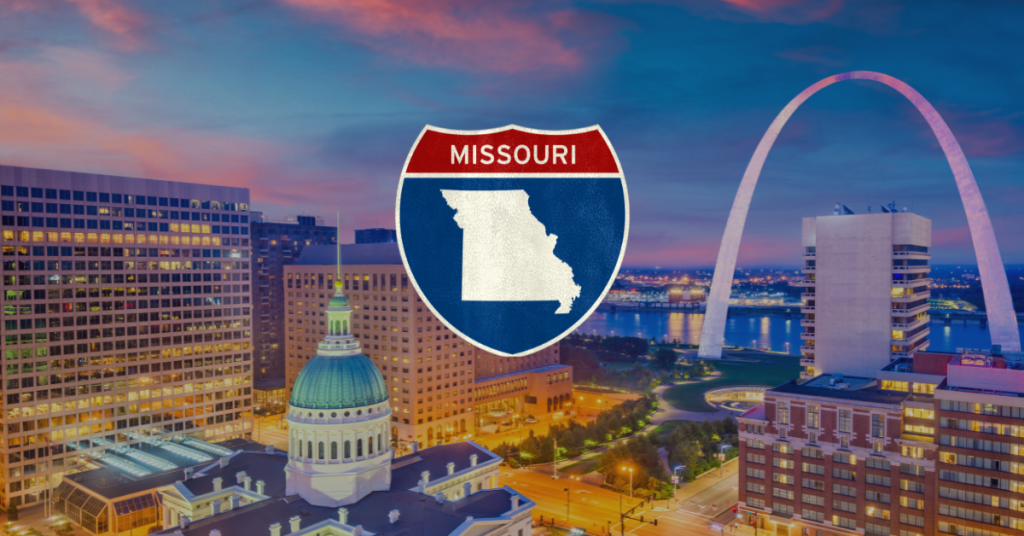
Missouri sports betting surpasses $543 million in inaugural month
- Missouri bettors wagered $543 million across online and retail sportsbooks during December 2025, the first month of legal operations.
- The state collected just $521,000 in sports wagering tax revenue from operators despite the substantial betting volume.
- Operators provided more than $125 million in promotional benefits, resulting in a collective negative adjusted gross revenue of $20.8 million.
Missouri’s sports betting market launched with substantial activity in December 2025, generating $543 million in total wagers during its first month of operations.
However, the state’s tax revenue fell dramatically short of projections, collecting just $521,000 and raising questions about the financial structure of the newly legalised industry.
The Missouri Gaming Commission reported that online platforms captured $538.9 million of the total handle, whilst retail sportsbooks at casinos and professional sports venues accounted for just over $4 million. The market recorded more than 25 million individual bets during the inaugural month, with 99% placed online.
Promotional spending eliminates taxable revenue
Missouri collected approximately $521,000 in sports wagering tax revenue from December operations, based on the state’s 10% tax rate.
The modest figure represents a fraction of earlier estimates that projected sports betting could generate substantial annual revenue for education programmes and problem gambling treatment.
The 16 licensed operators provided customers with more than $125 million in free bets and promotional benefits during the launch period.
Combined with $438 million paid out in winnings and additional deductions for voided or cancelled wagers, total deductions reached approximately $564 million. This resulted in operators collectively reporting a negative adjusted gross revenue of about $20.8 million for December.
“The license-fee total reflects the fact that a majority of the licenses issued at launch are five-year licenses,” Mike Leara, executive director of the Missouri Gaming Commission, said in a news release.
“These figures also reflect a market in its early stages, including the impact of significant promotional deductions that are customary during initial rollout.”
The state additionally collected nearly $7.5 million from initial licensing fees, bringing total sports wagering-related revenue to approximately $8 million for December.
Market leaders emerge during launch
FanDuel emerged as the market leader during the launch period, capturing approximately $212 million in online wagers and controlling close to 40% of the mobile market.
DraftKings followed with roughly $195 million in handle. The two operators combined accounted for more than $400 million of Missouri’s total wagering activity.
The remaining market share was divided amongst BetMGM, Caesars Sportsbook, bet365, Fanatics Sportsbook, Circa Sports, and theScore Bet. Several retail sportsbooks at casino properties also processed physical wagers, though retail activity represented less than 1% of total handle.
Sports betting launched in Missouri on 1st December 2025, following narrow voter approval of Amendment 2 in November 2024. The constitutional amendment was passed by just 2,961 votes out of almost 3,000,000 cast, with final certified results showing 1,478,652 votes in favour and 1,475,691 opposed.
Tax structure draws criticism from lawmakers
Missouri’s 10% tax rate on adjusted gross revenue positions the state amongst those with the lowest sports betting taxation in the US. By comparison, the state’s 13 licensed casinos pay a 21% tax on net receipts. During December, casinos paid $36.2 million in taxes on net winnings of $172.4 million.
House Budget Committee Chairman Dirk Deaton, a Republican from Noel, expressed disappointment with the early revenue figures.
“We might as well have just made them tax free at this point,” Deaton said.
State Senator Rusty Black questioned how quickly education funding would materialise, noting constitutional constraints prevent lawmakers from easily adjusting the tax structure.
“Sports gaming will probably provide $100 million to education total, as long as I don’t die in the next 10 years,” Black said.
The initiative campaign, organised by Missouri’s professional sports teams and funded primarily by DraftKings and FanDuel, cost approximately $43 million.
Revenue allocation and market outlook
Under the Missouri Constitution, the first $5 million in annual sports betting tax revenue is earmarked for the Compulsive Gaming Prevention Fund, with remaining funds designated primarily for public education. Because December’s tax intake fell well below that threshold, no funds were directed to schools during the launch month.
The commission anticipates using 9% of licensing fees for administration, with the remainder transferred to the Compulsive Gaming Prevention Fund. However, most licensing revenue represents a one-time infusion, as major licences carry a five-year term.
Industry representatives described the early results as typical for a new market.
“This early performance shows that Missouri bettors were eager for a regulated marketplace,” Christopher Boan of BetMissouri.com said. “If engagement levels hold steady and operators continue investing in the market, Missouri will be well-positioned to cultivate a thriving sports wagering ecosystem.”
Ryan Butler, senior editor for Covers, cautioned against expecting sports betting to meaningfully alter state finances.
“Sports betting isn’t going to be a panacea for Missouri’s budget,” Butler said.
Industry analysts anticipated heavy promotional spending during initial months of operation, a pattern consistent with launches in other states.
Promotional deductions typically decline after the launch phase as operators shift from customer acquisition to retention strategies. Data from mature markets shows promotional deductions stabilising at 5-15% of gross revenue within 12-18 months of launch.
The Missouri sports betting market went live with eight operators on 1st December, following weeks of preparation during which online registration opened ahead of the launch.
Notable additions to the market included theScore Bet’s rebranded launch after PENN Entertainment completed its transition from ESPN BET.
Missouri’s legislation permits up to 14 online licences and unlimited retail locations at licensed casinos and professional sports venues.
The state’s four major professional franchises—the Kansas City Chiefs, St. Louis Cardinals, Kansas City Royals, and St. Louis Blues—received authorisation to partner with online operators. Two untethered licences, which do not require casino or sports team partnerships, were awarded to DraftKings and Circa Sports.
The coming months will test whether Missouri’s competitive tax structure successfully balances operator profitability with public revenue goals.
As promotional periods expire and the market matures, tax collections should increase, providing clearer indicators of the industry’s long-term fiscal contribution to education and problem gambling prevention programmes.
Do you have a story worth sharing?
Send it over to our editors!