Kinga Warda, MGA: ‘Responsible innovation should be seen as a competitive advantage, not a constraint’

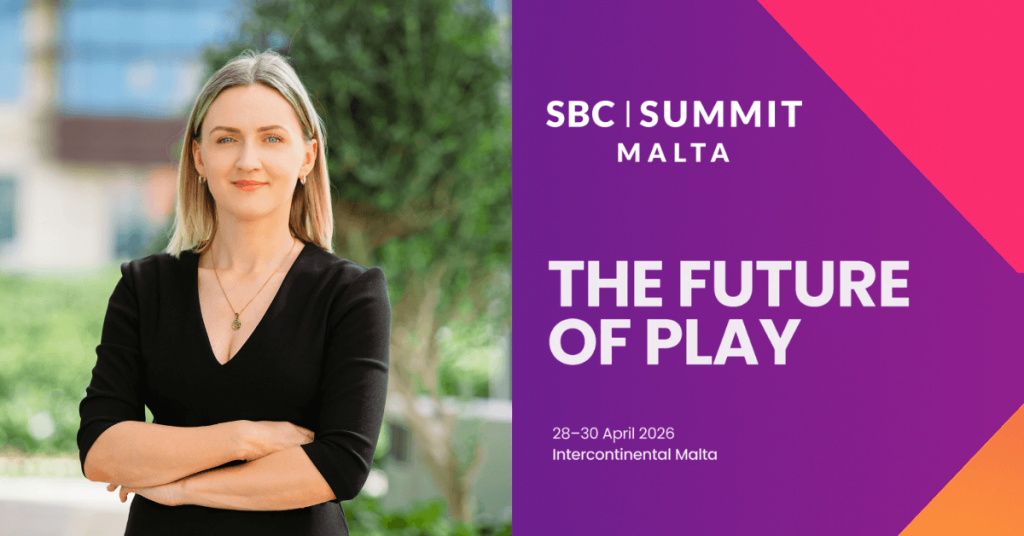
Kinga Warda, Chief Officer for Policy and International Affairs at the Malta Gaming Authority, sets out what operators must do now to prepare for the EU AI Act and explains how the AI Gaming Charter turns broad regulatory principles into actionable guidance.
The EU AI Act is no longer a distant deadline. As implementation moves closer, gaming operators are confronting a practical reality: knowing what the regulation says and knowing how to operationalise it are two very different things.
Kinga Warda is Chief Officer for Policy and International Affairs at the Malta Gaming Authority, one of the world’s most prominent gaming regulators and a driving force behind the proposed AI Gaming Charter.
Warda will be speaking at SBC Summit Malta as part of the session “AI in Gaming: Shaping the Industry’s First AI Charter” on Thursday 30 April, 12:00–13:00. Ahead of that, she spoke to iGaming Republic about the skills gap holding operators back, how regulators can enable rather than inhibit innovation, and what unprepared operators should be doing right now.
This Q&A covers:
- The biggest challenges operators face in translating the EU AI Act into operational practice
- How the AI Gaming Charter bridges the gap between broad principles and clear standards
- The most important steps unprepared operators should be taking now to become future-ready
iGaming Republic: As the EU AI Act moves closer to full implementation, what are the biggest challenges gaming operators face in translating regulation into practice?
Kinga Warda: The primary challenge is moving from legal interpretation to operational reality. The EU AI Act is intentionally principles-based, but operators need to translate those principles into system design, governance processes, and day-to-day decision-making.
In the gaming sector specifically, this is compounded by the complexity of AI use cases, ranging from fraud detection and player protection to marketing and personalisation. Many of these systems may fall into high-risk or sensitive categories, requiring robust risk assessments, transparency measures, and human oversight.
Another key difficulty is mapping existing systems against the AI Act’s classifications. Operators often already use advanced analytics, but may not have clear visibility over where AI is embedded or how it should be categorised under the Act.
Finally, there’s a skills and governance gap: ensuring that compliance, technical, and operational teams are aligned and equipped to implement these requirements consistently across the organisation.

Going to SBC Summit in Malta? Use code IGRPARTNERVIP to get 42% off your VIP ticket.
iGR: What role will the AI Gaming Charter play in helping operators move from broad principles to clear, actionable standards?
KW: The AI Gaming Charter is intended to act as a bridge between regulation and implementation.
While the EU AI Act sets out horizontal requirements, the Charter translates those into sector-specific guidance tailored to the realities of gaming. This includes practical interpretations of concepts like fairness, transparency, and accountability in contexts such as player interaction, risk profiling, and automated decision-making.
Importantly, the Charter is not about adding another layer of regulation; it’s about providing clarity and consistency. Operators will benefit from shared expectations, common terminology, and examples of good practice that reduce ambiguity.
It also creates a collaborative framework, where industry and regulators can align on responsible AI deployment, rather than approaching compliance in isolation. Over time, this should help raise standards across the sector while supporting sustainable innovation.
iGR: How can regulators strike the right balance between encouraging innovation and ensuring responsible, compliant AI deployment?
KW: Striking that balance starts with adopting a risk-based and proportionate approach.
Equally important is regulatory engagement. Creating open channels with operators, testing ideas through sandboxes, and encouraging early dialogue can help innovation happen within a compliant framework rather than in spite of it.
Clarity is also key. When expectations are well-defined, innovation becomes easier, not harder. Operators are more confident investing in AI when they understand the boundaries.
Ultimately, responsible innovation should be seen as a competitive advantage, not a constraint.
iGR: For operators that may feel unprepared, what are the most important steps they should be taking now to become future-ready?
KW: The first step is understanding your AI landscape. Operators should identify where AI is being used across their organisation and assess those systems against the EU AI Act’s risk categories.
From there, building internal governance structures is critical. This includes clear accountability, documentation processes, and cross-functional collaboration between legal, compliance, and technical teams.
Operators should also start implementing basic safeguards, such as transparency measures, human oversight mechanisms, and testing for bias or unintended outcomes.
Training is another key area. Ensuring that teams understand both the regulatory requirements and the ethical implications of AI will be essential moving forward.
Finally, engaging with initiatives like the AI Gaming Charter can provide practical guidance and help operators benchmark their approach against emerging best practices.
iGR: What are you most excited to see and hear at the SBC Summit in Malta?
KW: I’m most interested in the honest conversations: what’s actually working with AI, and where the challenges still are.
In day-to-day settings, people don’t always over-share with the regulator, understandably. But events like this tend to change that a bit. The setting is more open, the discussions more practical, and you get a much clearer view of what’s really happening on the ground.
That’s incredibly valuable for us, because it helps close the gap between how things are written and how they actually play out in practice.
And yes, some of the best insights usually come from the conversations that aren’t on the agenda.
About the author
Bianca Máthe
Bianca Máthe is Publisher of iGaming Republic. She spent close to a decade on the supplier side of iGaming, working across the sector's core verticals: platform and player-engagement technology and crypto payments. That mix gave her a working knowledge of how operators, suppliers and payment providers actually run. In 2025 she started a media project, bringing that operational grounding to her editorial work. Her output includes interviews with high-profile iGaming executives, original reports, and in-depth features covering licensing, M&A, and the operators and suppliers shaping the sector. Based in Malta, she spends much of her time getting closer to emerging sectors like prediction markets, tracking how they're developing before the rest of the industry catches up.
Do you have a story worth sharing?
Send it over to our editors!