Data scouts expose global betting network targeting German amateur football

Table of contents
- Kirchheimer SC football club finds out about global betting on their matches
- Scouts at German amateur football matches transmit real-time information to international bookmakers through Sportradar, making live betting possible despite a ban
- Companies like Betano, Interwetten, and bet365 are suspected of using German-language interfaces to reach bettors and Sportradar scouts
Released in 2024, DW’s documentary exposes a hidden network of data scouts infiltrating German amateur football matches, feeding live match information to Germany-licensed betting operators despite domestic legislation declaring such activities illegal.
Exploiting amateur soccer
Titled Exploiting amateur soccer – The greed of the gambling industry (Angriff auf den Amateurfußball – Die Gier der Wettindustrie), the investigative journalism piece is showing how betting companies can offer betting on football games from the amateur league to local and foreign bettors online.
The documentary was initially released on German TV and broadcast networks last year, in 2024, and has now been made available on YouTube.
The story kicks off in München, where an amateur football club, Kirchheimer SC, learns that 25 websites are offering sports betting on their matches. Both the management and players of the club are shocked by this finding. Together with DW’s investigative team, they launch an investigation at their upcoming game to uncover scouts sending live data to the betting websites.
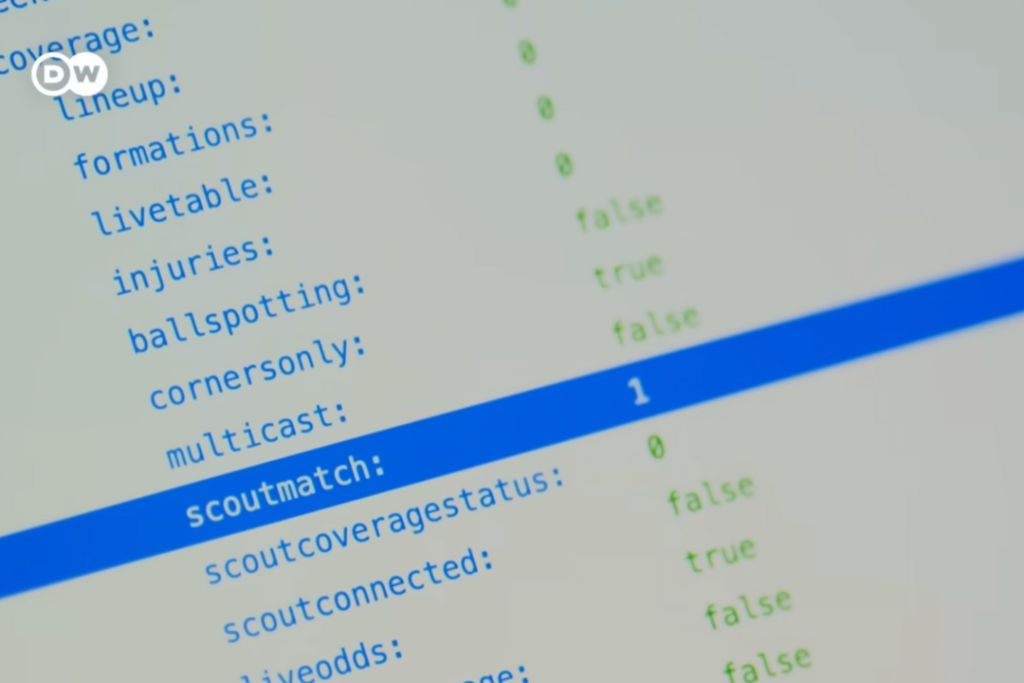
The investigators manage to access to the source code of the websites to track the scouts’ real-feed, uncovering the company behind it.
The documentary is a joint project of various public broadcasters and was originally broadcast as part of the “ARD Story” series, according to GambleJoe. Read on to learn which gambling companies are involved.
Kirchheimer SC discovery
The story centers on Kirchheimer SC, a local football club in Bavaria’s fifth division where players have grown up together since youth teams.
Vice-captain Philipp Maiberger has played for the club since he was six years old. Christian Boche has kept the team running for 20 years as the club’s heart and soul. The Boche family had no idea that people could bet on their team until investigators showed them 24 betting sites offering odds on their games in real-time.
“Pretty amazing that people around the world are betting on our match in little old Kirchheim, in the fifth division,” said Ludwig Boche, Christian’s son and board member.
During one match against the 1860 München reserve team, most websites had Kirchheim winning at 6-to-1 odds. A €1,000 bet would bring a whopping €6,000 in winnings if successful.
The family was shocked to discover they could follow their own game online with just a five-second delay from live action. They started to investigate how their matches were monitored on-premises without their knowledge or consent.
“Annoying. At least one person is here relaying that data. It could be someone sitting up in the bar, while having some food and a beer!” says Christian Boche in the documentary just moments before confronting the scouts.
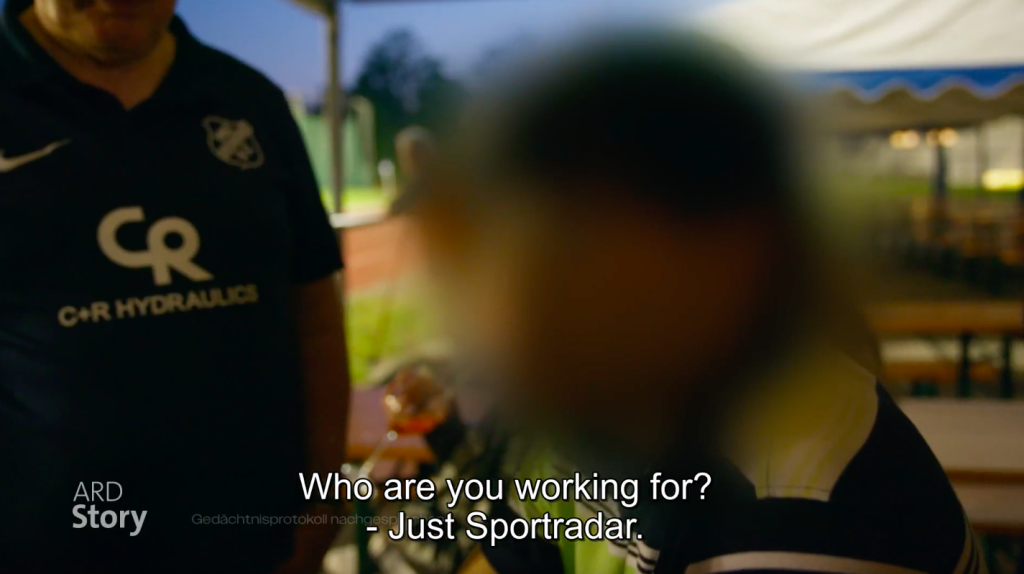
They began monitoring who was attending the game and quickly discovered a couple sitting on a bench, transmitting live data to bookies through a smartphone.
“I was told the data was for tracking whether there are any match-fixers. That’s all I know,” the scout stated when confronted.
The Hessian Football Association published guidance for amateur clubs on identifying and removing data scouts after similar incidents across multiple venues.
Screen capture from DW’s documentary.
Technical analysis revealed data scouts transmitted 266 separate match updates during a single half, with information flowing directly to betting operators.
The data gathered by DW investigators shows that during the 2023-2024 season, Sportradar gathered live data on at least 2,700 amateur matches in Germany.
Many contradictions
Sportradar’s business model shows many contradictions regarding their sports integrity monitoring. The company supplies betting operators with real-time data and is offering fraud detection services to sports organisations at the same time.
“I don’t understand the connection to this interview,” said Andreas Krannich, Managing Director Integrity Services at Sportradar, when questioned about data collection at amateur matches during a London office visit by the investigation team.
Sportradar later stated it only works with licensed betting providers contractually obliged to follow local laws.
The company’s integrity services division reported 33% revenue growth, driven by demand for fraud detection solutions. This expansion may occur alongside continued data supply to betting markets that create the very vulnerabilities Sportradar claims to combat.
Football players insulted online
Blumenthal, a football club based in Bremen, wants to lead the fight against betting on clubs like theirs. Unfortunately, the club has no leverage in preventing people from betting on their matches.
This follows after receiving aggressive messages from international bettors angry about unexpected results, showing the global reach of these operations, with players feeling uneasy and disturbed by social media messages, which include insults and death threats.
“Of course it makes me angry, but it still happens, despite being banned. What I really want to see is the people who issue these bans to also think about how to enforce them,” says club spokesperson.
“If any of our players bet, they’re out. Period,” said club officials, establishing zero-tolerance policies for gambling involvement.
Match-fixing vulnerabilities
Former Austrian goalkeeper Bartolomej Kuru, who served a two-year ban for match-fixing, explained how lower-league games can be manipulated so players abroad can make big wins.
“When they kick the ball to you, you wait to pass until the opposing forward comes, and when they shoot you react a second too late. You’d meet them after the game to get cash. And that was it,” he explained for DW’s documentary.
He received cash payments for ensuring specific goal tallies, with criminal networks reportedly based in Asia coordinating the match-fixing schemes.
Several questionable matches from BSC Hastedt in Bremen had unusually large bets on them. A player from Denmark bet 10,000 euro that the team would lose, even with Hastedt being a clear favorite. It has been proven that one of the players of Hastedt bet on losing, raising major match-fixing alarms.
Do you have a story worth sharing?
Send it over to our editors!