Arizona moves to revoke Underdog licence over prediction markets partnership
- Arizona Department of Gaming issues notice to revoke Underdog’s fantasy sports licence over Crypto.com partnership.
- First US state action to strip operator licence for prediction market involvement.
- Fanatics and PrizePicks face similar risks as regulators warn all licensees must comply.
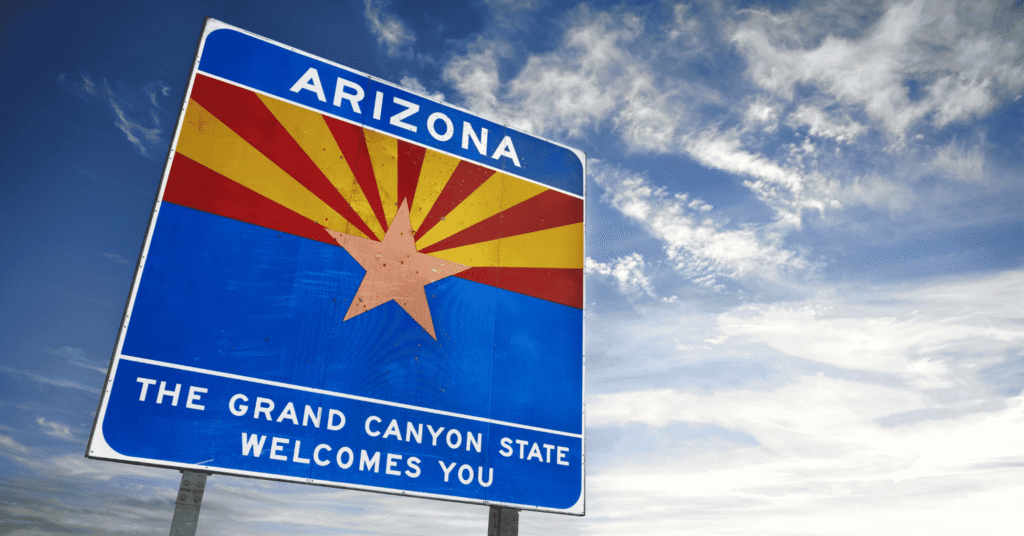
Arizona has become the first US state to move against a licenced gaming operator over prediction market involvement, issuing a notice of intent to revoke Underdog’s fantasy sports contest operator licence on 5 December.
The Arizona Department of Gaming (ADG) cited the operator’s partnership with Crypto.com and its role in enabling sports event contracts as grounds for the unprecedented enforcement action.
The decision marks a watershed moment for the gaming industry as operators increasingly pursue prediction market opportunities.
Underdog has held licence FS200008 since 23 August 2021 and generated nearly $1.8 billion in entry fees in Arizona in September, ranking third amongst the state’s 14 daily fantasy sports (DFS) licensees.
Regulators cite ‘aiding and abetting’ illegal conduct
The ADG’s notice, obtained through public records requests, concludes that Underdog’s relationship with Crypto.com constitutes support for unlawful gaming activity despite the operator not offering prediction markets directly in Arizona.
“ADG has determined that Underdog, by contracting with Crypto, benefitting from Crypto’s services, supporting Crypto’s interests, and providing financial support to Crypto is aiding and abetting Crypto’s illegal conduct in Arizona and providing it with a façade of legitimacy,” the department stated.
“Moreover, and in the same fashion, Underdog’s relationship with Crypto is an association that poses a threat to the public interest of this State.”
Chris Kotterman, Senior Policy Advisor in the Arizona Governor’s Office, explained the rationale at the National Council of Legislators from Gaming States (NCLGS) Winter Meeting in Puerto Rico on 13 December.
“There’s a very clear case that the operator was offering something in Arizona that we consider to be an illegal product,” Kotterman told attendees.
“We did that because they are partnered with Crypto.com to offer a prediction market product.”
Background to enforcement action
Arizona’s move follows months of escalating tensions over prediction markets. The ADG issued cease-and-desist letters to Kalshi, Robinhood and Crypto.com in May, classifying their sports event contract offerings as illegal gambling in Arizona. Six other states took similar actions.
In September, ADG Director Jackie Johnson sent a warning letter to all licenced operators stating that relationships with prediction market platforms could jeopardise their gaming authorisations, even for activity occurring outside Arizona’s borders.
“The Arizona Department of Gaming is committed to thoroughly investigating and evaluating the suitability of our licensees that maintain relationships with operators conducting illegal, unlicensed gaming activity in Arizona,” Johnson said.
“When unsuitable conduct is occurring, the department will take enforcement action consistent with its statutory authority to protect consumers, preserve lawful gaming revenues to the state and maintain public confidence in Arizona’s regulatory framework.”
Crypto.com ceased offering event contracts in Arizona earlier in December following the regulatory pressure.
The platform also withdrew sports derivatives in Illinois, Maryland, Massachusetts, Michigan, Nevada, New Jersey and Ohio, all states with legalised online sports betting.
Underdog vows vigorous defence
Nicholas Green, General Counsel for Underdog, confirmed the company will appeal the revocation notice.
“Arizona regulators are trying to supersede federal law, which they cannot do,” Green stated. “We will vigorously defend against this illegal action.”
In a social media post, Green emphasised that Underdog’s prediction market relationship with Crypto.com in other states does not pertain to its fantasy sports product in Arizona. He noted that Underdog customers in Arizona cannot access sports event contracts through the platform, making it one of 26 states where the company does not offer its prediction market.
Underdog has 30 days from the 5 December notice to request a formal hearing or lodge an appeal. The company continues to list Arizona as active for its players.
Other operators face scrutiny
Whilst Underdog is currently the only operator to receive a formal revocation notice, Arizona officials indicated similar conduct by other licensees would face equivalent scrutiny.
When asked if additional operators could face action, Kotterman said:
“I think the department would look similarly on someone who’s partnering with someone who’s doing the things that we consider to be unlawful in the state of Arizona. But I’m not the director of the department, so I can’t speak to what she might do.”
Several other Arizona licensees have prediction market partnerships.
Fanatics Betting and Gaming offers prediction markets through a partnership with Crypto.com, launching Fanatics Markets on 3 December. PrizePicks maintains relationships with Kalshi and Polymarket, both of which received cease-and-desist letters from Arizona regulators.
Jordan Bender, Citizens equity research analyst, identified the operators most at risk.
“The two major companies we believe this will impact are Fanatics, with a high-single-digit handle market share in AZ (gaming licence), and PrizePicks (fantasy licence),” Bender noted.
“Fanatics launched Fanatics Markets two weeks ago with Crypto.com, and PrizePicks has a relationship with Kalshi and Polymarket.”
Industry giants appear insulated
FanDuel and DraftKings, which dominate the US sports betting market and hold both fantasy sports and sports wagering permits in Arizona, appear safer from regulatory action. Both operators are entering prediction markets but have structured their offerings to avoid conflicts with states where they hold sports betting licences.
FanDuel partnered with CME Group for financial contracts rather than sports event contracts. DraftKings is developing its own mechanisms to operate in both spaces without directly offering sports prediction markets in states with sports betting licences.
“We believe both of these companies took the cleanest way possible to avoid friction with states and, on the surface, should not be impacted by the decision out of Arizona,” Bender concluded.
Underdog’s strategic pivot
The Arizona action coincides with Underdog’s exit from traditional sports betting markets. The company announced it would cease sports betting operations in North Carolina effective 17 December, its only sports betting jurisdiction.
Underdog withdrew from Missouri sports betting just days before the state’s launch in November, despite securing a partnership with the Kansas City Royals for one of the state’s tethered betting licences.
“We wanted to let you know about an upcoming change in North Carolina: Starting December 17, sports betting will no longer be available via the Underdog platform,” the company notified customers.
“Don’t worry. Underdog isn’t going anywhere. You’ll still be able to make fantasy picks, play drafts, and enjoy everything else you love about the app using the same credentials as before.”
The exits signal a possible strategic pivot toward prediction markets, where Underdog launched its offering in September through its Crypto.com partnership. The platform now offers sports event contracts in 24 states, making it the first major DFS or sportsbook licence holder to enter the prediction markets space.
Broader regulatory landscape
Arizona joins at least seven states that have warned licence holders about prediction market involvement, including Connecticut, Illinois, Massachusetts, Michigan, Nevada and Ohio. However, the Grand Canyon State is the first jurisdiction to enforce sanctions through licence revocation proceedings.
Kotterman emphasised that licensing approval represents an ongoing evaluation in Arizona.
“We asked for information from Underdog about the nature of their relationship. We got that information, and then we decided that they were engaging in conduct that would threaten their licence,” he explained.
“They partnered with that operator, and that affects their suitability.”
He acknowledged Arizona may face litigation over the issue but stated regulators felt compelled to demonstrate seriousness about licensees not engaging in activity the state believes violates statutes.
“Approval as a regulated operator is an ongoing evaluation in Arizona, and the state government continues to assess all licensees’ conduct to make sure that you’re not engaging in activity with people who are unsuitable to be involved in the business,” Kotterman said.
The focus remains on in-state conduct despite Johnson’s September letter suggesting out-of-state prediction market activity could impact licensing decisions.
Industry implications
Arizona’s enforcement action raises questions about regulatory consistency and the boundaries of state authority. Bender noted inconsistencies in the state’s approach:
“The picking and choosing from the state creates some uncertainty with the inconsistency in Arizona’s line of thinking, in our view. For example, the state awarded Bet365 a gaming licence during a time it had black market exposure in China but is now stripping a licence for an offering not even in its state.”
The situation creates a complex compliance environment for operators navigating multiple state jurisdictions. Underdog, which recently deployed advanced player protection technology, now faces the prospect of losing market access despite compliance investments.
Multiple states permit sports betting yet classify prediction market sports contracts as illegal gambling, forcing operators to choose between market opportunities or risk losing established licences.
Legal battles continue in more than half a dozen states, with industry stakeholders forming coalitions to defend federal oversight of prediction markets. Final resolution could take several years and potentially reach the Supreme Court.
The timeline for Arizona’s proceedings remains uncertain, though the 30-day appeal window provides Underdog until early January to respond formally.
Do you have a story worth sharing?
Send it over to our editors!