William Hill set to close 200 shops, 1,500 jobs at risk

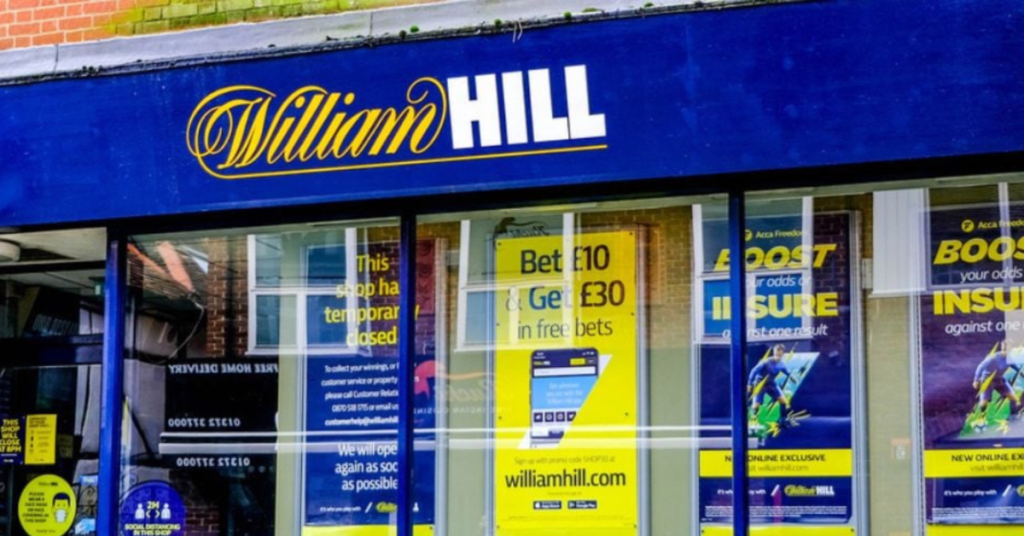
- Evoke plans to shut about 200 William Hill betting shops across Britain from 24 May, with up to 1,500 jobs at risk.
- The company cited rising cost pressures and UK gambling-tax changes announced in last November’s Autumn Budget as the drivers behind the decision.
- Remote Gaming Duty rises from 21% to 40% from 1 April 2026, with a new 25% remote betting rate to follow from 1 April 2027.
Evoke, the parent company of William Hill, has confirmed plans to close about 200 betting shops across Britain from 24 May, with up to 1,500 employees at risk of redundancy.
The company said the decision was driven by rising cost pressures and the UK government’s gambling-tax changes introduced in last November’s Autumn Budget.
The closures represent roughly 15% of William Hill’s approximately 1,300 retail locations nationwide.
Tax changes drive closures
An Evoke spokesman said:
“These decisions are never taken lightly, however in the face of rising cost pressures we must take action to ensure we can continue to invest in our core retail estate, with the right shops, in the right locations.”
The tax changes at the centre of the dispute are substantial. Remote Gaming Duty is set to increase from 21% to 40% from 1 April 2026. A new remote betting rate of 25% — covering general bets placed online, excluding horse racing and self-service betting terminals — is due from 1 April 2027.
Per Widerström, chief executive of Evoke, had warned of exactly this outcome when the policy was first announced in October 2025. He said at the time:
“These proposals are ill-thought-through, counterproductive, and highly damaging. It is clear these changes will significantly harm businesses, employees, and customers.”
Evoke’s financial position
The planned closures come against a difficult financial backdrop for Evoke. The company carries net debt of around £1.82bn and has seen its market value fall sharply since its £2.2bn acquisition of William Hill’s retail network four years ago.
UK betting revenue fell 22% in the final quarter of 2025 compared with the same period a year earlier. Total group revenue for that quarter reached £464m — a 7% sequential improvement, but below market expectations.
Evoke launched a formal strategic review in December, with Morgan Stanley and Rothschild appointed as advisers. The review is examining options including a potential sale of all or parts of the business. The company has not provided financial guidance for 2026 pending the outcome of that process.
Sector-wide concern
William Hill is not the only operator to have flagged the consequences of the new duty rates. Entain, owner of Ladbrokes and Coral, has also warned that higher taxes risk rendering certain shops unviable and could push activity towards unregulated alternatives.
Stella David, chief executive of Entain, said:
“Every point of [tax] increase would actually have an impact that certain shops would become unviable.”
She added that the “biggest winner by far from higher gambling taxes would be the black market“, citing the Netherlands as a market where elevated duties drove players to unlicensed sites.
Operators have also raised concerns about proposed mandatory affordability checks on customers, which they argue would compound the pressure already created by the duty increases.
Evoke latest developments
The shop closures cap a turbulent period for Evoke. Following the November Budget, the company immediately began executing its mitigation plans, warning that the new duty rates would add up to £135m in annual costs by 2027 and that thousands of jobs across the sector were at risk.
Full-year results showed group revenue of £1.79bn for 2025, a 2% year-on-year increase, though UK betting revenue dropped 22% in Q4 alone.
Despite the headwinds, the brand posted a strong showing at the 2026 Cheltenham Festival, with William Hill describing one day of the four-day meeting as its “best ever day” at the event, with Gold Cup turnover expected to top £10m.
Away from the retail pressures, Evoke also opened a new Leeds office in late 2025, consolidating more than 750 employees into a modern hub at West Village.
Adding to the company’s difficulties, a technical fault in William Hill’s Jackpot Drop promotional game in mid-March caused millions of pounds to be incorrectly credited to player accounts, with some balances reaching six figures. Evoke confirmed the error and began contacting affected customers to recover the funds, offering to let some players retain 11% of withdrawn amounts as a goodwill gesture.
The incident prompted threats of legal action from affected customers, adding further reputational and financial pressure to a business already navigating a formal strategic review.
About the author
Bianca Máthe
Bianca Máthe is Publisher of iGaming Republic. She spent close to a decade on the supplier side of iGaming, working across the sector's core verticals: platform and player-engagement technology and crypto payments. That mix gave her a working knowledge of how operators, suppliers and payment providers actually run. In 2025 she started a media project, bringing that operational grounding to her editorial work. Her output includes interviews with high-profile iGaming executives, original reports, and in-depth features covering licensing, M&A, and the operators and suppliers shaping the sector. Based in Malta, she spends much of her time getting closer to emerging sectors like prediction markets, tracking how they're developing before the rest of the industry catches up.
Do you have a story worth sharing?
Send it over to our editors!