Tribal-only Maine iGaming eyes 2027 debut
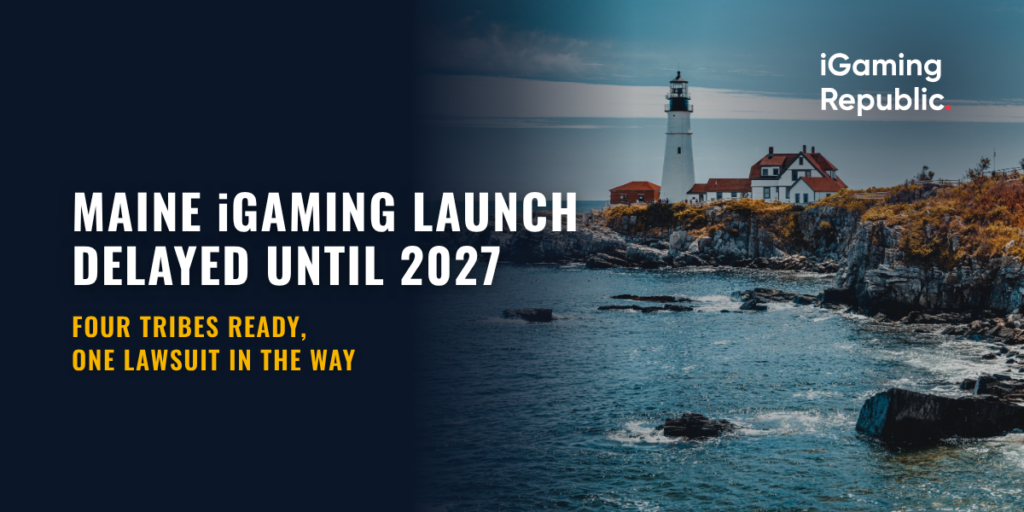
- Maine Gambling Control Unit sees Q1 2027 as the practical launch window for online casinos.
- Third draft of iGaming rules sets an 18% tax, a $50,000 operator fee and in-state wager servers.
- Churchill Downs-led lawsuit over tribal exclusivity could block the market before or after launch.
Maine’s first online casinos are unlikely to go live before 2027.
Milt Champion, Executive Director of the Maine Gambling Control Unit (GCU), now sees the first quarter as the practical launch window, with rulemaking, hiring and a licensing portal still unfinished.
Not a deadline
Champion treats the first quarter of 2027 as a target rather than a commitment. Gambling Insider asked him earlier this month whether a 2026 debut was still possible. He said:
“In my experience, the first quarter of 2027 is more practical.”
That is later than Caesars Entertainment had hoped. When it unveiled three online brands for Maine in June, Caesars said the deal positioned it and its tribal partners for a potential 2026 launch, pending regulatory approval.
The GCU must still hire six staff, arrange iGaming training and open a licensing portal with a supporting database. Operators can prepare their applications now, but they cannot file until the system is live.
The fourth-draft risk
The GCU published its third draft of the rules on September 30, with comments due by October 30. If the feedback prompts no substantive changes, the Office of the Attorney General has up to 120 days to review the rules’ legality.
Bigger amendments would mean a fourth publication and another comment round. Champion told SBC Americas:
“If that legal review requires a fourth publication, then it will push back the final adoption. If not required, then the rules will be sent to the Secretary of State for final adoption.”
Maine has been here before. Sports betting was legalized in May 2022 but did not launch until November 2023. Champion said:
“As with sports wagering, iGaming is new, and the rulemaking process has followed in the same lengthy fashion as with sports wagering.”
A tribal-only market
Governor Janet Mills let LD 1164 become law without her signature in January. It created a tribal-exclusive framework and made Maine the eighth US state with legal online casinos.
The Maine Gambling Control Board had urged a veto over monopoly concerns, and Champion had also opposed the expansion.
The Penobscot Nation, Mi’kmaq Nation and Houlton Band of Maliseet Indians have extended their Caesars sports betting deals to cover iGaming. Caesars plans to launch Caesars Palace Online Casino, Caesars Sportsbook & Casino and Horseshoe Online Casino.
The Passamaquoddy Tribe, a DraftKings sports betting partner, has not named an online casino partner. That leaves the fourth tribal license as the market’s main commercial unknown.
What operators sign up for
Under the 15-chapter draft, live-dealer studios, game engines and random number generators may sit outside Maine. The primary server that accepts and stores wagers must stay in the state.
GCU staff would inspect live systems and studios quarterly, with licensees paying for travel, lodging and meals. Routine game updates no longer need separate approval, as long as they do not materially change an approved game.
Operators pay a $50,000 initial license fee, and management services providers and suppliers pay $10,000. Revenue is taxed at 18%, with no deductions for free play, sign-up bonuses or other promotions.
Player funds must sit in a segregated account. Operators also need a $500,000 bond to fund their reserve, and the reserve must cover all player balances and unpaid winnings. Credit card deposits are banned, in line with the credit card restrictions Mills signed in April.
The director may issue temporary licenses valid for up to a year, or until a final decision on the application. Applicants need a SOC 2 Type II audit completed within the previous two years and a comparable license in good standing in another US state.
Logos and lockouts
Players must be 21 or older and physically in Maine. Ads cannot target under-21s, including on college campuses. Every ad must also show the beneficiary tribe’s name and logo at the same size as the operator’s branding.
Self-exclusion will run through an automated system that gives operators real-time access to additions and removals. Champion confirmed that idPair will run the program under a contract with the Maine Center for Disease Control and Prevention (Maine CDC).
A courtroom wildcard
Oxford Casino Hotel, its operating company BB Development LLC and parent Churchill Downs Incorporated sued Champion on January 23, 2026, in the US District Court for the District of Maine. They argue the state has “blessed a race-based monopoly” that shuts out Maine’s commercial casinos.
The other commercial venue, Hollywood Casino in Bangor, is operated by PENN Entertainment.
All four Wabanaki tribes intervened in April. The case does not have to be resolved before launch. However, the plaintiffs want Champion barred from enforcing the law, so an adverse ruling could block the market before it opens or disrupt it afterwards.
Waiting on Augusta
Analysts see a modest prize. J.P. Morgan’s Daniel Politzer estimated Maine iGaming at around $200m a year, according to CDC Gaming.
Deutsche Bank’s Steven Pizzella forecast $236m at maturity and up to $482m, assuming a 30/70 split between Caesars and DraftKings.
For now, the timetable sits with the attorney general’s office and a federal judge rather than with operators. Any further rewrite or a court injunction would push Maine’s debut deeper into 2027.
Do you have a story worth sharing?
Send it over to our editors!