Peru softens fines, hardens rules for betting ads
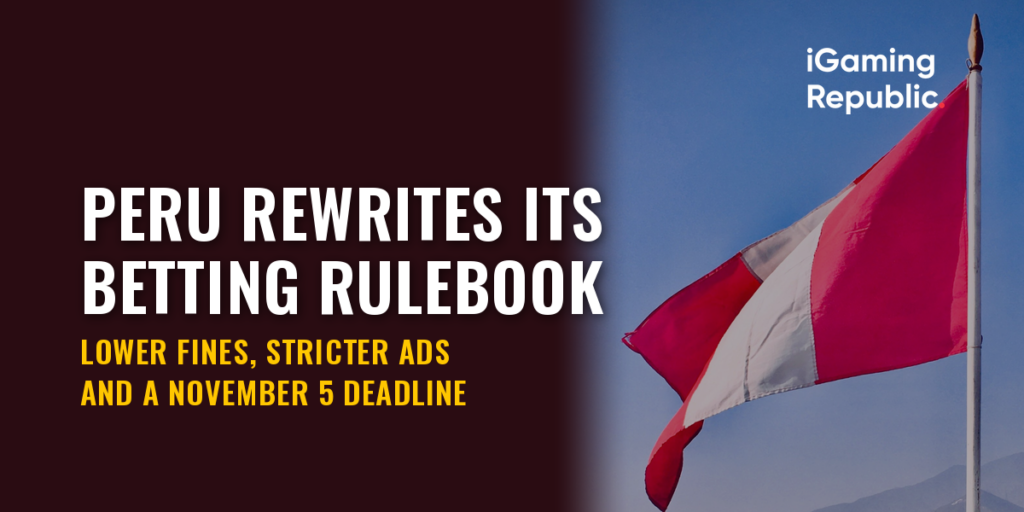
- Draft cuts the top fine from 200 UIT (about $320,000) to 70 UIT (about $112,000)
- Ads must name the license holder and its authorization number
- Public comments on the MINCETUR draft close on November 5
Peru’s Ministry of Foreign Trade and Tourism (MINCETUR) wants to cut the maximum fine for the most serious remote gaming breaches from 200 tax units (UIT) (about $320,000) to 70 UIT (about $112,000).
The draft decree, published for consultation on October 21, also tightens advertising rules and makes operators answerable for the influencers they hire.
The text amends the regulation of Law No. 31557, approved through Supreme Decree No. 005-2023-MINCETUR. MINCETUR published the draft under Ministerial Resolution No. 382-2026-MINCETUR in the official gazette El Peruano.
Comments can be filed for 15 calendar days through the ministry’s consultation portal. The window closes on November 5.
A softer stick
One UIT is worth S/5,500 in 2026. Under the current rules, fines run up to 50 UIT (about $80,000) for minor breaches, 150 UIT (about $240,000) for serious ones and 200 UIT (about $320,000) for very serious ones.
The draft decree resets those bands to one to 11 UIT (about $17,600), one to 35 UIT (about $56,000) and one to 70 UIT (about $112,000). Minor breaches could also end in a warning.
Very serious cases keep the heaviest tools. MINCETUR could still cancel an authorization or ban an operator for up to 10 years, or permanently.
Fines would also be capped at 10% of gross annual income from the year before the breach. Repeat offenders and unlicensed operators would get no such protection. Operators that cannot evidence their income when asked would face the maximum fine.
A new formula sets a base fine of 1, 3.5 or 7 UIT (about $1,600, $5,600 or $11,200) depending on severity. That figure is then adjusted for the probability of detection and any aggravating or mitigating factors.
The draft also proposes fine reductions for early admissions. Operators would get 50% off before the final investigation report and 35% before the sanction is notified. Paying without appeal would earn 25%.
According to MINCETUR’s explanatory memorandum, the new range better reflects the sector’s reality. The ministry says it is designed to deter without being excessive.
Influencers on the hook
Advertising is where the draft gets tougher. Only platforms, games and formats holding a valid MINCETUR authorization could be promoted. Every ad would have to name the license holder and show its authorization number.
Ads aimed at minors would be banned. So would messages presenting betting as a source of income or a fix for money problems. Linking gambling to social success or personal appeal would also be off limits.
Influencers would have to label sponsored content clearly. They could not promote betting to audiences made up mainly of minors. Operators would be responsible for third-party ads, including content from the creators they pay.
The addiction warning would stay on screen for at least five seconds in audiovisual and digital ads. In print and static formats, it would fill 10% of the space. Consumer watchdog INDECOPI would control, supervise and sanction advertising breaches. MINCETUR would check warnings on platforms and in betting rooms.
Lighter logins, deeper data
Several technical rules would ease, and the memorandum credits operator association APADELA with requesting them. The minimum player password would drop from eight characters to four. The ministry says this aligns Peru with international standards.
Full re-authentication would move from every 30 days to every six months. Automatic integrity checks on critical software would shift from every 24 hours to every 30 days.
Operators would no longer have to hand over system credentials before launch. Instead, they would provide access within 10 business days of an inspection request. In return, MINCETUR would receive more detailed reports on deposits, withdrawals, bets and player account status.
The memorandum counts 4,559 authorized sports betting rooms nationwide. Black-market enforcement is running in parallel. On October 2, MINCETUR said it had blocked 50 more unauthorized platforms, taking the total to 86 of the 157 targeted this year.
Deputies eye 5% levy
Tax is the other pressure point for licensees. Deputies from Partido Cívico Obras have registered Bill No. 00519-2026-2031-CD in the Chamber of Deputies. The initiative is led by Luis Aurelio Masco Cáceres.
It would raise the Selective Consumption Tax (ISC) on remote gaming and remote sports betting from 1% to 5% of each wager. For now, it remains a proposal.
The separate 12% tax under Law No. 31557 would not change. That levy applies to gaming revenue after prizes, refunds and maintenance costs, not to individual bets.
Peru has become a growth market for international groups. Betsson reported strong casino and sportsbook gains there in its Q3 results. Brazil’s government, by contrast, pulled the plug on its licensed market in September, and its Congress has since received 99 amendments to the ban.
Lima is tuning a regime it intends to keep. The lower ceiling and revenue cap give licensees clearer exposure. The advertising chapter will demand the most work, since affiliate and influencer contracts will need rewriting before any final decree takes effect.
Do you have a story worth sharing?
Send it over to our editors!