Krzysztof Opałka, Tequity: Building from the ground up

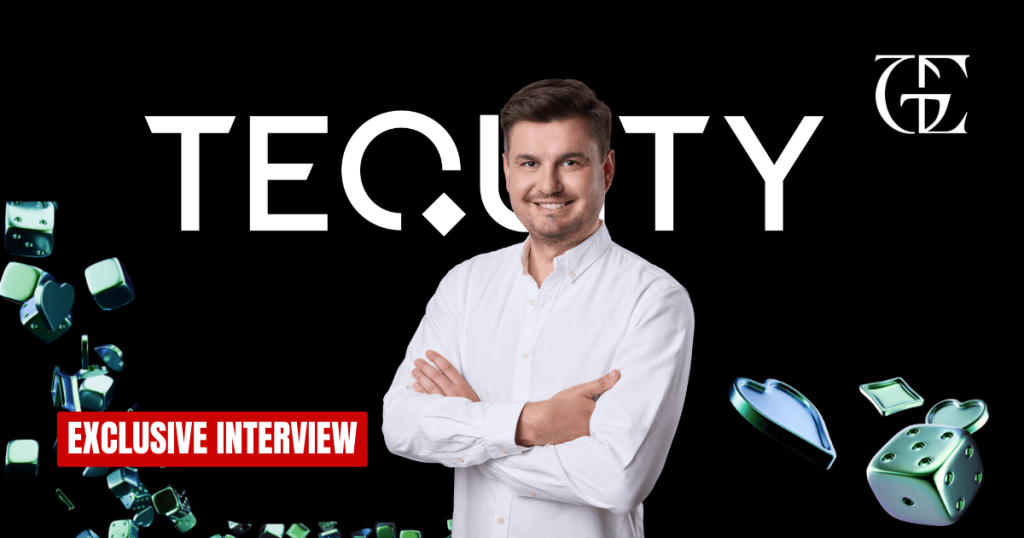
Krzysztof Opałka founded Tequity with a clear mission: give game studios the technical foundation they need to launch fast, build well, and scale without limits.
With a Kraków-based team, a SiGMA Digital Entrepreneur 2026 award, and two new product verticals already live this year, the company is making a strong case for itself as one of iGaming’s most interesting technology bets right now.
An exclusive sit-down with Tequity’s founder
The editorial team at The iGaming Europe had the opportunity to sit down with Krzysztof Opałka, CEO and founder of Tequity, for an exclusive interview. We wanted to understand the story behind the company, the decisions that shaped it, and where he sees iGaming infrastructure heading next.
Before Tequity existed, studios trying to get games to market faced the same wall every time. The RGS infrastructure, the compliance frameworks, the API integrations, was either locked down or slow to work with.
Studios spent months on technical groundwork before writing a single line of game logic. It was a problem the industry had normalised, and one that Krzysztof had seen up close long enough to know it did not have to be that way.
The iGaming Europe: Before Tequity, what problem were you watching the industry fail to solve, and when did you decide you were the one to fix it?
Krzysztof Opałka: The industry had normalised inefficiency. Talented studios were spending six to nine months solving infrastructure, compliance, and integration challenges before even thinking about gameplay. The RGS layer was treated as a gatekeeper instead of an enabler.
I kept seeing brilliant game ideas delayed or diluted because the technical foundation was either rigid or too slow. At some point, it became clear that if no one was going to redesign that foundation properly, we would. That was the real starting point of Tequity.
TGE: Was there a specific moment, conversation, or deal that made you think: this has to exist, and I have to build it?
KO: Yes. I remember a conversation with a studio that had an exceptional concept ready, strong art, strong math, but they were stuck waiting months for infrastructure alignment and certifications. They were losing momentum before launch.
That moment crystallised it for me. The industry didn’t need another game. It needed better rails for games to run on. Tequity was built to be those rails.
Kraków as a launchpad
The decision to base Tequity in Kraków was not accidental. Poland has become one of Europe’s most important technology hubs, producing engineering talent that competes at the highest level. For a company where the product is infrastructure and the margin for error is near zero, the quality of the team matters above everything else.
Tequity recently moved into THE SHIRE at Unity Centre in Kraków. Top location, a growing team, and a clear signal of where the company is heading. What the past few years have built is very much a foundation, not a ceiling.
TGE: Tequity is rooted in Kraków and built on Polish tech talent. Was that always the plan, and has it given the company a genuine competitive edge?
KO: Kraków is one of the strongest technology hubs in Central Europe and it’s also my hometown. Building Tequity here was both a strategic and a personal decision. The city offers access to outstanding technical developers, strong academic foundations, sensible economic conditions, and a work ethic that values precision and accountability.
Polish engineering talent is disciplined, analytical, and extremely strong in system architecture. When your product is infrastructure and compliance-heavy technology, precision matters more than hype.
Being rooted in Kraków has given us stability, technical depth, and long-term thinking. It’s not just a cost advantage – it’s a quality advantage.
TGE: What did the first year actually look like?
KO: We didn’t chase headlines. We built core architecture, automated deployments, and compliance tooling before we even started talking publicly. The first year was about building something that wouldn’t break under scale.
There were no shortcuts. Just clean code, long nights, and a very small team obsessed with getting the fundamentals right and top quality.
Building the right thing at the right time
Tequity’s RGS platform now supports over 20 studios who have collectively delivered more than 500 titles. It connects to over 100 APIs across the ecosystem and runs across most major regulated markets. Those numbers reflect a series of deliberate technical and commercial decisions made in the company’s earliest years.
The core philosophy has remained consistent: remove every obstacle between a studio and its first live title. Infrastructure as code, automated deployments, jackpot engines, multiplayer architecture, compliance built in from day one.
TGE: What should every game studio know about building on an RGS that most of them only figure out too late?
KO: They underestimate the hidden complexity.
An RGS is not just about hosting games. It’s about scalability under peak load, regulatory adaptability, jackpot architecture, multiplayer logic, version control, reporting accuracy, and seamless API orchestration.
If the foundation isn’t flexible, every future expansion becomes painful. Studios often realise too late that infrastructure decisions made early define their growth ceiling. The right RGS should remove friction – not create it.
Recognised on the global stage
In February 2026, Krzysztof Opałka was awarded Digital Entrepreneur 2026 at the SiGMA Eurasia Awards in Dubai. The recognition reflected Tequity’s commercial growth over the past two years, but also the approach behind it: an operator-first, infrastructure-led model that has earned trust from studios, operators, and investors across the industry.
For a company that started as a small team with a clear idea and a solid codebase, the moment carried real weight.
Read the full interview on The iGaming Europe.
About the author
Bianca Máthe
Bianca Máthe is Publisher of iGaming Republic. She spent close to a decade on the supplier side of iGaming, working across the sector's core verticals: platform and player-engagement technology and crypto payments. That mix gave her a working knowledge of how operators, suppliers and payment providers actually run. In 2025 she started a media project, bringing that operational grounding to her editorial work. Her output includes interviews with high-profile iGaming executives, original reports, and in-depth features covering licensing, M&A, and the operators and suppliers shaping the sector. Based in Malta, she spends much of her time getting closer to emerging sectors like prediction markets, tracking how they're developing before the rest of the industry catches up.
Do you have a story worth sharing?
Send it over to our editors!