Brazil’s betting market rides on Lula–Bolsonaro runoff
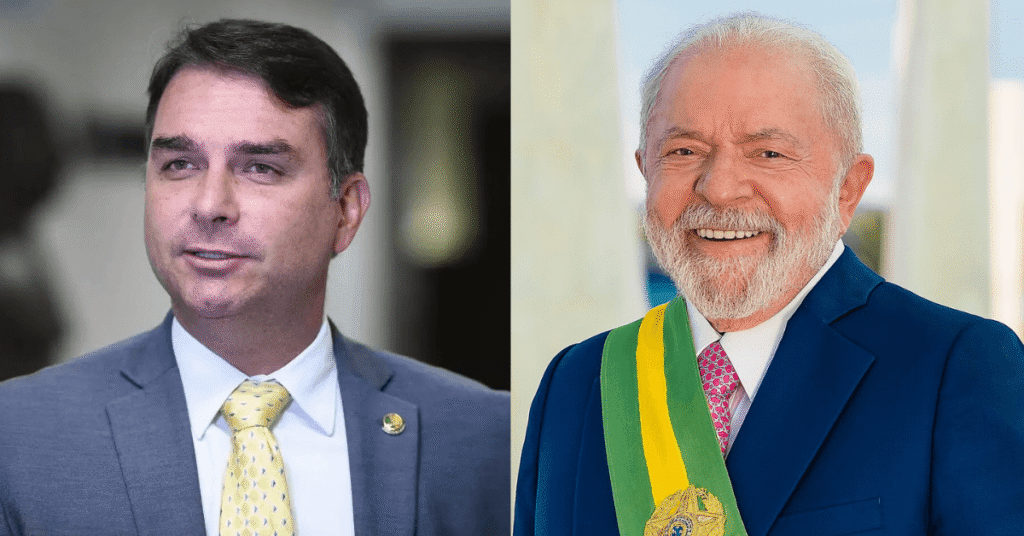
- Flávio Bolsonaro leads Lula 47.03% to 45.16%, sending Brazil to an October 25 runoff.
- Licensed betting sites must go offline from October 6 under Provisional Measure 1,394.
- The Supreme Court has yet to rule on industry requests to suspend the ban.
Senator Flávio Bolsonaro finished ahead of President Luiz Inácio Lula da Silva in Brazil’s October 4 first round, setting up a runoff on October 25.
The result could shape the political future of the betting ban Lula signed nine days before the vote, though the measure still faces Congress and the Supreme Court.
Flávio Bolsonaro took 47.03% of valid votes, or 56,103,033 ballots, in the Superior Electoral Court count. Luiz Inácio Lula da Silva received 45.16%, or 53,870,724, with 99.99% of ballots tallied by late Sunday night.
Pre-election polls had Lula ahead by around three points. Kalshi’s market took the opposite view, giving Bolsonaro an implied 57% chance of winning the presidency before voting began.
Bolsonaro, 45, is the eldest son of former President Jair Bolsonaro, whom Lula beat by under two points in 2022. Lula, 80, is seeking a fourth term.
Ban on the ballot
Provisional Measure 1,394 took effect on publication on September 25. It prohibits the operation, offering, intermediation and advertising of fixed-odds betting and online games, including under state concessions.
New deposits were barred immediately. Bettors had until October 5 to withdraw balances, and operators had ten days from publication to remove advertising and sponsor branding. Websites and apps must be taken offline from October 6.
Under the implementation timetable, banks must return remaining funds between October 9 and 14. State-owned Caixa Econômica Federal will handle any payments still outstanding from October 14.
Authorizations terminate 30 days after publication, on October 25, the same day as the runoff. Operators receive no reimbursement.
The government ties the ban to record household debt, and recent surveys show roughly three-quarters of Brazilians back a complete prohibition. Lula has likened betting to a disease.
Luiz Inácio Lula da Silva, President of Brazil, said:
“I decided to take a necessary, tough, and drastic measure. It’s like cancer. Either we remove the tumor, or it kills us.”
Finance Minister Dario Durigan announced the ban at an event alongside Lula, explaining the immediate deposit freeze.
Dario Durigan, Minister of Finance of Brazil, said:
“It is no longer possible to deposit money into betting sites in the country.”
The government also plans to send Congress a bill making the operation of online betting businesses a crime punishable by up to six years in prison.
Bolsonaro called the measure election-driven. He has said he would prohibit online casino games but keep sports betting legal, drawing a line between a total ban and a casino-only one.
Flávio Bolsonaro, Liberal Party presidential candidate, commented on Lula’s ban:
“President Lula is desperate.”
All eyes on Fux
Congress has 120 days to convert the measure into law or let it lapse. The industry’s immediate hope sits with Justice Luiz Fux, who is rapporteur on three challenges to the measure, ADIs 8024, 8027 and 8028.
In ADI 8027, the National Association of Games and Lotteries (ANJL) asks for full suspension, a carve-out for authorized operators or a six-month extension. On October 3, the ANJL and the Brazilian Institute for Responsible Gaming (IBJR) asked Fux to decide before 23:59 on Monday. As of Monday afternoon, no ruling had been reported.
Fux has asked the Attorney General’s Office (AGU) to respond within 72 hours in a related case.
Each license cost R$30m for a five-year term, and the government collected at least R$2.55bn in licensing fees.
Plínio Lemos Jorge, President of the National Association of Games and Lotteries, said:
“The compensation claim would cover not only the 30 million reais, but also material damages arising from all the investments made by the industry, and moral damages.”
Football clubs have entered the proceedings. Fux authorized Flamengo to participate as an interested party on September 30. Seventeen clubs, including Fluminense, Botafogo and Cruzeiro, asked to join ADI 8027 on October 2, and five others filed a separate petition.
At the time of the ban, 13 of the 20 Série A clubs carried betting brands as main shirt sponsors. Club leaders have discussed, but not announced, a possible halt to the Brazilian Championship.
Operators are reassessing. Entain, which expected Brazil to contribute around 5% of FY26 online net gaming revenue, now expects to land at the lower end of its EBITDA guidance. Allwyn, which holds 36.75% of Betano operator Kaizen Gaming, said Betano is preparing legal action over its five-year license.
The black market reloads
Unlicensed operators moved first. Justice Ministry figures show 440 new illegal sites appeared after the ban, and authorities had taken down 506 by September 29.
Iron Security‘s Bet Legal tool, which monitors unauthorized domains active in Brazil, saw its count rise from 381 on September 25 to 1,071 on September 29. Of 322 domains detected after the ban, nearly all had been registered beforehand, although registration alone does not show they were operating.
Player interest is shifting too. Offshore brands accounted for 3.4% of Brazilian iGaming search demand on September 24, according to Blask Index data. By September 30 their share had reached 11.3%, the highest since the regulated market launched.
Search demand is not wagering volume. H2 Gambling Capital has modeled a scenario in which about 60% of previously regulated spending moves offshore, lifting the illegal market from roughly R$17bn to R$42bn.
Enforcement is scaling up. By September 29, authorities had requested the blocking of more than 5,200 sites, and app stores were told to remove 186 betting apps by October 6.
The ANJL estimates that the ban will push more than 30 million bettors toward illegal sites. The sector held 85 licenses and paid R$9.95bn in federal taxes in 2025.
The election outcome could change the government’s stance in Congress and in court, but any reversal would still require political or legal action.
Do you have a story worth sharing?
Send it over to our editors!