Kim Dalli, MGA: ‘Accountability carries more weight than perfection’

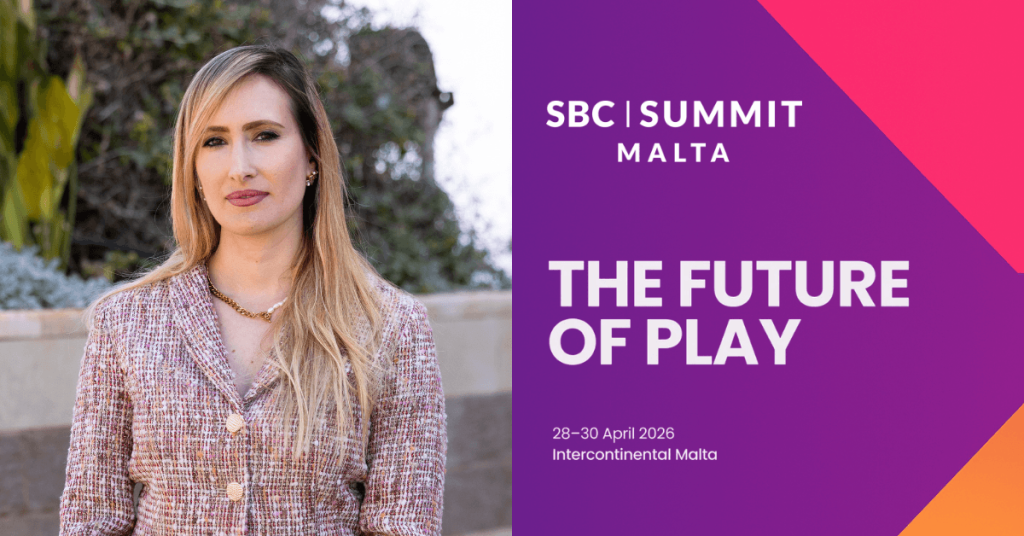
Kim Dalli, Head of PR and Communications at the Malta Gaming Authority, explains why clarity and early acknowledgement outperform spin in a crisis, and what gaming operators can learn from global brands that got it right.
Reputation in iGaming is hard won and quickly lost. When a crisis hits, operators face a narrower margin for error than almost any other sector: regulatory scrutiny, public scepticism, and the speed of modern media mean that how an organisation communicates in the first hours can define how it is judged for years.
Kim Dalli is Head of PR and Communications at the Malta Gaming Authority. She works at the intersection of regulation and reputation, with a front-row view of how the industry handles pressure and where it consistently falls short.
Dalli will be speaking at SBC Summit Malta as part of the session ‘Crisis Comms Masterclass: Who Got It Right?’ on Wednesday 29 April, 11:00–12:00. Ahead of that, she spoke to iGaming Republic about the most common communication pitfalls in gaming, what global case studies reveal, and why attempting to appear flawless is itself a risk.
This Q&A breaks down:
- How crisis communication in gaming differs from other sectors on speed, tone, and transparency
- What global brands like KFC and Facebook can teach gambling operators
- How operators can protect their brand without sacrificing trust with regulators and players
Let’s dive in!
iGaming Republic: In highly regulated industries like gaming, how does crisis communication differ from other sectors when it comes to speed, tone, and transparency?
Kim Dalli: Crisis communication in gaming does not take place in a vacuum. It is shaped not only by regulation, but also by the broader reputation the sector continues to carry in public discourse. That combination means the margin for error is significantly narrower than in many other industries.
Speed is absolutely essential. While accuracy remains non-negotiable, a vacuum will almost always be filled by external narratives, often speculative and difficult to reverse once they take hold. For that reason, responsiveness is critical, even if initial communications are necessarily limited in scope. The priority is to establish a factual baseline early, rather than allowing misinformation to define the conversation.
Tone is equally critical. Communication should not be overly legalistic or defensive, as both can undermine trust. Instead, the expectation is for a clear, responsible voice that is direct and grounded. Openness and a willingness to acknowledge issues early are more effective than attempts to over-manage or spin the narrative.
Transparency works best when it is structured but candid. The most effective approach is often phased: acknowledging what is known, confirming that the matter is being investigated and taken seriously, and then providing updates once facts are verified. Clarity and honesty tend to build credibility far more effectively than overly cautious or overly polished messaging.

Going to SBC Summit in Malta? Use code IGRPARTNERVIP to get 42% off your VIP ticket.
iGR: Looking at well-known case studies from global brands, what elements of their crisis response feel most applicable to gambling operators?
KD: Some of the most instructive examples come from outside the sector. For instance, KFC’s famous response to running out of chicken back in 2018 is often remembered for its humour, but the real strength lay in how quickly and clearly the issue was owned. The takeaway is simple: clarity beats spin.
By contrast, Facebook demonstrated how delayed accountability can erode trust over time. When issues touch on integrity or data, under-communicating in the early stages often leads to a much larger reputational challenge later.
Across both these cases, the pattern is consistent: clarity, accountability, and consistency travel well. Delay, fragmentation, and over-engineering the narrative do not.
iGR: From a regulatory perspective, what are the most common communication pitfalls the gaming industry faces during a reputational crisis?
KD: From a broader industry perspective, one recurring challenge is the tendency towards overly legalised messaging. While legal accuracy is essential, communication that lacks clarity or empathy can inadvertently heighten reputational pressure rather than ease it.
Another issue is the assumption that silence can function as a strategy. In practice, it rarely does. In a highly visible industry, external actors will interpret gaps in communication, and those interpretations can quickly become embedded as fact.
Consistency is also critical. When different stakeholders receive different versions of the same story, it raises questions not just about the issue itself, but about governance more broadly. Increasingly, there is also an expectation that communication decisions are traceable and well-documented, particularly when scrutiny intensifies.
iGR: How can operators balance protecting their brand while maintaining openness and trust with both regulators and players?
KD: In gaming, trust is the brand. Protecting it is less about limiting information and more about communicating with clarity and intent.
This begins with early acknowledgement, even where all the facts are not yet available. Organisations can, and should, signal awareness, seriousness, and a commitment to investigate without overreaching. Being clear about what is known versus what is still under review is key to maintaining credibility.
Equally important is alignment. Internal and external communications must move in step; employees, partners, and regulators should not be hearing different messages. Over time, consistency in communication builds confidence far more effectively than a single, carefully worded statement.
Ultimately, accountability carries more weight than perfection. Attempting to appear flawless can feel inauthentic, whereas demonstrating control, responsibility, and a willingness to act strengthens trust. Protecting the brand is not about saying less; it is about saying the right things, at the right time, with substance behind them.
iGR: What are you most excited to see and hear at the SBC Summit in Malta?
KD: I find platforms such as the SBC Summit Malta to be a valuable platform for knowledge sharing.
What I enjoy in such settings is the openness with which the industry is increasingly willing to reflect on challenges. There is real benefit in understanding not just what worked, but what did not, and why. There is as much to learn from approaches that did not deliver the expected outcome as there is from those that were clearly successful.
I am also interested in the ideas that are still taking shape, whether that is how regulatory frameworks are adapting across jurisdictions, or how technology, including AI, is beginning to influence decision-making and oversight in real time.
About the author
Bianca Máthe
Bianca Máthe is Publisher of iGaming Republic. She spent close to a decade on the supplier side of iGaming, working across the sector's core verticals: platform and player-engagement technology and crypto payments. That mix gave her a working knowledge of how operators, suppliers and payment providers actually run. In 2025 she started a media project, bringing that operational grounding to her editorial work. Her output includes interviews with high-profile iGaming executives, original reports, and in-depth features covering licensing, M&A, and the operators and suppliers shaping the sector. Based in Malta, she spends much of her time getting closer to emerging sectors like prediction markets, tracking how they're developing before the rest of the industry catches up.
Do you have a story worth sharing?
Send it over to our editors!