Germany’s GGL opens review into FIFA’s prediction market partner
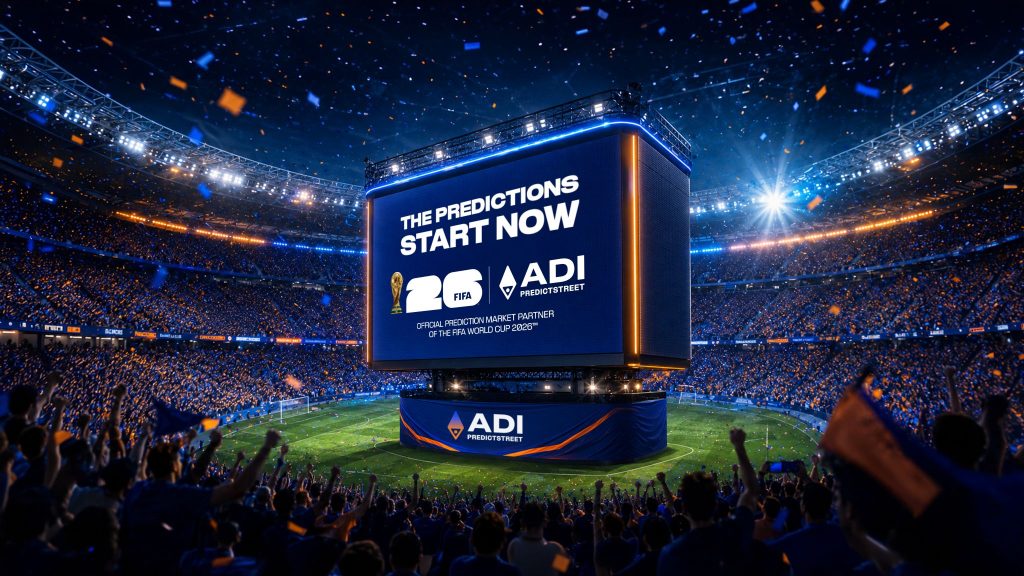
- Germany’s GGL has opened a formal review into ADI Predictstreet’s pitch-side advertising at World Cup matches, citing the operator’s absence from the country’s licensed gambling whitelist.
- RND reported the branding appeared during Germany’s opening match, broadcast via children’s channel KiKa, a detail that is expected to weigh on the review.
- Should violations be confirmed, enforcement action could extend beyond ADI to connected service providers under German law.
Germany’s gambling regulator, the Gemeinsame Glücksspielbehörde der Länder (GGL), has opened a formal review into ADI Predictstreet over its advertising visibility during 2026 FIFA World Cup broadcasts.
The regulator confirmed the move to German newspaper RND on 18 June, stating the operator’s pitch-side branding appears in German match coverage despite the company holding no local gambling licence.
Licence gap at issue
ADI Predictstreet secured a betting intermediary licence in Gibraltar in April, becoming the first Gibraltar-licensed prediction market operator in Europe. Shortly after, FIFA named it the official prediction market partner for the World Cup. Built on the Abu Dhabi-based ADI Chain blockchain, the platform launched on 8 June, three days before the tournament opened.
The Prüfverfahren, Germany’s regulatory examination process, centres on whether the Gibraltar licence confers any standing in the German market. It does not. Under the country’s Interstate Treaty on Gambling, only operators on the GGL’s official whitelist may advertise gambling services to German consumers. ADI does not appear on that list.
The GGL has confirmed its review will also examine whether German residents can access and use ADI’s platform. Should violations be confirmed, the regulator has indicated enforcement could include cease-and-desist orders directed at the operator. Under German law, connected service providers including payment processors, web hosting companies, and telecommunications firms could also be targeted.
RND reported that ADI Predictstreet’s branding was visible during Germany’s opening match, which was broadcast via the children’s channel KiKa, a joint ZDF/ARD venture. The appearance of gambling-adjacent advertising in that broadcast context is a dimension the GGL is unlikely to set aside.
Operator and broadcaster respond
ADI Predictstreet has denied any deliberate targeting of the German market. An ADI Predictstreet spokesperson said:
“We operate no marketing or advertising activities targeted at Germany.”
The company maintained that branding visible during World Cup matches arose from its global sponsorship and media rights arrangements and was not directed at German consumers.
Thomas Hagedorn, spokesperson for public broadcaster ZDF, acknowledged the concern but said the network had no influence over pitch-side advertising during the tournament. He told RND the visuals were supplied by the event’s host broadcaster and the displays were compliant with Germany’s Media State Treaty.
The response highlights a structural problem for European broadcasters at major global tournaments: host-fed advertising signals are distributed as a single worldwide feed, with no mechanism to filter by licensing status.
Europe acts in unison
The GGL’s move came on the same day nine European gambling regulators, covering Belgium, France, Germany, Italy, the Netherlands, Poland, Portugal, Spain, and Switzerland, jointly pledged enhanced cross-border enforcement against unlicensed prediction market platforms. The statement was deliberately timed to coincide with the opening of the World Cup.
Across most European legal frameworks, prediction markets are treated as gambling products. Prominent operators Polymarket and Kalshi have been blocked or restricted in several markets. Spain’s gambling authority, the DGOJ, imposed a temporary block on both operators last month while it investigates whether their event contracts constitute unlicensed gambling.
ADI Predictstreet occupies a distinct position. It holds both a Gibraltar licence and an official FIFA partnership. Neither shields it from enforcement in markets where prediction markets remain prohibited by law.
Germany’s Interstate Treaty on Gambling is due for a formal review before the end of 2026. The scale of unlicensed activity during the World Cup is expected to feature prominently in that process.
The GGL’s Prüfverfahren into ADI Predictstreet has already framed the central question: can a global broadcast arrangement function as a de facto advertising channel for an unlicensed operator, and if so, who is responsible for stopping it? For FIFA and its commercial partners, that question is no longer theoretical.
Do you have a story worth sharing?
Send it over to our editors!