Francois Piccione, MGA: AI in gaming has moved beyond experimentation

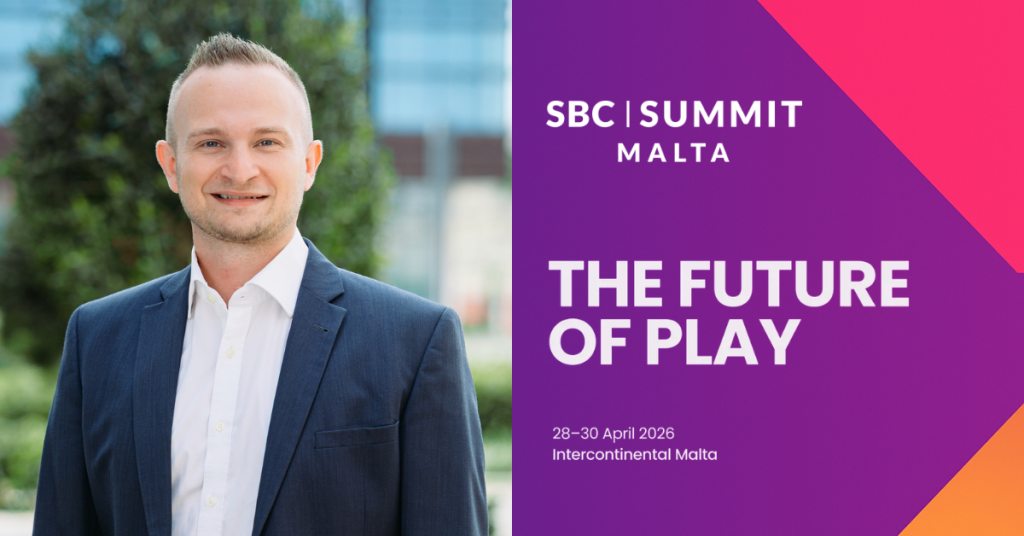
Francois Piccione, Chief Technology & Business Transformation Officer at the Malta Gaming Authority, sets out what responsible AI governance looks like in practice and explains how the proposed AI Gaming Charter aims to bring consistency to an industry still finding its footing.
Artificial intelligence is no longer a future-facing conversation in iGaming. It is already embedded in fraud detection, player protection, and compliance monitoring across the industry, and the question has shifted from whether to adopt it to how it should be governed and held to account.
Francois Piccione is Chief Technology & Business Transformation Officer at the Malta Gaming Authority, one of the driving forces behind that effort, where he leads the authority’s technology and transformation agenda.
Piccione will be speaking at SBC Summit Malta as part of the session ‘AI in Gaming: Shaping the Industry’s First AI Charter’ taking place on Thursday, 30 April, between 12:00-13:00.
Ahead of that, he spoke to iGaming Republic about the risks regulators are watching most closely, what responsible AI looks like on the ground, and where the industry is heading.
This Q&A breaks down:
- Where the most immediate AI opportunities and risks lie for gaming operators
- What responsible AI looks like in practice, day to day
- How the proposed AI Gaming Charter balances standardisation with room for innovation
Let’s dive in!
iGaming Republic: As AI becomes more embedded across gaming operations, where do you see the most immediate opportunities and risks emerging?
Francois Piccione: The most immediate opportunities lie in operational intelligence and player protection. AI is already proving its value in areas such as fraud detection, AML, responsible gaming interventions, customer support, and recommender engines/systems. When deployed correctly, it allows operators to identify patterns and risks earlier, tailor interventions more effectively, and improve efficiency without compromising the player experience.
At the same time, the risks are just as tangible. Over-reliance on opaque or poorly governed AI systems can lead to unintended bias, model drift, lack of transparency, and erosion of player trust.
There is also a real risk of “AI-washing,” where systems are presented as more intelligent or autonomous than they actually are. From a regulatory perspective, the most pressing concern is the use of AI in high-impact decision-making without adequate human oversight.
“Over-reliance on opaque or poorly governed AI systems can lead to unintended bias, model drift, lack of transparency, and erosion of player trust.”
Francois Piccione, Chief Technology & Business Transformation Officer, MGA
The key challenge, therefore, is not whether AI should be used, but how it is governed, monitored, and explained throughout its lifecycle.

Going to SBC Summit in Malta? Use code IGRPARTNERVIP to get 42% off your VIP ticket.
iGR: What does “responsible AI” look like in practice for gaming operators on a day-to-day basis?
FP: In practice, responsible AI is far less abstract than it sounds. It means having clear internal accountability, knowing where AI is being used, for what purpose, how it is used, and with what potential impact on players.
On a day-to-day basis, this includes:
- being transparent with players when they are interacting with AI-driven systems or AI-generated content;
- ensuring that AI outputs, particularly in areas such as responsible gaming or fraud detection, are reviewable, explainable, and subject to human intervention;
- maintaining proper data governance, including data quality, security, and purpose limitation; and
- continuously monitoring AI systems for errors, drift, or bias, and acting when issues emerge.
Responsible AI is ultimately about embedding ethical and regulatory considerations into operational routines, rather than treating them as a one-off compliance exercise.
“In practice, responsible AI is far less abstract than it sounds.”
Francois Piccione, Chief Technology & Business Transformation Officer, MGA
iGR: How will the proposed AI Gaming Charter help standardise approaches across the industry while still allowing for innovation?
FP: The Charter is deliberately designed as a principles-based and voluntary, rather than a prescriptive rulebook. Its role is to establish a common set of guidelines as a framework around transparency, fairness, human oversight, data protection, and governance, regardless of the size or maturity of the operator.
By standardising how AI risks should be approached through impact assessments, documentation, monitoring, and accountability, rather than which technologies should be used, the Charter creates consistency without stifling innovation. Operators remain free to experiment, innovate, and differentiate, provided they do so responsibly.
Importantly, the Charter also aligns with wider European developments, including the EU AI Act and related codes of practice, helping operators future-proof their AI strategies and AI use and adoption within their organisations, while continuing to innovate in a fast-moving sector.
iGR: Looking ahead, how do you see AI shaping the player experience and operational decision-making over the next few years?
FP: We will see a shift towards more adaptive, personalised, and predictive systems, both in player engagement and internal decision-making. For players, this could mean safer, more personalised experiences, where AI helps identify risk signals earlier and supports more targeted responsible gaming interventions.
Operationally, AI will increasingly support real-time decision-making, from compliance monitoring to customer support and risk management. However, successful operators will be those who treat AI as a decision-support tool, not a decision-maker in isolation.
The organisations that strike the right balance between automation and human judgement will be best positioned to benefit from AI while maintaining trust, resilience, and regulatory alignment.
“Successful operators will be those who treat AI as a decision-support tool, not a decision-maker in isolation.”
Francois Piccione, Chief Technology & Business Transformation Officer, MGA
iGR: What are you most excited to see and hear at the SBC Summit in Malta?
FP: What excites me most is the quality of the conversation. AI in gaming has moved beyond experimentation, and the industry is now asking more mature questions around governance, accountability, and sustainability.
SBC Summit Malta provides a valuable platform where regulators, operators, and technology providers can engage openly on these topics, not just to showcase innovation, but to discuss how we shape it responsibly.
About the author
Bianca Máthe
Bianca Máthe is Publisher of iGaming Republic. She spent close to a decade on the supplier side of iGaming, working across the sector's core verticals: platform and player-engagement technology and crypto payments. That mix gave her a working knowledge of how operators, suppliers and payment providers actually run. In 2025 she started a media project, bringing that operational grounding to her editorial work. Her output includes interviews with high-profile iGaming executives, original reports, and in-depth features covering licensing, M&A, and the operators and suppliers shaping the sector. Based in Malta, she spends much of her time getting closer to emerging sectors like prediction markets, tracking how they're developing before the rest of the industry catches up.
Do you have a story worth sharing?
Send it over to our editors!