Crypto, prediction market executives head to White House
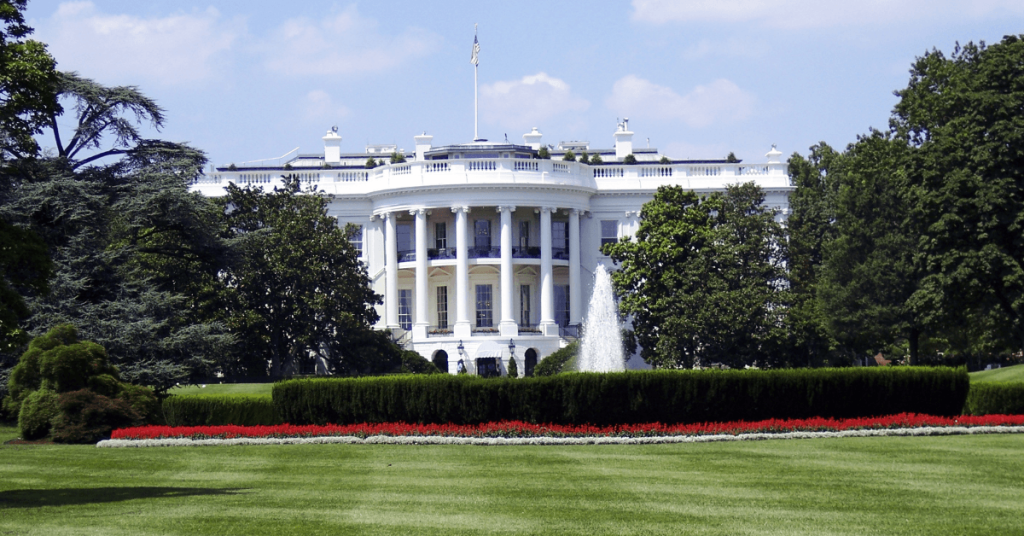
- Donald Trump is expected to attend a White House meeting on Wednesday with crypto and prediction market executives, including Kalshi’s Tarek Mansour.
- The gathering precedes the CFTC’s first Innovation Advisory Committee meeting on Thursday.
- The meeting follows a Baltimore lawsuit against Kalshi and Polymarket and a fresh Washington state court order forcing Kalshi to geofence most of its markets.
President Donald Trump is expected to sit down with senior crypto and prediction market executives at the White House on Wednesday, August 19, according to separate reporting from Politico, Bloomberg and The Block.
CFTC Chair Michael Selig and SEC Chair Paul Atkins are also expected in the room, a day before the CFTC’s Innovation Advisory Committee holds its first formal session.
Who will be in the room
Politico broke the story first, on Thursday, citing three people close to the planning but stopping short of confirming Trump’s attendance. Bloomberg pushed the reporting further on Friday: Trump is expected to show, and so is Paul Atkins, according to an SEC spokesperson.
The Block filled in the name that mattered most. Michael Selig, whom Trump nominated to the CFTC last year, is also expected in the room. The session lands at 2:30pm ET, at the Eisenhower Executive Office Building next door to the West Wing.
Two cabinet names round out the guest list, with less certainty attached. Treasury Secretary Scott Bessent and Commerce Secretary Howard Lutnick have been floated as possible attendees, but that detail traces back to a single source relayed to CoinDesk, thinner sourcing than the Selig and Atkins reporting.
Semafor’s invite list, cited by The Block, runs to Coinbase, Ripple, Chainlink, Kalshi, and venture firms a16z and Paradigm.
Thursday’s main event
The White House meeting functions as a warm-up. The main event is Thursday, when the CFTC’s Innovation Advisory Committee holds its first formal session, running 1pm to 4pm ET and open to watch online under a Federal Register notice.
Selig named the committee’s 35 members on February 12, drawing from Polymarket, Kalshi and Ripple alongside legacy venues including Cboe, CME, DTCC and Nasdaq. The agenda splits into three blocks: crypto asset regulation, artificial intelligence, and prediction markets.
The prediction markets block is where things could get uncomfortable. It centres on the roles of federal and state authorities and recent state litigation, and there’s no shortage of material.
Baltimore sued Kalshi and Polymarket this week over sports-related contracts, and a Washington state court separately ordered Kalshi to block sports, elections, politics, entertainment, culture, tech, science and so-called mentions contracts, with an initial geofence due August 19 and a fuller multi-source system due September 2.
A crowded courtroom
Kalshi is fighting this battle on multiple boards at once.
In Michigan, the company has already wound down its sports contracts to comply with a geoblocking order. In Nevada, a separate deadline passed on August 12, and Kalshi is now contesting a contempt motion from state regulators, who say the geofencing rollout fell short of what was promised.
The CFTC isn’t winning everywhere either. It has sued states including Arizona, Illinois, New York and Wisconsin over what it calls exclusive federal jurisdiction on event contracts, and filed amicus briefs in Massachusetts and before the Sixth Circuit.
Arizona went the agency’s way with a preliminary injunction, but a federal judge in Wisconsin ruled the opposite in July, finding that Kalshi’s sports contracts don’t meet the legal definition of a swap.
Donald Trump has already staked out a position on the underlying fight. He wrote on Truth Social on May 26:
“It is critically important that the CFTC’s exclusive authority over Prediction Markets is maintained.”
He went on to name several state officials he accused of trying to set their own rules. His son, Donald Trump Jr., advises both Kalshi and Polymarket and holds a stake in Polymarket through venture firm 1789 Capital.
None of this settles before the CLARITY Act reaches the floor. Majority Leader John Thune filed cloture last week, setting up a procedural vote for September 15, not final passage. The bill’s ethics language remains the real holdup, with Senate Banking Committee staff arguing it wouldn’t touch Trump’s next $1.4 billion in crypto income.
Selig gets his advisory committee this week either way. What he does not get is a settled answer on jurisdiction: the Wisconsin ruling stands, Baltimore’s suit is fresh, and Nevada regulators are still arguing over whether Kalshi’s geofence actually works.
A photo of the president next to Kalshi and Coinbase executives will not change any of that math.
Do you have a story worth sharing?
Send it over to our editors!