Albania’s betting relaunch awaits final signal
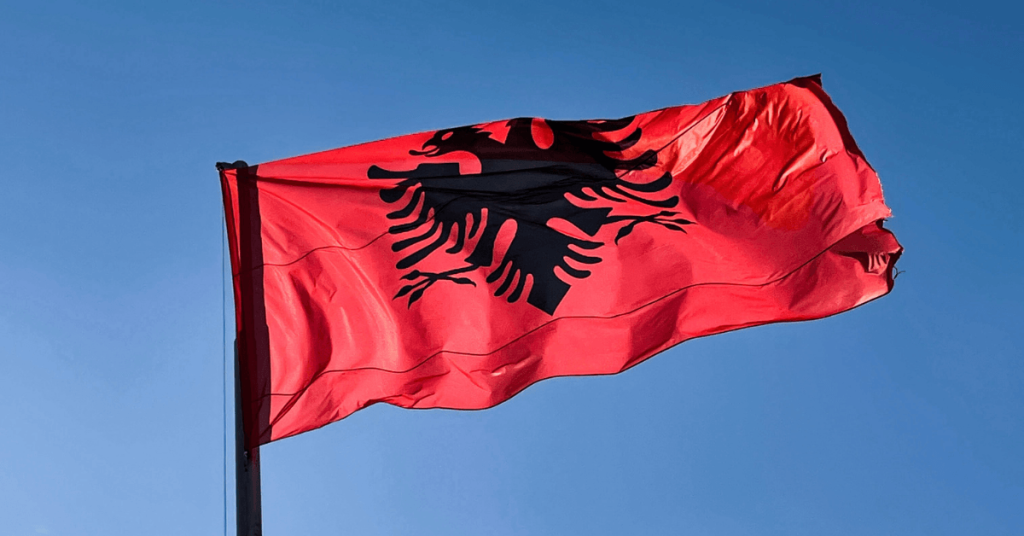
- Albania has completed the regulatory framework needed to relaunch online sports betting, seven years after a 2019 ban pushed the market underground.
- The new regime permits up to 10 online sports betting licences, administered by the Gambling Supervisory Authority (AMLF) and the Licensing Commission.
- Authorities have not yet opened the licensing process, with the Ministry of Finance confirming the system is ready but inactive.
Albania has finished building the regulatory framework required to reopen its online sports betting market, but the licensing process itself has yet to begin, seven years after a blanket ban forced most gambling activity underground.
The Gambling Supervisory Authority (AMLF) will run the new licensing regime alongside the Licensing Commission, with a maximum of 10 online operators permitted nationwide once the competition opens.
Decision 194 in force
The Albanian Council of Ministers adopted Decision No. 194 on 26 March 2026, setting out the evaluation criteria, timelines and scoring methodology for awarding online sports betting licences.
Applications are marked out of 100 points across five criteria: economic offer (30 points), gambling experience (30 points), organisational and administrative capacity (20 points), software and certification capacity (15 points), and a three-year business plan (5 points). The decision took effect on 30 March, following publication in the Official Gazette.
The final regulatory piece landed in June 2026, when the government approved rules on the suspension and revocation of licences, closing the last gap in the enforcement structure. By July 2026, the AMLF confirmed all eight implementing regulations required for the system were in place, spanning technical standards through to player protection.
The Licensing Commission has not yet triggered the competition itself. Once it does, the call for applications must be published within seven days, including in two international newspapers, and applicants will have 45 days to submit documentation alongside a non-refundable application fee of ALL 500,000 (approximately €5,100).
Albania’s Ministry of Finance told BIRN:
“The system is legally ready, but the licensing process has not yet officially opened.”
Betting shops stay banned
Albania’s model is not a full return to the pre-2019 market. Betting shops and standalone slot halls, both fixtures of the old retail sector, sit outside the new licensing categories entirely and are not coming back.
Casino gaming will remain confined to certain five-star hotels, keeping land-based exposure narrow even as the online channel reopens.
The licence itself carries a steep price tag on top of the application fee. Winning bidders must pay a minimum fee of ALL 400 million (roughly €3.9 million), spread across the 10-year licence term, and must show annual turnover of at least ALL 2 billion (about €20 million) along with operating experience in at least three EU or OECD markets.
Licensed operators will also hand over 15% of gross gaming revenue to a dedicated fund covering sport, culture, technology and innovation projects.
How many of the 10 available licences actually get issued is still an open question. The Licensing Commission decides the number for each round, so the first cohort could sit well under the cap. Advertising is bound by similarly tight limits, restricted to a framework built around minors, misleading claims and safer-gambling messaging.
Seven years underground
Albania’s parliament approved a sweeping gambling crackdown in 2018, and the resulting ban on betting shops, slot halls and most online gambling took hold the following year.
Before the shutdown, the retail sector carried real weight: annual betting turnover ran to roughly €700 million in 2018, spread across close to 4,000 betting shops in a country of just over 2.8 million people.
None of that appetite went away once the shops closed. Industry estimates place unregulated online sports betting gross gaming revenue at around $117 million in 2024 and $126 million in 2025, figures that climb to an estimated $229 million once unlicensed online casino and poker activity is folded in.
Parliament cleared the legal path for a controlled return of online sports betting in 2024. Operators elsewhere in the region have been reading the signals: MaxBet recently expanded its live casino offering into Montenegro, Serbia and Bosnia and Herzegovina, a sign of how fast licensed brands scale once a Balkan market opens up.
Commission holds the key
What happens next depends entirely on the Licensing Commission, which still has to formally launch the competition before a single application can be filed.
When it does, the required international publication means the announcement will land in front of operators well beyond Albania’s borders, not just the local market.
Other jurisdictions offer a sense of what that interest can look like. Finland’s transition away from its state monopoly drew 50 operator applications within weeks of opening, a scale Albania’s far smaller, ten-licence ceiling was never designed to match but one that hints at how quickly bidders move once a competitive process actually starts.
Albania’s timing also lines up with a clear regional pattern. Greece has pushed through its own black-market reform, and gambling associations across the Balkans recently came together to form a cross-border trade body built around exactly the same pressures Albania is now trying to address: unlicensed activity that has outgrown the tools available to stop it.
Do you have a story worth sharing?
Send it over to our editors!